It’s a bright Monday morning in a third-grade classroom. Students are shuffling in, buzzing about lunch and recess, thrilled to see their teacher out for a three-day weekend and a substitute in charge. For most of the class, it’s a win.
Protestors hold up signs during a No Kings protest outside the Henry Ford Centennial Library in Dearborn, Michigan, March 28, 2026. Photo by David Rodriguez Muñoz, Detroit Free Press
As we observe Sexual Assault and Prevention Awareness Month this April, a new and insidious threat is emerging from the digital realm: the weaponization of Artificial Intelligence against women and girls.
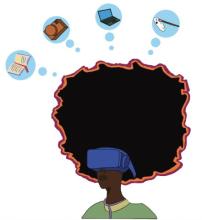
Virtual reality has long fascinated dreamers, scientists, and storytellers alike. For centuries, humans have imagined stepping outside the bounds of the physical world, into spaces limited only by imagination.
Science is built on trust. Every vaccine approved, every treatment prescribed, every policy informed by data rests on the assumption that the researchers behind it were honest.
The pressure to do well starts long before graduation for many college students. The pressures of being a student can easily become overwhelming, with school, jobs, and personal obligations.
There is a particular kind of disease that comes by surprise. It doesn’t announce itself. It doesn’t show up in dramatic episodes. It shows up in a student who learns and understands but does nothing.