

What If Your Own Cells Were the Cure for Cancer?
Gallery
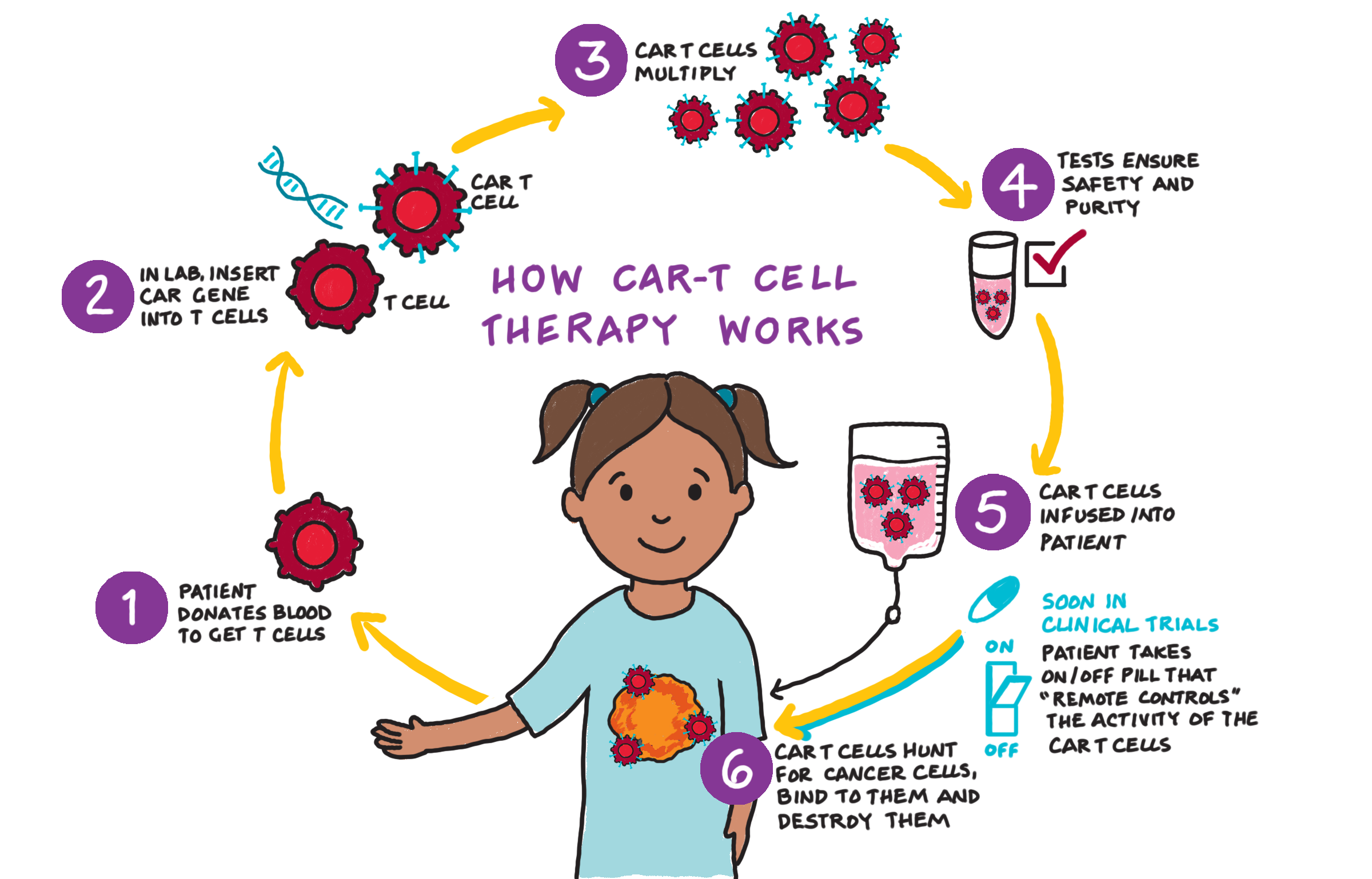
What if, instead of giving a patient another round of chemotherapy, doctors could take the patient’s own immune cells, upgrade them and send them back with a new mission?
That is the idea behind CAR T-cell therapy, one of the most remarkable developments in modern cancer treatment. It has changed what is possible for some patients and opened a bigger scientific question: How far can we learn to engineer our own immune system?
A living drug, step by step
CAR T stands for chimeric antigen receptor T-cell therapy. T cells are immune cells that normally help defend the body against infected or abnormal cells. In CAR T therapy, doctors collect a patient’s T cells from their blood. In a laboratory, scientists genetically engineer the cells to produce a new surface protein called a chimeric antigen receptor, or CAR.
The receptor works like a new targeting system. For many leukemias and lymphomas, the target is CD19, a protein found on B cells, another type of immune cell. Scientists multiply the engineered cells and infuse them back into the patient. Once they find their target, they activate and attack, releasing molecules such as perforin and granzymes that help trigger the cancer cell’s death.
Unlike a conventional drug, CAR T cells are alive. They can multiply inside the body and, in some patients, remain for more than a decade, continuing to patrol for cells that carry their target.
From one child’s recovery to standard care
One of the best-known cases began in 2012 with six-year-old Emily Whitehead. Her leukemia had returned after treatment, and she became the first child with relapsed leukemia to receive CD19-targeted CAR T cells. She developed a severe immune reaction but recovered, and she has remained in remission for more than a decade.
The U.S. Food and Drug Administration approved the first CAR T therapy in 2017. Today, seven versions made from patients’ own cells are approved for certain leukemias, lymphomas and multiple myeloma. Some patients with these cancers have had remissions lasting years.
CAR T in Michigan
Michigan Medicine is one of the places putting this science into practice. Dr. Monalisa Ghosh, a physician-scientist there who works in cell therapy, discussed the work in a podcast interview the health system published in June. She said the number of patients treated at Michigan more than doubled in the past year. She has treated patients who were choosing between hospice care and a CAR T trial, and some are now cured. She also said Michigan is running a trial to test whether CAR T could replace chemotherapy as a first treatment for certain lymphomas.
“It’s been revolutionary. It’s been amazing in blood cancers. We’re hoping to see that in solid cancers as well,” Ghosh said on the podcast, “The Fundamentals.”
The solid tumor problem
That hope points to one of the biggest frontiers in CAR T research. So far, the therapy has worked far better against cancers of the blood than against solid tumors such as brain, breast and colorectal cancers.
One major challenge is finding the right target. A molecule found on a tumor may also exist on healthy cells, which creates the risk that engineered T cells could attack both. Solid tumors also contain many different cancer cell types, and their surroundings make it hard for immune cells to enter and survive.
There are signs of progress. A randomized trial published in “The Lancet” in 2025 found that CAR T cells targeting a protein called claudin 18.2 helped patients with advanced stomach cancer live longer without their disease getting worse, compared with the treatment their doctors would otherwise have chosen. Even so, responses in solid tumors are often temporary, and more innovation is needed.
Beyond cancer
Researchers are also asking whether CAR T could treat noncancer diseases. In autoimmune diseases, B cells produce antibodies that attack the body’s own tissues. Because CD19 sits on B cells, CAR T cells can be used to wipe them out.
Early results are encouraging for lupus, scleroderma, multiple sclerosis and other conditions. Ghosh said Michigan is running trials in several of them. These uses are still experimental and are not FDA-approved. She said some patients have been able to stop immune-suppressing medications for now, which matters for people who might otherwise take them for life. It is too early to say whether any of these diseases can be cured.
Making CAR T faster and cheaper
The treatment itself is complicated. A patient’s cells are collected, sent to a manufacturing facility, where they are engineered and multiplied, then shipped back. Ghosh said that the process often takes three to six weeks, and people with fast-growing cancers must be kept stable while they wait. The cost and complexity limit who can receive the treatment. She said Michigan hopes to build its own manufacturing facility to make cells faster and for less.
Researchers are exploring two ways to change the model. The first is “off-the-shelf” CAR T cells made from healthy donors and prepared in advance. They could shorten the wait, but the patient’s immune system might destroy donor cells, and donor cells can attack the patient’s healthy tissue.
The second idea goes further. In a field called in vivo CAR T, scientists are trying to deliver genetic instructions directly into the patient’s body, teaching existing T cells to become CAR T cells without removing them first. In a first-in-human study reported in the “New England Journal of Medicine” in 2025, researchers delivered tiny fat-based particles carrying CAR instructions for five patients with severe lupus. The patients showed rapid improvement with only mild immune reactions. Major hurdles remain, including delivering the instructions only to the right cells. If researchers solve them, the patient could, in a sense, become the CAR T factory.
The risks
CAR T is not a cure for every patient or every cancer. Because engineered T cells can trigger a powerful immune response, patients can develop cytokine release syndrome, which can cause fever and dangerously low blood pressure. They can also develop neurological complications, from headache and confusion to seizures in severe cases. Doctors have drugs to manage these reactions, but they are a major reason treatment happens at specialized, certified centers. Researchers have also documented rare cases of new T-cell cancers after treatment, although large studies suggest the risk is very low.
Why it matters for students
CAR T’s limits are also shaping the next generation of research. Can scientists design cells that recognize multiple signals? Can they help cells survive longer inside tumors? Can therapies be made faster and at lower cost? Can engineered immune cells treat diseases far beyond cancer? Researchers writing in “Nature Reviews Immunology” this year say artificial intelligence could speed up the design of better cells, which suggests the field will draw on far more than medicine and biology.
About nine years after the first CAR T therapy was approved, researchers are asking questions that reach well beyond the technology’s original purpose, for students entering medicine, biology, engineering and biotechnology, that may be the most exciting part of the story. Scientists are no longer asking only whether the immune system can fight cancer. They are learning how to redesign it. The question now is what we will teach it to do next.