

Moon’s New Gravesite: Here Lies SpaceX’s Falcon 9
Gallery
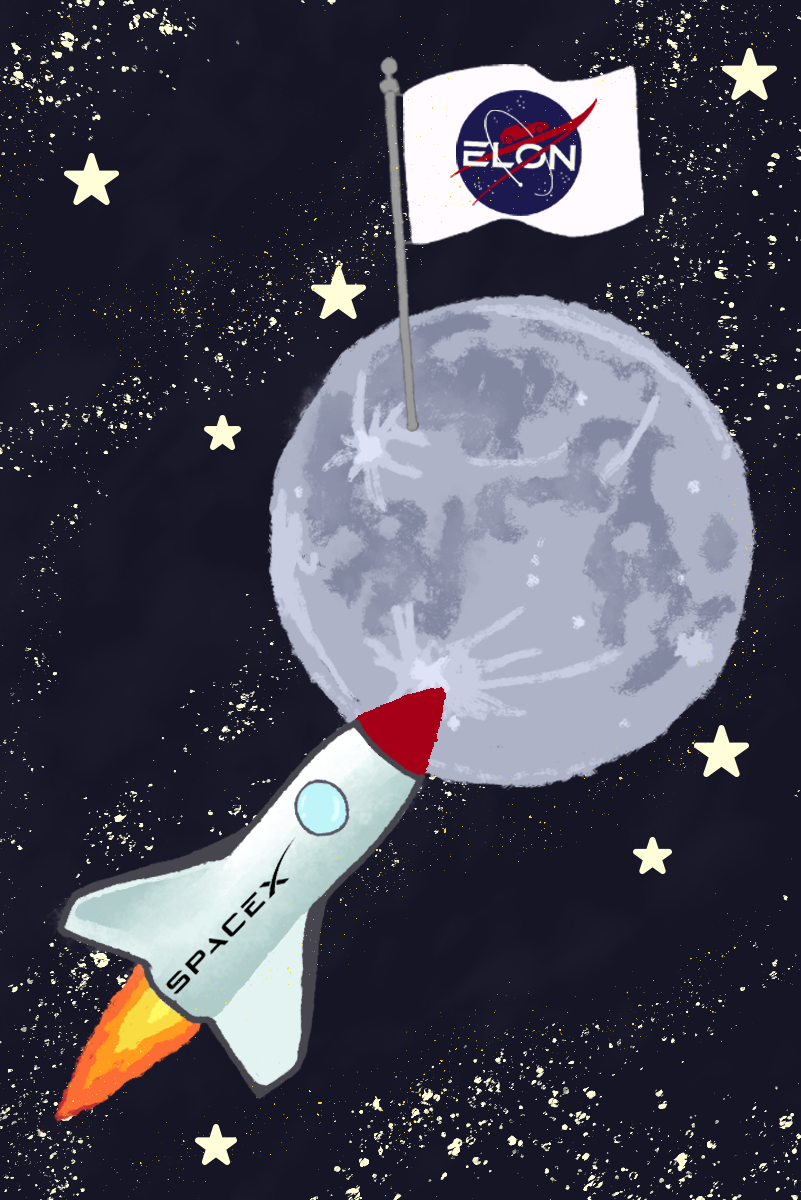
Our moon is no stranger to craters. Its surface gets struck every single day by natural space debris. It also gets struck by unnatural, human-made objects, like Elon Musk’s SpaceX Falcon 9 rocket, which has left permanent scars upon the moon’s surface.
On Aug. 5, part of a SpaceX Falcon 9 rocket crashed into the moon. The abandoned rocket crash-landed at 5,400 mph, with the force of roughly 3 tons of TNT, leaving a fresh crater on the moon. The new crater measures roughly 60 feet wide and 10 feet deep, and its impact site lies near the Einstein crater. SpaceX described the Falcon 9’s fate as “unintentional but unpreventable.”
The rocket, launched on Jan. 15, 2025, carried two robotic lunar landers. After delivering its package, it failed to perform a maneuver that would have allowed it to enter the Sun’s orbit. Over the course of 18 months, gravitational forces altered its course, sending it towards the moon and to its inevitable crash landing.
This impact marks humanity’s second known unintentional lunar impact of a rocket body. The first one occurred in 2022, when a discarded Chinese rocket lost control and crashed into the far side of the moon.
While the moon can certainly handle the violent impact, and since it happens all the time, the question is: “Should we care about this?” Yes, we should, especially when the richest person in the world has more satellites in space than actual global space organizations.
Elon Musk, owner of SpaceX, hit trillionaire status earlier this summer in June, and has ambitious plans for space. Most notably, his plans to colonize Mars. His Starlink project has resulted in thousands of satellites being sent into Earth’s low orbit, currently providing services to over 160 countries worldwide. The current official number of Starlink satellites in orbit is around 11,102, but Musk plans for 42,000 in total, a number he hopes to achieve in coming years.
There are currently a total of 18,111 satellites in Earth’s orbit, and over 11,000 of them are SpaceX satellites. Musk’s newest plan, Starmind, plans to launch around 1 million orbital AI data centers into space to bypass the limitations of land, water, and power on Earth.
Astronomers have concerns regarding Musk’s plans, as they fear this many satellites will interfere with observing the universe. With the current number of Starlink satellites in the sky, astronomers already struggle to observe and document. Spaceflight experts have also weighed in, calling Starlink the number one collision hazard in Earth’s orbit. Space debris is becoming a growing concern. As of 2026, an estimated 1.2 million objects of debris are in Earth’s orbit, with an additional 140 million tiny fragments floating around.
There were various public reactions regarding the Falcon 9 crash. Some celebrated it, others were outraged, and the rest just flat-out didn’t care. Actually, some scientists were excited. People around the world turned their telescopes toward the moon and hoped to watch the inevitable. Scientists hoped to catch a glimpse of the plume of gas left in the impact’s wake. They hoped to learn more about the moon’s composition as a result of the crash.
Not one single opinion is right or wrong, but the overall takeaway is the collective numbness with which our society responds to such events. In the past, news of a rocket crashing into the moon would have alarm bells ringing for everyone. Now, people hear it, shrug, and move on. Some argue that objects crash into the moon all the time; what’s the big deal with a leftover rocket crashing into it?
Although still important, it’s less about the physical damage and more about the sentiment. No one owns the moon, or space itself for that matter, but as humans, what right do we have to physically alter our planet’s only natural satellite?
This recent collision with the moon brings up the question: Where are we headed? With science, there is sometimes a risk of damage in order to get data, but as technology advances and wealth increases, we need to ask ourselves, “How far is too far with unchecked power?”
Musk is not a scientist nor an astronomer; he is a businessman who holds the title of the richest person in history. He claims to do what is best for humanity, but it’s clear he wants to see his name on everything. He acts as if he is untouchable, and what Musk wants, Musk will do whatever it takes to get.
It’s obvious SpaceX’s satellites have polluted our skies, but what will happen if Musk completes his additional 33,000 Starlink goal, along with the planned 1 million orbital AI data centers? We can’t be entirely sure what is next as technology advances and the wealthy become more ambitious.
We humans have certainly left our mark on this planet, and it will be no different as we mark our territory in space. The most powerful of humans will race to claim more territory, to any depths they can reach. There needs to be accountability for the damage the wealthy have done to our planet and beyond. While people fight to save what we have left, Musk, the world’s richest individual, sends as many rockets into space as he so pleases. One of them even crashes into the moon, and no one blinks, but maybe we should.