

Gordie Howe International Bridge Puts Connecting Communities Above Politics
Gallery
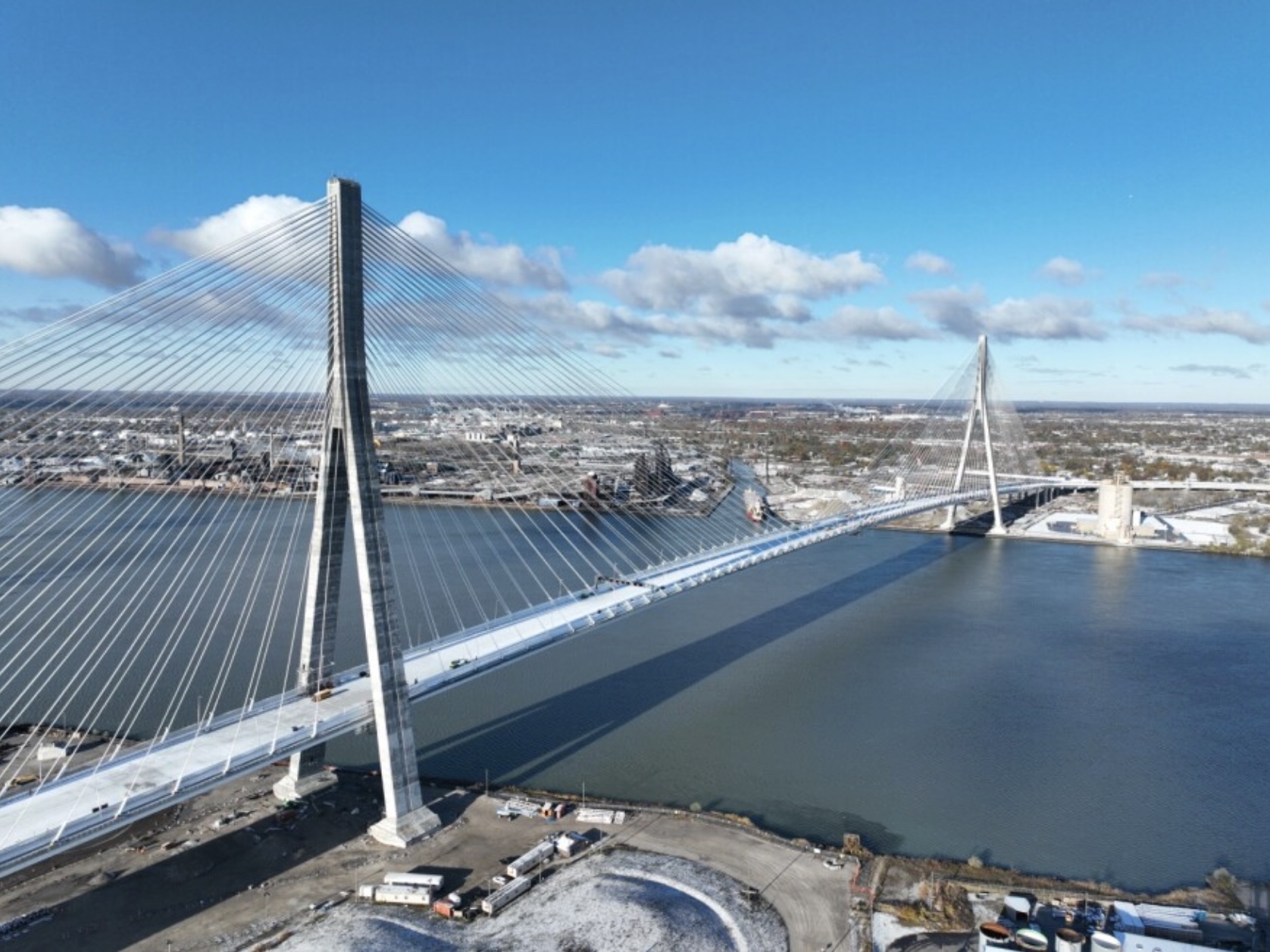
The Gordie Howe International Bridge is more than a new route between Detroit and Windsor. Years of planning went into addressing transportation needs, international trade and the concerns of communities surrounding the project.
Heather Grondin, chief relations officer for the Windsor-Detroit Bridge Authority, spoke with The Mirror News about the project, the organization’s role and some of the goals behind the bridge.
The Windsor-Detroit Bridge Authority, commonly referred to as WDBA, is a Canadian Crown corporation. Grondin explained that the organization follows government legislation while operating similarly to a private-sector company. It reports to a board of directors, with the Government of Canada serving as its shareholder, and is funded by Canadian taxpayer dollars. WDBA serves as the operator of the Gordie Howe International Bridge.
As chief relations officer, Grondin manages several areas involving the bridge and the public, including internal and external communications, government relations, public and community relations, and customer engagement.
The idea for the bridge dates back to 2000. According to Grondin, the Windsor-Detroit gateway handles approximately 25% of all trade, making transportation between the two cities an important part of the project.
The bridge was developed around four primary transportation needs: providing redundancy with an additional border crossing to help decrease traffic while increasing capacity, improving border processing and creating direct highway-to-highway connectivity.
Grondin explained that no other international crossing between the U.S. and Canada provides the same direct highway-to-highway connection. This allows large commercial trucks to remain off local streets, helps separate local traffic from international traffic and reduces the need for international traffic to pass through multiple stoplights.
Although Detroit and Windsor have been connected by the Ambassador Bridge for nearly a century, Grondin emphasized that the Gordie Howe International Bridge was not developed to compete with other crossings. One distinction is that the new bridge is publicly owned.
Bringing the project from an idea to a completed bridge required approximately 16 to 18 years of planning. Grondin explained that a project of this size had to meet numerous legislative requirements throughout the process.
That planning also included attention to the communities located next to the project, particularly those affected by its construction and surrounding infrastructure. WDBA used several methods to receive community input, including community advisory committees, quarterly public meetings, meetings with elected officials, online and printed surveys, and community and environmental assessments.
One result of that involvement was the Community Benefits Plan. Grondin said the plan included a total of 71 community initiatives intended to support the quality of life of residents in surrounding communities. Local employment was also part of the project. According to WDBA data, 41% of individuals oriented to work on the project were local, defined as living within the City of Detroit or within 100 kilometres of Windsor.
Another feature of the bridge is its newly opened multi-use path. The path is toll-free and allows another way for people to travel across the international border.
Because the path crosses between the United States and Canada, however, users still need the proper travel documents. Grondin explained that travelers need either a passport or an enhanced license in order to cross the border.
Safety was also considered in designing the path. WDBA partnered with a Canadian mental health organization and incorporated emergency help stations into the crossing. Specific fencing was also installed to prevent people from accessing the water.
The bridge’s long history has also included opposition and political debate. The Moroun family, owners of the Ambassador Bridge, opposed the Gordie Howe International Bridge project for many years. When asked about the arguments made against the new bridge and whether that opposition affected its development, Grondin did not go into detail. She said additional information was publicly available and explained that challenges were addressed as the project continued.
According to Tom Perkins reporting for The Guardian, “The Trump administration for months blocked a $4.7 billion publicly owned bridge between Detroit and Windsor, Ontario, a move critics allege is a quid pro quo” for billionaire donor Matthew Moroun, who “donated $1 million to a Trump political action committee (PAC) in January, and in February received a meeting with Howard Lutnick, the US commerce secretary. Hours later, Trump on Truth Social threatened not to open the Howe.”
Despite the Trump administration’s attempts to delay the opening, the Gordie Howe International Bridge opened on July 27. During the bridge’s first full month of operation, over 270,000 crossings happened.
For Grondin and WDBA, the bridge represents years of coordination among governments, transportation agencies and neighboring communities. Its highway connections improve international transportation and trade, while features such as the multi-use path and Community Benefits Plan extend the project beyond vehicle traffic alone.
For Detroit and Windsor residents, the Gordie Howe International Bridge now serves as another physical connection between two communities that have long shared a border.