

The Forgotten War: YEMEN
Gallery
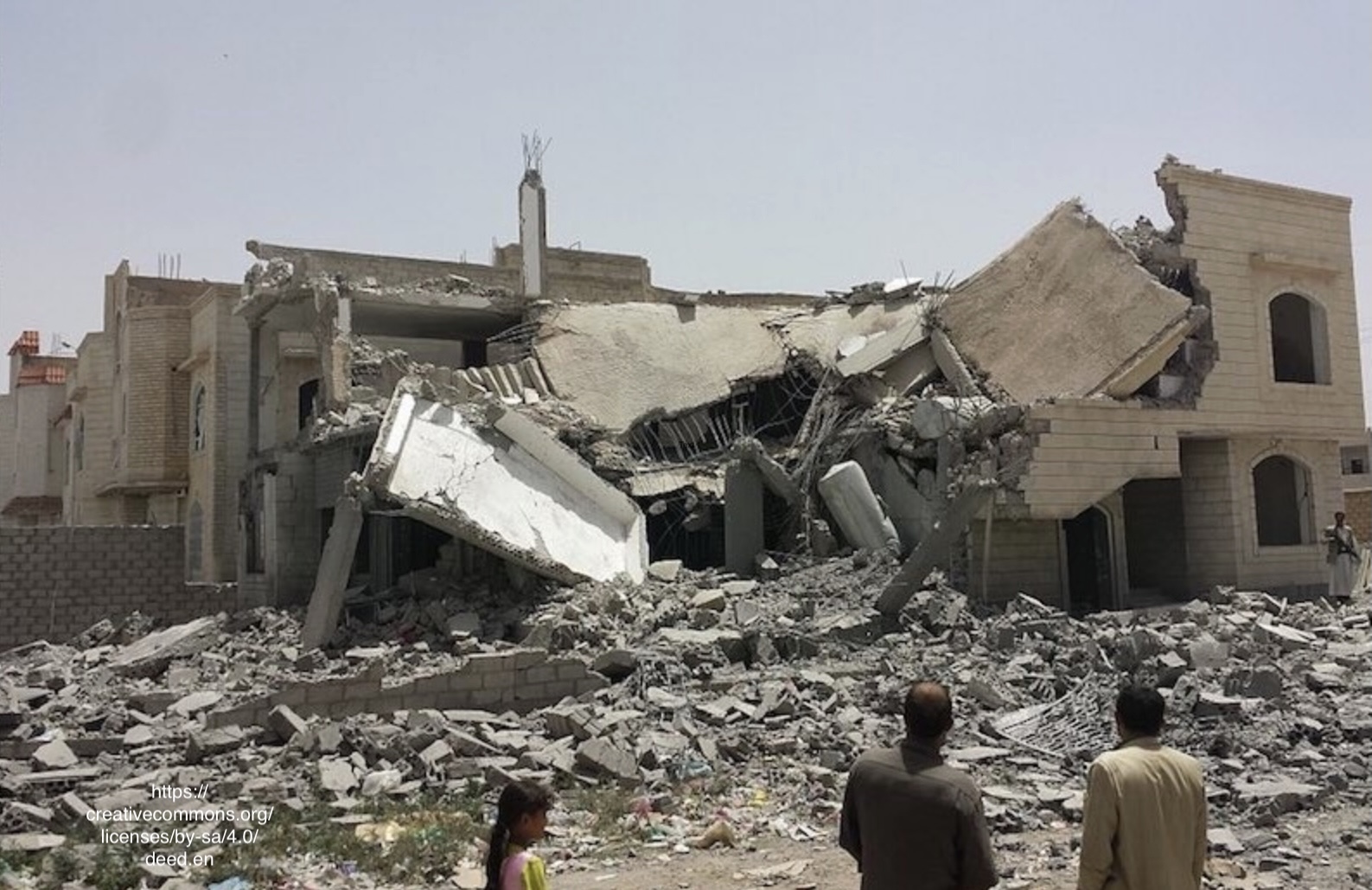
According to the U.N. Council on Foreign Relations, it has been determined that Yemen is and has been enduring “one of the world’s worst humanitarian crises.” The country has been undergoing civil war led by Iran-backed Houthis for the last decade, which has therefore caused a historic humanitarian crisis and major displacement among the people of Yemen. Amidst this ongoing conflict, over 377,000 civilians have lost their lives, and even more have suffered through severe famine and poverty.
The conflict has drawn in the United States military as the Houthis attacked the Red Sea shipping and Israel. As of 2026, the Houthis have continued launching missiles at Israel, and the conflict has ignited further international responses, as reported by Al Jazeera.
As for those who remain living in Yemen, over 26.1 million civilians are facing a desperate need for humanitarian aid, with millions facing famine and a severe cholera outbreak. Amidst the Houthis’ forceful takeover, Yemen has suffered a complete collapse of its infrastructure and stability in its government.
The destruction of Yemen’s economy has diminished access to healthcare, food, and water for civilians. Regardless of the political reasoning for starting this war, innocent civilians, often including women and children, have been deeply and unfairly affected to the point that their suffering has led to one of the world’s worst recorded humanitarian crises ever.
According to the UN Office for the Coordination of Humanitarian Affairs, “a higher percentage of people face death, hunger and disease [in Yemen] than in any other country.”
Recently, due to the conflicts arising between the U.S. and Iran, and as Houthis are funded and controlled by the Iranian government, the humanitarian crisis in Lebanon has raised attention from Western countries and the media. According to the Security Council Report, following the 7 April announcement of a two-week ceasefire between Iran and the US, differences emerged between the conflict parties on whether the truce framework included Lebanon, which Israel continued to bomb heavily. In a 9 April speech, Houthi leader Abdulmalik al-Houthi described the ceasefire announcement as a “great victory” for Iran, while stressing that de-escalation efforts will not be successful unless Israel ceases its attacks on Lebanon and on any member of the “axis of resistance.” However, there was no mention of the humanitarian crises in Yemen.
Ibrahim Alhasbani, the owner and founder of Qahwa House, escaped the war in Yemen and built a new life here in Dearborn, Michigan. As his business thrives, Alhasbani continues to support his family’s farm back in Yemen.
Yemen has undergone numerous conflicts over the years, going back to the early 80’s. Conflicts that began within the country gradually spread to become an international conflict that remains deadly yet ignored. Local Melvindale residents, Hani Abdulaziz and Tahani Khan, offered their insights on what Yemen used to be and the specific conflicts that changed the country into what it is now.
Abdulaziz and Khan are originally from Aden, Yemen. A region rich with oil, gold, and a region close to the sea, making it a crucial area for import and exports via what used to be Aden’s sea ports. Now “dead,” in Khan’s words, as political and regional issues took it away from them. Abdulaziz recalls the first civil war in 1986, “The soldiers were sitting and eating, and each of them knew who was from which tribe, the tribes that were at war during this time, and when the time came, they all drew their guns and rifles and shot just the person next to them.”
“It was out of nothing,” Khan said, “I remember how the crisis became known through the news, and everyone was afraid upon hearing what was happening. It was one country, but each city and tribe had their own greed.”
It was January of 1986 when the violent 11-day civil war took place, some call it “Events of 86” or the “South Yemeni (Aden) Crisis.” A conflict that began on the thirteenth of January due to a power struggle within the ruling Yemeni Socialist Party. What started as a political conflict escalated to become a bloody conflict between factions–a conflict led by President Ali Nasir Muhammad and former president Fattah Ismail.
Similar to conflicts that have occurred over numerous periods and in various regions and countries, the conflict became incredibly heated between the North and the South as the North sought to seize Aden and establish their control, treating Aden like subjugated territory rather than an equal partner in unification.
“The North, they took the lands, took the government buildings, and owned us to the point that anything you wanted to do in Aden you had to go to San’aa (the capital of Yemen) to get it done,” Abdulaziz said, “Aden started a revolution, a resistance to fight back against the Northern government and what they were doing. But in the end, it was useless, and the people that were a part of the resistance were killed by those they opposed.”
Abdulaziz continued, “When Aden tried to gain their independence from the North, they weren’t allowed the chance to do so. Aden has oil and seaports, therefore Aden is one of Yemen’s biggest powers for international trade and exports. So they kept Aden and didn’t separate, but didn’t treat them like part of the country either.”
“The factories were shut down and sold to anonymous people who owned private land. The men who once had work had nowhere to go and nowhere to make their money anymore – they just sat at home jobless because of what was happening,” Khan said, “Aden is rich, the land is rich, there are so many things, but we never even got a chance to see it because they took it from us and sold it before we got the chance.”
According to Khan and Abdulaziz, Aden had the world’s second-largest seaport after Manhattan, which is occupied by major assets that Yemen doesn’t even gain benefit from. When asked what Aden is like now compared to how it was before they came to America, the couple said it was immensely worse than before. “The government isn’t even a government anymore,” Abdulaziz says, “There is no stability, no more education or colleges, and overpopulation across the entire region.”
Abdulaziz persisted, “There are beggars everywhere, and people will simply find land and build a house on it, the government disregarding where they came from and who they are. There used to be mountains and beautiful views, now populated by people everywhere. They have no money, no food, no education, and no more job opportunities.”
Henry Ford College student, Bisan Azazi, a recent Yemeni immigrant from San’aa, offered her insight on the current conflicts and what she had observed in recent years: “I came to the U.S. because my family was already here, and the ongoing conflict in Yemen made it difficult to stay. It was both a decision for safety and an opportunity to build a more stable future. Yemen is currently facing a severe humanitarian and environmental crisis. Years of conflict have damaged infrastructure, limited access to clean water, and worsened problems like drought and food insecurity. Economically, the country is extremely unstable, with high unemployment, rising prices, and limited access to basic services.”
Azazi added, “Many people rely on humanitarian aid to meet their daily needs. There are multiple groups competing for control, which has divided the country and made it difficult to reach a lasting solution. What stands out most is the impact on civilians, who are caught in the middle of conflict. I believe that any real solution will require compromise, accountability, and a focus on peace rather than continued escalation.”
Abdulaziz had a final, heartwrenching statement: “When I left Aden, it was beautiful. And now it looks nothing like the place I once grew up in. But the joy of going back is reuniting with my family and old friends and classmates and the friends I made while serving the military.”
Yemen has undergone and continues to undergo wars and crises that have affected people of every religion whose stories are inevitably muffled as the wars become bleak, old, and ultimately, forgotten.