
The Neuroscience of Aging
Gallery

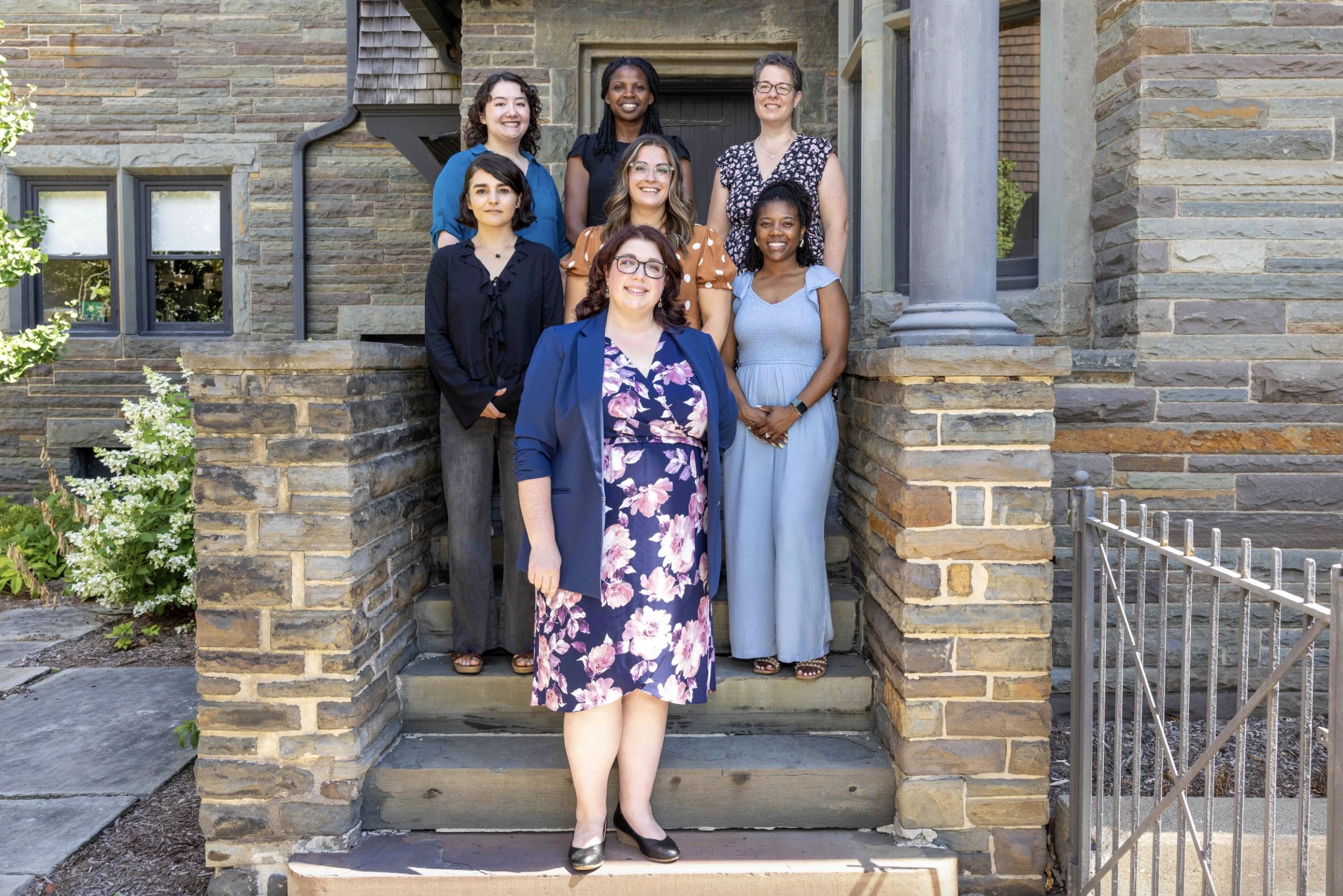
Dr. Ana M. Daugherty, PhD, and the faculty and staff of the Healthy Brain Aging Laboratory at Wayne State University, Detroit, MI. Photo courtesy of Wayne State University.
Cognitive neuroscientist Dr. Ana Daugherty, Ph.D., is the Director of the Institute of Gerontology and Associate Professor of Psychology at Wayne State University, where she directs the Healthy Brain Aging Lab. Her work challenges the idea that aging is purely a decline, explaining that some abilities may weaken while others improve over time.
“There’s a common misconception that aging is just loss, but that’s not entirely true,” notes Dr. Daugherty. As we age, our bodies experience innumerable changes in countless ways, some visible and some hidden. Tasks that were once effortless in our youth will evolve into ones that can cause aching, our breath shortens, as the aging human body experiences an overall decline.
The neuroscience of aging is the study of how the brain changes over time. As we enter our 30s and 40s, the brain undergoes structural changes that become more noticeable with age. Dr. Daugherty further explains that “it’s not that neurons are just dying off, but rather that they shrink and their connections become less efficient.”
This process contributes to what we observe as brain atrophy, a neurodegenerative condition, involving the complete loss of neurons and connections. When neurons can’t communicate properly, the brain shrinks. Although this is a normal process of atrophy and aging, if excessive, it can be accelerated with diseases such as Alzheimer’s or traumatic injuries, leading to problems with speech, memory loss and daily functioning.
Certain parts of the brain are impacted more than others. The frontal lobe and hippocampus are responsible for cognitive functions and experience more shrinkage than the rest of the brain as we age. The frontal lobes are the largest lobes in the human brain and are responsible for executive functions, such as decision making, planning and impulse control.
While the frontal lobe contributes to all human cognitive functions, it is also the last to fully develop in the brain, explaining why younger people tend to make more rash, impulsive decisions compared to older people. The hippocampus is responsible for storing memories, especially episodic memories, regarding personal experiences. It converts short-term memories and experiences into long-term recollections and plays a role in the way we think, regulate emotions, and manage stress.
The study of the neuroscience of aging continues to reveal how complex and adaptive the human brain is. Even as neurons are lost and connections weaken, the brain persists in reorganizing itself through a process called neural plasticity. This allows the remaining neurons to form connections and make up for some of the losses that come with age. Dr. Daugherty explains, “the brain is constantly reconstructing and pruning itself,” reinforcing the idea that aging is an active, ongoing process rather than a complete decline.
Dr. Andrew E. Budson, a neurologist at Harvard Medical School, explains that “neuroplasticity is the brain’s ability to learn, remember, and change when it is appropriate for the circumstances.” In other words, while aging brings natural decline, the brain rewires itself to accommodate learning, experiences, and changes in the environment. Understanding these neural changes helps many researchers develop treatments for neurodegenerative diseases like Alzheimer’s and Parkinson’s.
Beyond biological changes, external factors also play a major role in how the brain ages. According to Dr. Daugherty, “70% of how people age differently is due to lifestyle or the environment, and these are things that we can control,” meaning that many aspects of brain health are within our control. Factors like physical activity, heart health, and social engagement all influence cognitive function.
Dr. Daughtery emphasizes that “anything you do to take care of your heart across your lifespan is going to improve your brain health and ultimately your cognitive function.” She adds, “It’s never too late to start, but the earlier you start, the better benefit you will have.”
Researchers have identified specific changes that can have a major impact on brain health. Dr. Daugherty highlights that scientists have identified 14 modifiable risk factors that influence dementia risk across one’s lifespan. She explains that “if we could change all 14 of these, we could reduce almost 50% of all-cause dementia cases,” emphasizing the powerful impact of prevention.
Environmental conditions, especially in urban areas like Metro Detroit, can impact brain health. “Air pollution is a really big risk factor,” says Dr. Daugherty, “About half of the modifiable risks are related to heart health, and another major one is air pollution exposure.” Metro Detroit experiences poor air quality due to traffic density and industrial emissions.
One study conducted by the Healthy Brain Aging Lab found that “higher levels of particulate matter exposure are linked to changes in how different parts of the brain communicate.” These factors are known for increasing the risk of cognitive decline, degenerative diseases, and mental health issues. Pollutants are a known cause of brain inflammation and can alter brain connectivity as well as directly enter the brain through the olfactory bulb. The brain must therefore learn to adapt to such circumstances, which have lasting effects as the brain continues to age.
Protective factors can help maintain brain function. Dr. Daugherty explains that “things like social connection, lifelong learning, and mindfulness act as protective armor for the brain,” helping individuals maintain cognitive functions longer.
Dr. Daugherty explains, “Memory is not just such an essential human skill. It’s what gives us identity. It also gives us a sense of community.” Healthy brain aging does not have to mean memory loss.
Understanding how the brain changes with age helps scientists not only treat diseases but also redefine what it means to age. Dr. Daugherty states, “Alzheimer’s is a disease, not a normal part of aging.”
With the healthy brain, aging is part of a neurological system that is still adapting, still working hard daily and reorganizing itself in remarkable ways.