

Overlooking Genocide in Sudan
Gallery
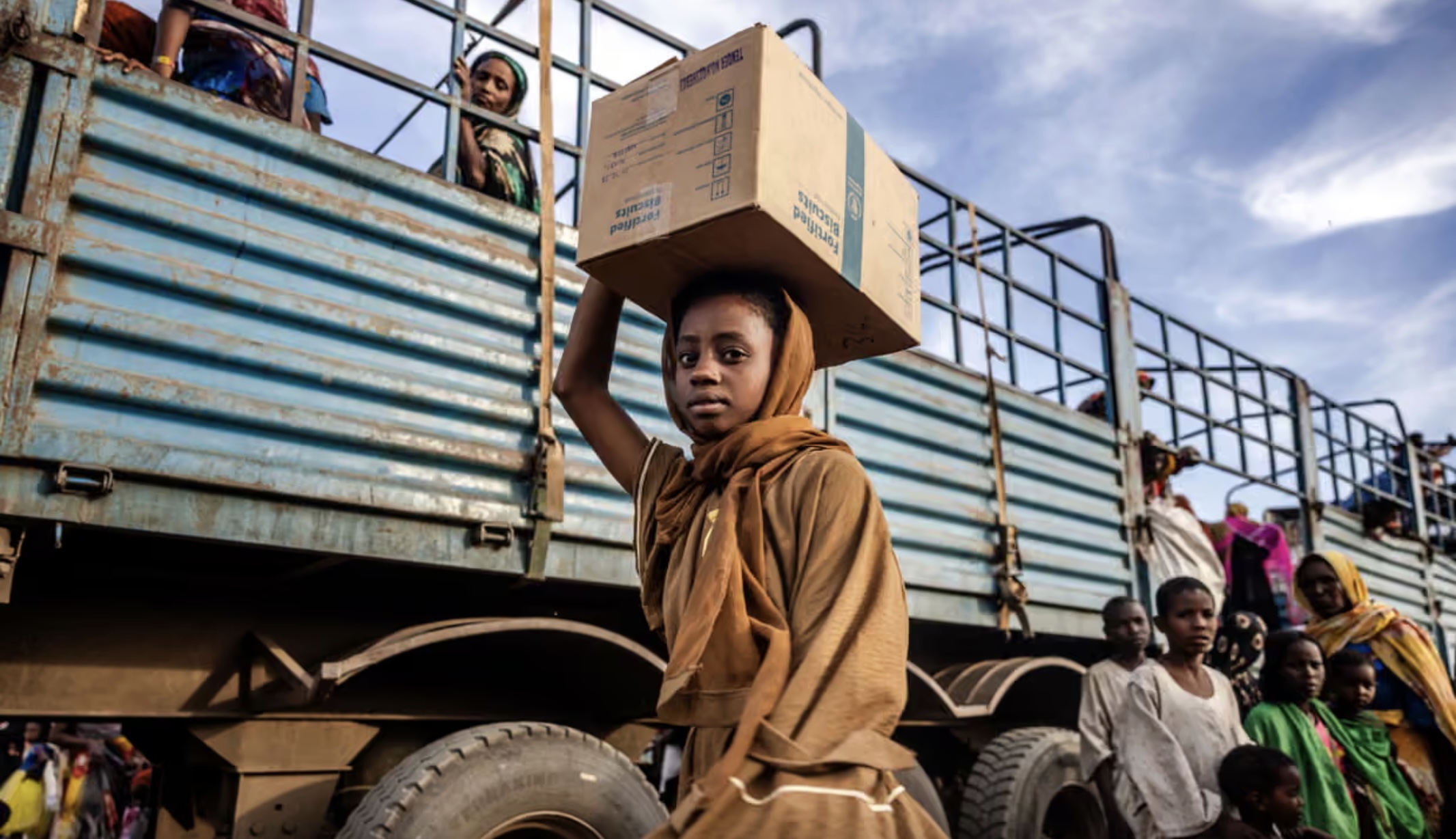
A Sudanese girl at a centre for refugees in Renk, South Sudan, 13 February 2024. Photograph- Luis Tato/AFP/Getty Images
The dirt has been so deeply soiled in the blood of innocent Sudanese civilians that it could be seen from space using satellite technology. Yet, the world remains silent on this crisis. Ukraine, Palestine, and Lebanon made the headlines. However, while Sudan has never dominated the headlines, the country was seemingly dropped by the media, cast aside and discarded as unimportant.
Millions of innocent people are crying with every fiber of their being just for their voices to be muffled, silenced, and degraded to the level of importance held by an Instagram post every once in a while.
In April of 2023, Sudan began to experience a catastrophic civil war, which led to one of the world’s most severe humanitarian crises. The civil war had been initiated between the Sudanese Armed Forces (SAF) and the Rapid Support Forces (RSF). The war was especially heated in Khartoum and Darfur.
According to the Oxfam report, “What’s Happening in Sudan and why you’re not hearing about it,” the civil war caused 150,000 deaths, forcing over 12 million civilians to flee from their homes, which then sparked widespread hunger, disease, and ethnic violence among the people of Sudan. The power struggle between the two factions (SAF and RSF) ignited the conflict during a fragile transition into democracy.
After an 18-month siege, the RSF seized Darfur and established, although forcibly, its control of all of Darfur’s state capitals. This forced takeover triggered the most violent of atrocities throughout Darfur and every district affected by the conflict. It triggered systematic race-based executions of civilians, with death tolls ranging from two thousand to tens of thousands. The brutal violence included gang rapes, kidnapping for ransom, and attacks on hospitals.
According to Asylos Research, “Sudan: The Situation in El Fasher – Spotlight Report Series,” one of the many acts of violence by the RSF was the massacre of over 460 patients at the Saudi Maternity Hospital in Sudan. Social media coverage has exposed acts of gruesome torture, often filmed by the RSF themselves, glorifying and publicizing their horrifying crimes against innocent civilians, including women and children. Sources noticed the pattern of murders having been directed mainly towards non-Arab civilians, essentially proving that the RSF is not only attempting to take over the government but also to initiate ethnic cleansing.
The fighting beginning in Khartoum and significantly affecting various other regions like Darfur has destroyed their infrastructure, impeding access to healthcare. Furthermore, millions of these innocent civilians affected by the genocide have been left without food or drinkable water. The United Nations estimates that over half of the population requires immediate humanitarian aid. Over 12 million people have been internally displaced or seek refuge in neighboring countries like Chad and Egypt.
The genocide has resulted in widespread international condemnation and investigation by the International Criminal Court into war crimes.
Sudan is rich in silver, iron ore, uranium, gold, oil, and agriculture. According to Al Jazeera, “The army holds much of the north and the east, including the capital, Khartoum, as well as other key cities along the Nile and the strategic Port Sudan on the Red Sea.” Al-Jazeera further reports, “Sudan is the world’s largest exporter of sesame seeds and gum arabic, which is used as a stabiliser and emulsifier by the global food and beverage industry and goes into pharmaceuticals, supplements, and cosmetics.” According to Brookings, Sudan has the third largest mass in Africa and shares borders with seven countries. The genocide taking place in Sudan has significant impacts, creating a ripple effect economically, socially, politically, and most importantly in humanitarian terms. When it comes to geography, Sudan is a key country to many in East and North Africa due to its relationship to the Nile River. Khartoum, the capital, is where the white Nile and the Blue Nile converge to form the Nile River.
Additionally, Sudan is located on the Red Sea, with the Red Sea city of Port Sudan serving as Sudan’s main seaport and the primary location for trade flows in and out of the region. Finally, Sudan served as a major transit route for African Muslims who wished to do the annual Islamic pilgrimage of “Hajj” to Mecca. These key points highlight Sudan’s importance in economics, geography, and religion, raising more attention as to why the genocide in Sudan has been so heavily ignored.
A factor that limits media coverage of the genocide in Sudan is limited access for journalists. The ongoing violence and instability make it incredibly difficult for reporters to have successful on-site coverage. Because of the lack of access and safety guaranteed to the press and journalists who want to cover the genocide, the public’s awareness continues to diminish.
This is especially true for women in the field. According to the United Nations, the genocide is now the world’s worst humanitarian crisis for women and girls. Who “make up more than half of the more than 12 million people displaced.” In addition, many of these women and girls “are being deliberately targeted with sexual violence.”
The world needs to pay attention.