

“A Human Experience” at the Sisson Gallery
Gallery
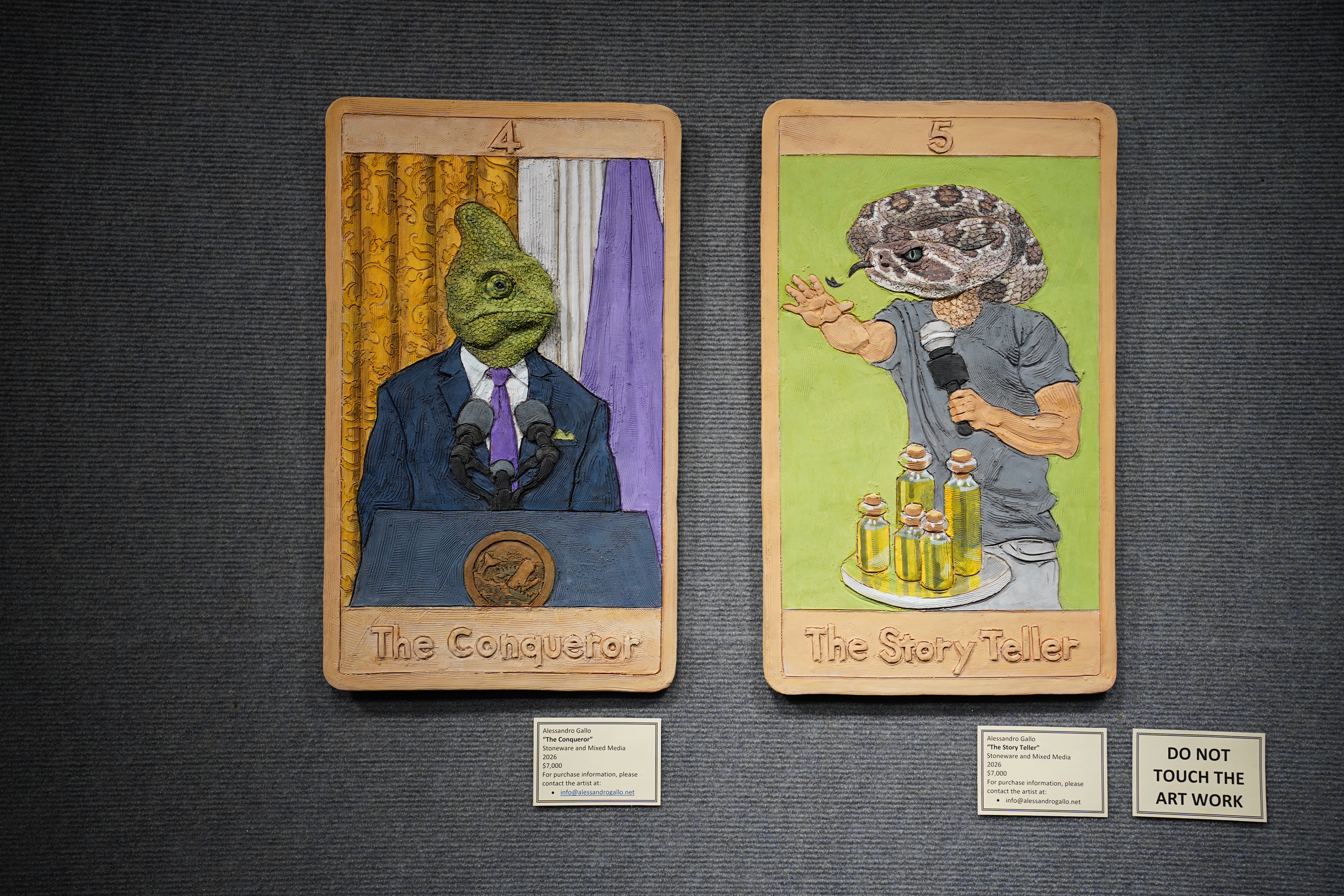
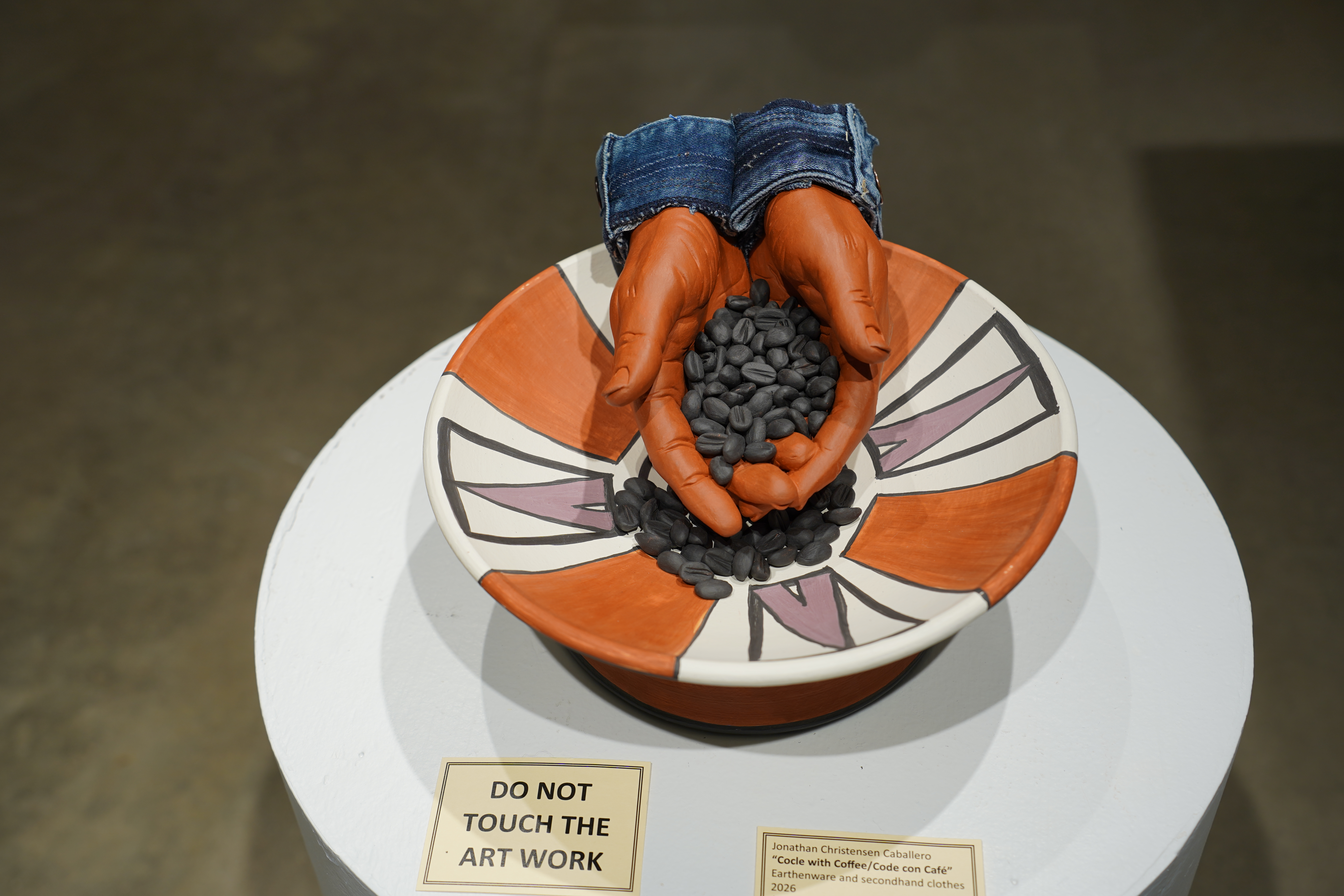
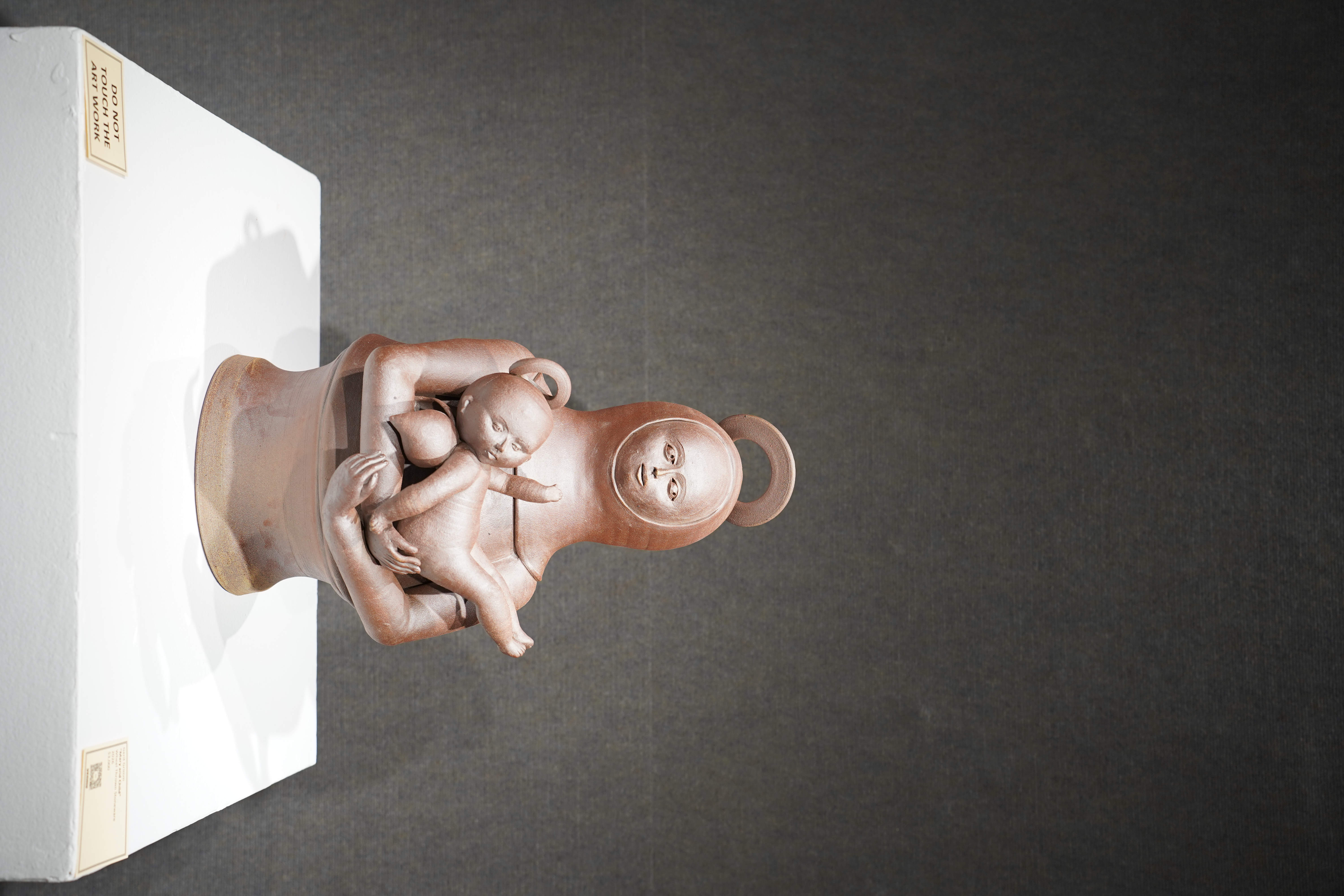

Walking into the Sisson Art Gallery, you don’t just glance at the artwork and move on. “A Human Experience” makes you slow down. The level of detail and craftsmanship is hard to ignore, with each piece showing a clear sense of skill and intention. Each piece pulls your attention in a different direction, making it hard to leave without stopping to figure out what it’s trying to say.
The exhibition, on display at Henry Ford College, is part of the National Council on Education for the Ceramic Arts (NCECA) Annual Conference, a national ceramics conference taking place in Detroit for the first time at Huntington Place. While the main event is happening downtown, this exhibit brings that same level of artistry directly onto campus, giving students a rare chance to experience it up close.
What makes the exhibition stand out is its focus on the human figure, but not traditionally or predictably. Some sculptures are detailed and realistic, while others are exaggerated or even a little unsettling. As you move through the gallery, the mood shifts from serious to playful to thought-provoking, and that constant change keeps you engaged.
Ceramics instructor Steve Glazer, who helped bring the exhibition to HFC, said that range is intentional. “It’s really about different facets of the human experience, everything from identity and culture to humor and imagination,” Glazer said.
For Glazer, the exhibition is personal. He has been connected to the conference for decades, first attending as a graduate student. “I’ve been going to these conferences for almost 30 years, I think I’ve only missed two,” he said, “When I found out it was going to be in Detroit for the first time, I got really excited. I wanted HFC to be part of it.”
That excitement turned into an opportunity when HFC was selected to host one of the conference’s top sponsored exhibitions, organized by Sean Clute. Featuring nearly 20 artists from across the country, the exhibition brings together a wide range of perspectives, styles, and ideas in one space, including several artists connected to HFC, such as ceramics technician Micheal George, retiree Diane Eberts, student Denise Widen, and alumna Katie Warden.
As you walk through the gallery, it becomes clear that the pieces are not randomly placed. Many are grouped in subtle ways, connecting ideas across different artists. It also encourages you to compare pieces without realizing it, noticing how different artists approach similar ideas in completely different ways. Some works focus on identity and immigration, while others explore culture, religion, or personal experience. A few use humor or exaggeration but still carry deeper meaning. “Almost everything here has a story behind it,” Glazer said.
One of the pieces that stood out to me the most was “American Apathy” by Kyle and Kelly Phelps. The title immediately caught my attention, but what really made it stand out was how the meaning comes through both the idea and the details. The composition brings together multiple figures in a way that feels tense and heavy, and the expressions add to that feeling. The craftsmanship is impressive, especially in the textures and small details, which feel intentional and well thought out. The piece references the issue of immigration enforcement, including deportation, and reflects the impact of those actions on individuals and families. That context adds another layer to the work, giving it a stronger emotional weight. It’s one of the pieces I kept thinking about after.
For students, especially those studying art, the exhibition also highlights the importance of understanding human figures. Even the most abstract or unusual pieces are built on that foundation. “You need to know how the figure works, how the muscles and bones structure function,” Glazer said, “Even if you’re doing something unusual, that knowledge matters.” Seeing that in person makes it easier to understand how much skill goes into even the most abstract work.
At a community college, it’s not every day that students get access to work like this. But “A Human Experience” brings professional-level art into a familiar space, making it easier to connect with ideas that might otherwise feel distant. By the time you leave, the exhibition’s title starts to make more sense. It doesn’t define human experience in one way; instead, it shows it through different perspectives, emotions, and stories. And that’s what makes it stay with you.