

Out of This World Visit From Interstellar Comet 3I/ATLAS
Gallery
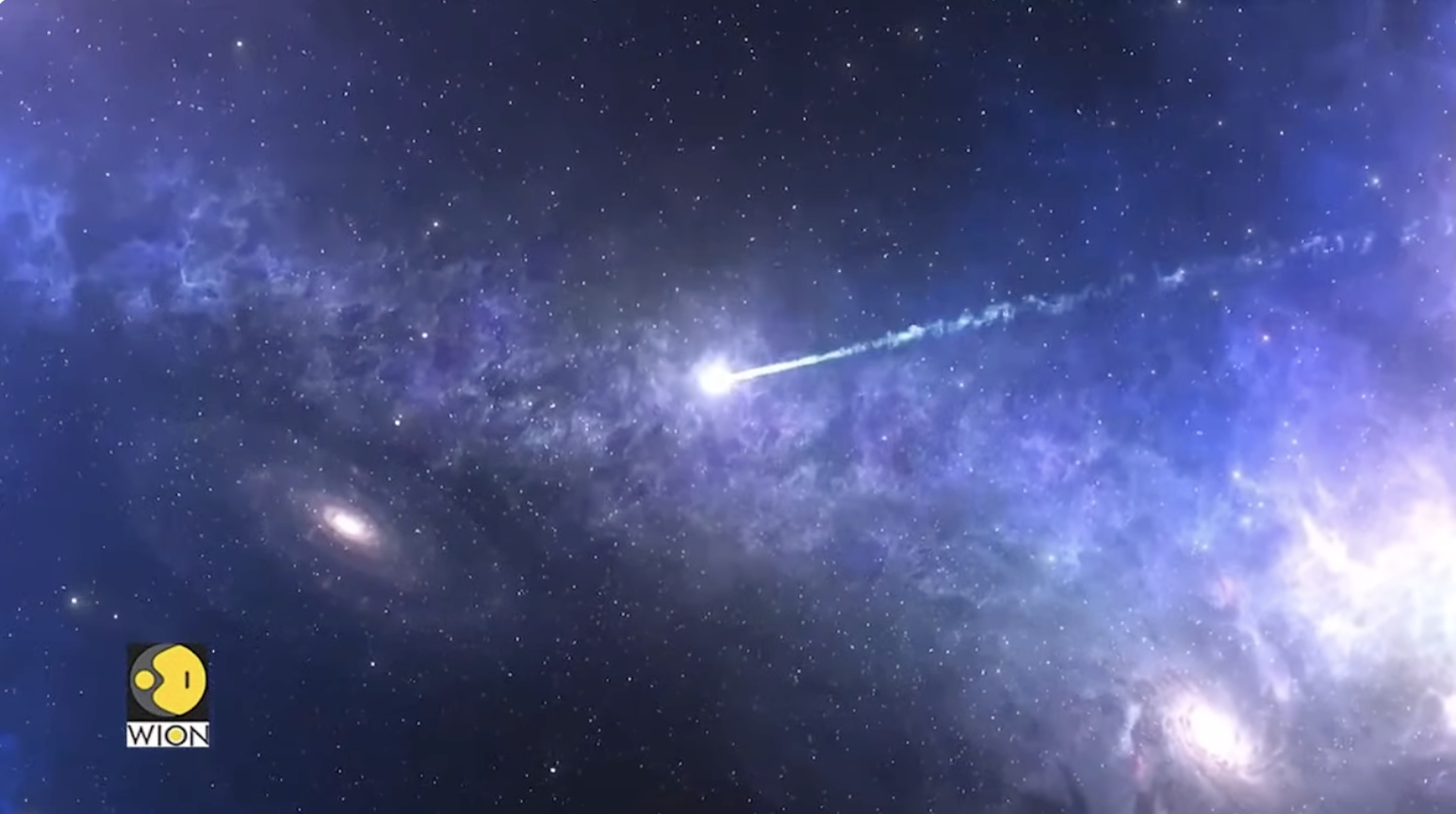
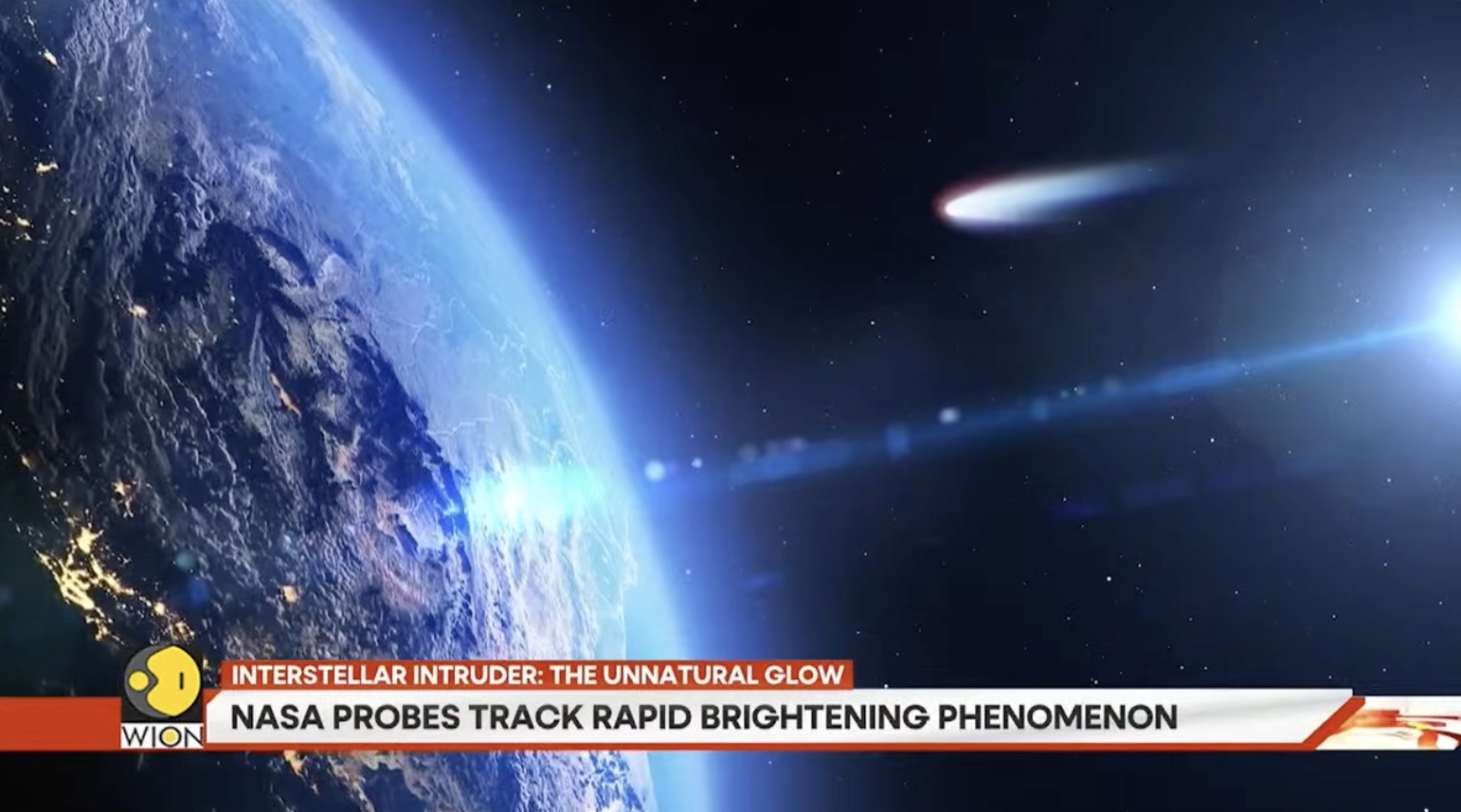
On July 1, 2025, a third interstellar comet, known as 3I/ATLAS, was discovered in Rio Hurtado, Chile, by the NASA-funded ATLAS survey telescope. This discovery follows the second interstellar comet 2I/Borisov, discovered in 2019, while the first interstellar comet was 1I/Oumuamua, discovered in 2017.
The 3I/ATLAS comet gets its name from being the third interstellar object found passing through our solar system, hence the 3I, and ATLAS, from being discovered by the ATLAS telescope. ATLAS stands for Asteroid Terrestrial-impact Last Alert System, and its telescope is part of NASA’s planetary defense network that continuously surveys the skies to keep our planet safe.
Estimated to be twice as old as our solar system, 3I/ATLAS was spotted travelling at around 137,000 miles per hour, and its trajectory was set for just inside the orbit of Mars before leaving our solar system. The astronomical speed of this comet, combined with its hyperbolic trajectory, meaning it is unbound by the sun, confirms its origins were from interstellar space.
Comets provide information about how solar systems form and the star they form from. Jesse Mason, professor of physics at HFC, explains that comets are “frozen time capsules from the beginning of solar systems.” Steven Murrell, faculty chair of Physics, Astronomy, and Earth Science at HFC, explained how our own solar system formed from a nebula, which had certain concentrations of different elements. The study of 3I/ATLAS provides insight into the different elements deep in space, far from our home.
The composition of 3I/ATLAS has proven interesting. It has many elements expected of a comet, but some factors of its composition are worth noting. Comets from our solar system are typically made mostly of water vapor, carbon dioxide (CO2), ammonia, methane, dust and rocky material. Interestingly with 3I/ATLAS, the CO2 levels are much higher than water vapor content compared to other comets studied. A recent discovery from the Atacama Large Millimeter/submillimeter Array (ALMA) telescope revealed that 3I/ATLAS contains an abundant amount of the organic molecule methanol, a highly toxic and flammable alcohol. While methanol is commonly found on comets, recent studies have now named 3I/ATLAS as one of the most methanol-rich comets ever studied.
A unique feature 3I/ATLAS has displayed, and one that has gained much attention, is its anti-tail. Some argue it is only a perspective trick from the angle of the tail and the sun, while others argue it is the true nature of this interstellar comet.
Murrell explains that comets contain a nucleus, often referred to as a “dirty snowball,” and can be the size of a small mountain or city, though sizes can vary. Most comets are far from the sun and stay frozen but as they travel closer, the nucleus begins to heat up and sublimate, which is when the ice turns directly to gas. That gas and dust surround the nucleus, called a coma, and as incoming solar wind blows off the nucleus, it creates a tail.
Interestingly enough, there are actually two tails that form. One, from smaller molecules and atoms, which the solar wind blows easily, and another one from bigger chunks, producing a dust tail. Both tails always point away from the sun. An anti-tail behaves differently. “An anti-tail points towards the sun,” Murrell explained, “and that doesn’t happen very often in our solar system.”
While rare, this doesn’t exactly point to anything extraordinary. While some could take this information as a violation of all the rules, Murrell clarifies: “It is, but it isn’t.” He explained the reasoning behind this rarity. He explained that the unique composition of 3I/ATLAS causes the particles to sublimate differently than those in our comets. Those chunks create “jets” out in front of it, and since the chunks are larger, it allows them to travel in front of the comet longer before they sublimate, creating the rare anti-tail.
When 3I/ATLAS was first discovered, the term “aliens” was commonly thrown around. When people hear the word interstellar, they commonly think of interstellar travel. There were numerous reports of the comet behaving erratically. Combine that with the fact that it contains large amounts of nickel, and the public jumped on the possibility of an alien spacecraft almost immediately.
Mason said, “If aliens are going to visit our solar system, they are probably not going to do it riding a comet. I’ve yet to see any evidence whatsoever that the interstellar objects are space ships in disguise.” Scientists have put the alien theories to rest, assuring the behavior is nothing out of the ordinary and poses no threat to Earth. Murrell explained that these types of misinformation luckily never really make it into science; they tend to stay on social media only, amongst the public.
While 3I/ATLAS has been in the spotlight for many different reasons, the most obvious is that it is from interstellar space. Mason didn’t experience too much excitement upon hearing of its discovery, but agrees that its most exciting feature is that it is interstellar.
Mason expressed, “To get a time capsule from another solar system, to do a fly by is very cool.” The comet may reveal similarities between other solar systems and our own. Mason explained how we need more data before drawing any big conclusions, but overall, it’s been showing signs of being normal. He describes it as “kind of like astronomical Pokémon.” Mason observes, “We’ve already collected a Charizard. Another one is nice and useful, but we’re not expecting it to be a game changer.”
Upon hearing the news of 3I/ATLAS, Murrell didn’t experience the excitement he did with the interstellar comet Oumuamua, but he expressed that 3I/ATLAS’s anti-tail was fun to learn about. It even impacted the material he will be teaching in the future. Murrell explained that he currently teaches that comet tails always point away from the sun, but will now teach his students about the anti-tail produced by 3I/ATLAS, giving them a real-world example.
Comets are important to study because they not only provide information about the solar system but also about Earth’s history. Scientists believe that the majority of water on our planet was delivered by comets. The study of interstellar comets can provide even more insight into the nature beyond our solar system and even the history of our universe.
Murrell expects further interstellar comets to be discovered frequently due to improved technology, as better tools will better detect them. ”I would be surprised if every couple of years, we don’t see one,” he said, “and it doesn’t make it any less exciting, it just means that maybe this is more common than we thought.”
While this is only our third interstellar visitor that current technology has allowed scientists to observe, it surely will not be the last. Having moved past Jupiter in March, 3I/ATLAS will exit Saturn’s orbit by late 2026, continuing on its path to leave our solar system forever. While its time here was short, the information we have gained has been extraordinary.
Murrell describes 3I/ATLAS as “most likely the most observed comet ever.” He explained that over the next year or two, many peer-reviewed articles will be published, declaring, “those are the ones to always trust.”
For more information regarding 3I/ATLAS, other interstellar visitors, or any space-related information, visit nasa.gov or space.com.