

Dinosaur Discoveries in 2026: Doolysaurus huhmin and Spinosaurus mirabilis
Gallery
Within the first quarter of 2026, there have been exciting discoveries made in the world of paleontology. The field of paleontology as a science is experiencing something of a “Golden Age” where cutting-edge technology and expanded research access allow paleontologists to discover new fossils roughly once every 10 days. Paleontologists are underpaid compared to their laborious work; despite that, the sheer volume of their discoveries is astonishing and shows no signs of slowing.
On March 19, a baby dinosaur fossil was found on South Korea’s Aphae Island by a team of researchers—namely Jo Hyemin—from the Korean Dinosaur Research Center and the University of Texas. The discovery marks the country’s first fossil discovery in over 15 years. South Korea is known paleontologically for its abundance of footprint–or trace–fossils; however, this recent discovery is one of only two other dinosaurs described in the nation.
Jung Jonghyun, lead researcher from the University of Texas, assisted in naming the genus of the dinosaur Doolysaurus after a well-known South Korean children’s cartoon, “Dooly the Little Dinosaur.” The species name, Huhmin, was named after Huh Min, founder of the Korean Dinosaur Research Center, who has a career in the field spanning over three decades.
The tiny Doolysaurus fossil dates back 113-94 million years ago during the mid-Cretaceous period. Researchers suspect it to have been about two years old at the time of death based upon growth markers on the femur bone. The Doolysaurus is a thescelosaurid; a group of small, bipedal dinosaurs suspected to be covered in feathers—Doolysaurus is no bigger than a turkey. As a thescelosaurid, Doolysaurus is closely related to the second dinosaur ever formally discovered, the Iguanodon.
Doolysaurus huhmin was found encased in hard rock, which typically takes decades to be completely excavated by hand. However, researchers discovered intricate details about the dinosaur in mere months. This was due to micro-CT scanning based at the University of Texas High-Resolution X-ray Computed Tomography facility. With this technology, researchers uncovered that Doolysaurus had gastroliths in its stomach, otherwise known as stomach stones. These indicated that Doolysaurus was an omnivore, needing the stones to assist in shredding food for digestion. Additionally, skull bones were discovered through micro-CT scanning, the first time such vital fossils have been found in South Korea.
The progress of this discovery is astounding and exciting for South Korean-based researchers. The adorable, fuzzy Doolysaurus huhmin is a rare find in South Korea that highlights the success in advancing paleontological technology.
To learn more about Doolysaurus huhmin and the works of the Korean Dinosaur Research Center and the University of Texas, visit https://news.utexas.edu/
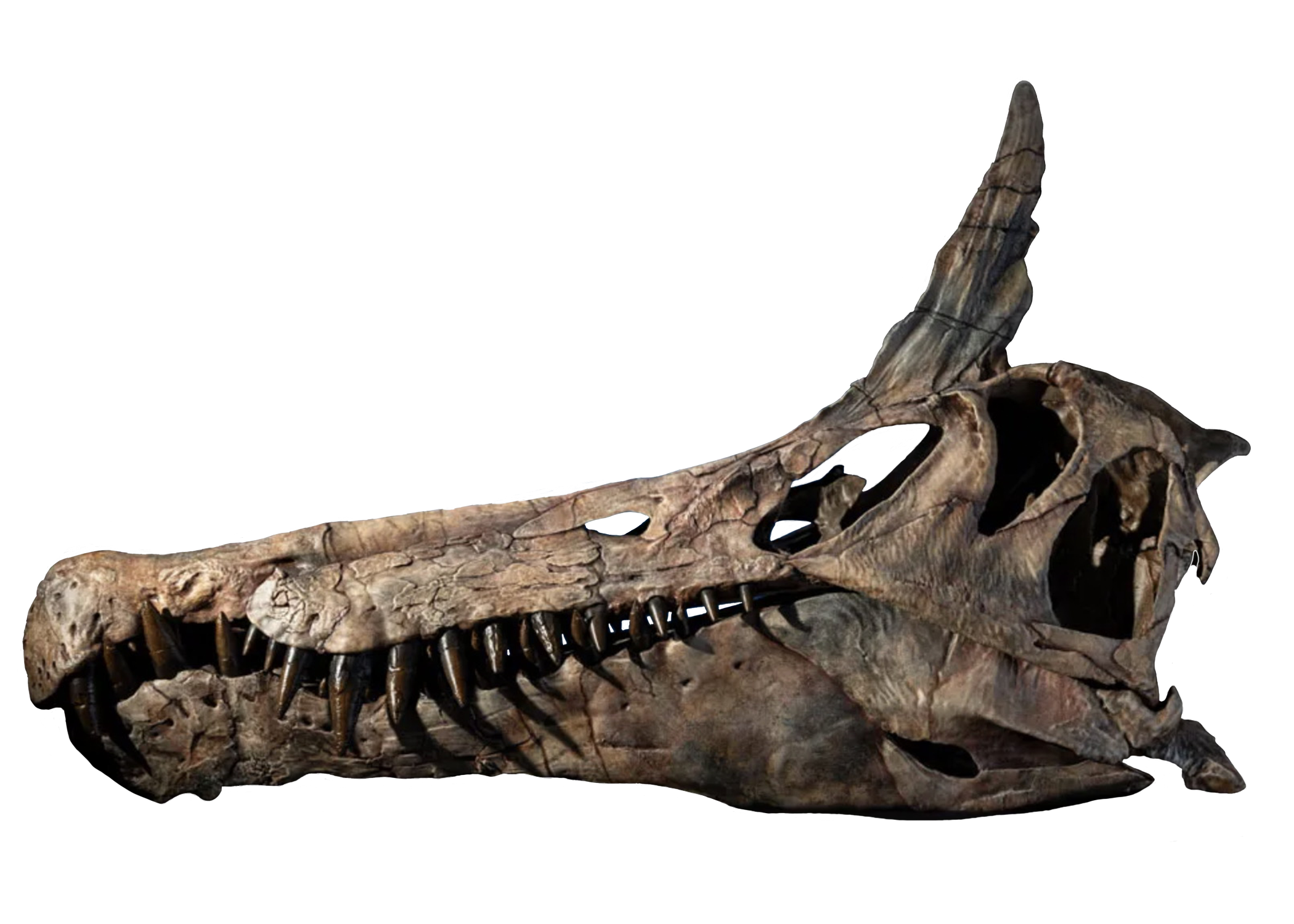
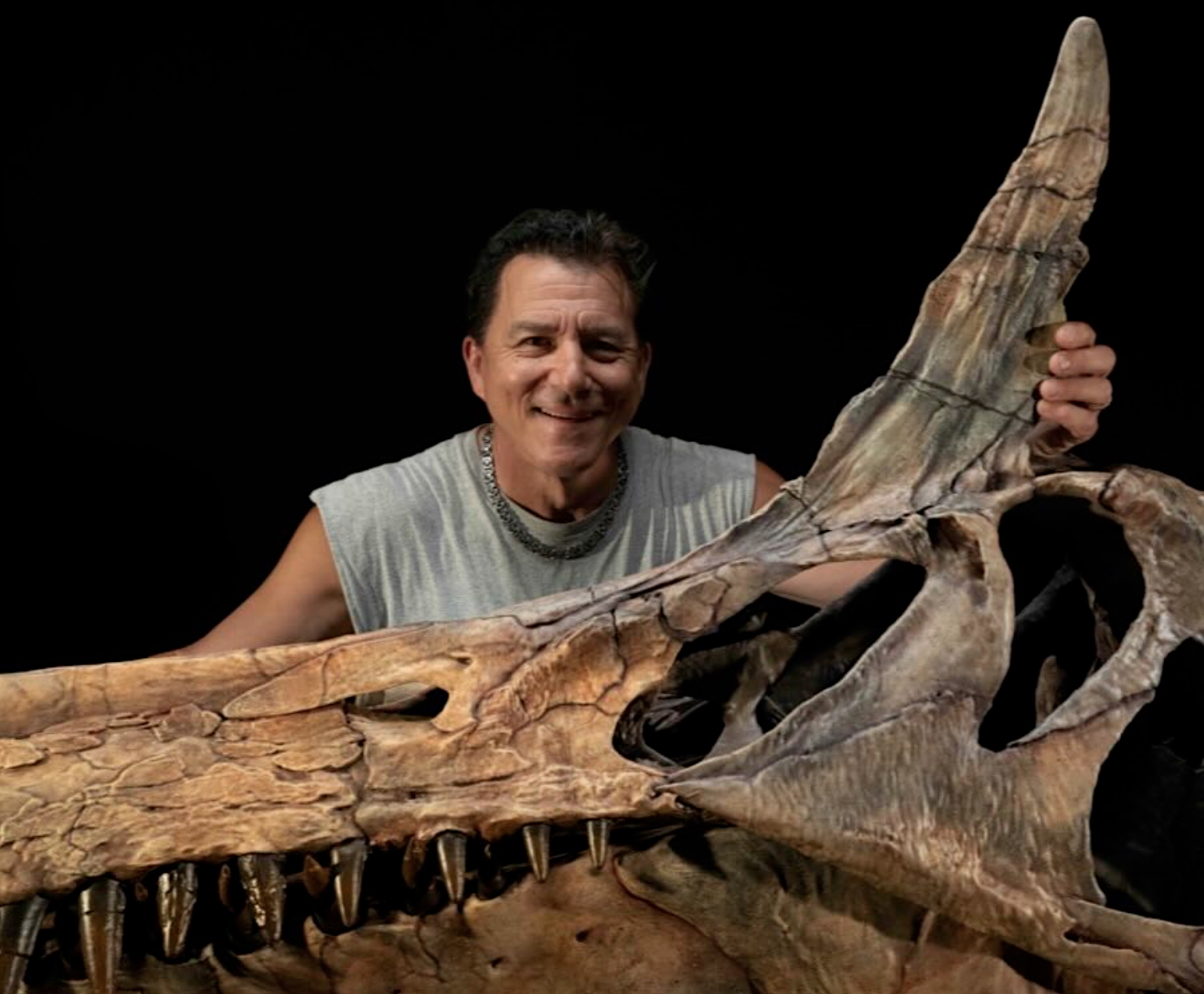
Perhaps the most exciting—and popular—discovery of 2026 is the new species of unicorn-crested Spinosaurus known as Spinosaurus mirabilis, formally published Feb. 19. The skull fossil measuring over 8 meters, or 5 feet, was discovered in the Farak Formation of the Sahara Desert in Niger, Africa, a dig site virtually forgotten by researchers for 70 years until recently. S. mirabilis was notably identified by its scimitar-shaped head crest, which researchers liken to finding a unicorn. The new Spinosaurus species, nicknamed “hell heron” by lead researcher Paul Sereno, was named mirabilis, meaning astonishing in Latin, for its remarkable head crest.
The discovery marks the first of its genus unearthed since S. aegyptiacus was described in 1912–the first ever of the Spinosaurus family to be discovered and whose original remains were destroyed during WWII. The discovery of this new species of Spinosaurus has led researchers in the right direction in learning more about these elusive dinosaurs.
While scientists have known the beloved Spinosaurus to be fish eaters who waded in the shallow waters, S. mirabilis is the first of the species to be found in what would have been a complex river system 95 million years ago. Paleontologists speculate that S. mirabilis may have had such a distinctive head crest to attract mates or ward off enemies in the shallow waters. The crest was found to be covered in keratin, meaning it was most likely even longer when the dinosaur walked the Earth.
Like other members of its genus, S. mirabilis has a “fish-snaring” jaw that would have made it a skilled fish hunter, an adaptation that the modern crocodile features. Scientists have long suspected Spinosaurus to be ambush shoreline hunters, and there is still debate over whether the dinosaurs were ambush divers as well. With the discovery of S. mirabilis, these questions are one step closer to being answered.
The combination of S. mirabilis’s large head crest and extraordinary back-sail would have made it a commanding and breathtaking sight in the ancient world. To learn more about S. mirabilis and the work of Paul Sereno’s research team, visit https://paulsereno.uchicago.edu/