

State Violence and the Politics of Sympathy
Gallery
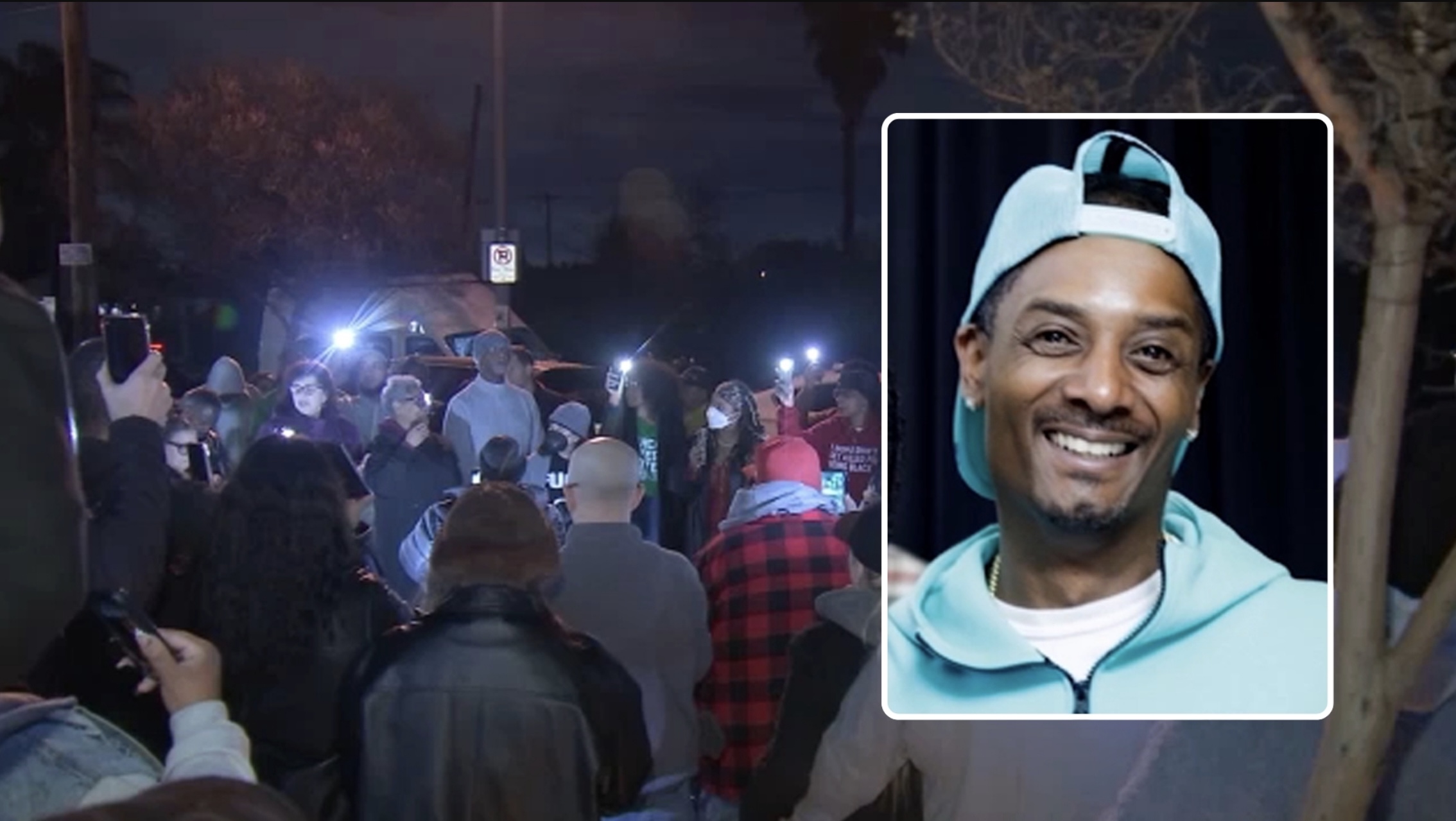
On New Year’s Eve, Keith Porter Jr., a 43-year-old Black father of two, was shot and killed by an off-duty ICE agent in his own front yard in Los Angeles. Just one week later, on January 7, 2026, Renee Nicole Good, a 37-year-old White mother, was killed by an ICE agent during a raid in Minneapolis. While both were U.S citizens by birth and killed by federal agents under questionable circumstances, the national response revealed a deep-seated racial disparity in empathy, resources, and outrage.
The death of Renee Good triggered an eruption of condemnation, leading to nationwide protests and a GoFundMe campaign that reached $1.5 million in a matter of 2 days, while Keith Porter’s GoFundMe stalled at a mere $31,000–only jumping to $302,000 after Renee Good’s GoFundMe was closed. His story struggled to gain traction even as activists pointed to the blatant double standard. This gap is not accidental; it is proof of a system that treats White deaths as shocking anomalies and Black deaths as routine.
The media and political response to Good was quick and intense, involving the resignation of six federal prosecutors in Minnesota who protested the Department of Justice’s handling of the case. Porter, however, received less scrutiny. The Los Angeles police refused to identify the shooter for weeks and provided little to no information on the investigation, allowing the state to frame Porter as an “active shooter” without any pushback from the public.
Sociological research consistently shows that White women and girls are prioritized as “ideal victims” who are portrayed as innocent and “worth saving,” a phenomenon dubbed as “Missing White Woman Syndrome.” This same hierarchy of victimhood applies to those killed by the state. While Renee Good was described as a “Good Samaritan” and a “beautiful human” by the public, the Department of Homeland Security’s attempts to label her as a “domestic terrorist” were met with widespread disbelief and outrage from local officials.
Keith Porter’s reputation, on the other hand, was immediately ruined by official accounts that focused on his firing celebratory gunshots into the air, a common New Year’s Eve tradition, which the state used to justify his death sentence. For Porter, humanity and the right to public grief were conditional upon perfect behavior, whereas for Good, empathy was granted as an inherent trait of her identity.
The disparity in handling these cases suggests that outrage is conditional; the public grieves when they can “see themselves” in the victim. Because the majority of the population can more easily relate to the “damsel in distress” or the “innocent neighbor” archetypes when they are White, cases like Good’s become “mega-cases” that command state-level priority.
When the victim is Black, the system relies on stereotypes to dehumanize them, frequently labeling them as “suspects” or “criminals” regardless of the facts. This empathetic failure not only influences media coverage but also dictates the distribution of investigative resources, as law enforcement feels less public pressure to solve cases involving Black victims.
Keith Porter’s death was a tragedy. His life mattered. Renee Good’s death was a tragedy. Her life mattered. I am angry and disgusted at what has happened to both of them.
And two things can be true at once: America’s handling of these two tragedies proves that citizenship means very little when it is weighed against race. The massive mobilization for Renee Good compared to the institutional shielding in the Keith Porter case reinforces a racial hierarchy where White lives are treated as sacred and Black lives as disposable. Until the nation refuses to ration its outrage based on the color of a victim’s skin, the system of state violence will continue to operate with a license to disappear those it deems unworthy of empathy.
May Keith Porter Jr. , Renee Nicole Good, Heber Sanchaz Domínguez, Victor Manuel Diaz, Parody La, Luis Beltran Yanez-Cruz, Luis Gustavo Nunez Caceres, Geraldo Lunas Campos, Jaime Alanis Garcia, Jose Castro-Rivera, Nenko Stanev Gantchev, Delvin Francisco Rodriguez, Foud Saeed Abdulkadir, Jean Wilson Brutus, Shiraz Fatehali Sachwani, Pete Sumalo Montejo, Francisco Gaspar-Andres, Kai Yin Wong, Gabriel Garcia Aviles, Hasan Ali Moh’D Saleh, Leo Cruz-Silva, Miguel Angel Garcia-Hernandez, Huabing Xie, Norlan Guzman-Fuentes, Ismael Ayala Uribe, Santos Reyes Banegas, Oscar Duarte Rascon, Lorenzo Antonio Batrez Vargas, Chaofeng Ge, Tien Xuan Phan, Isidro Perez, Johnny Noviello, Jesus Molina-Verya, Abelardo Avelleneda-Delgado, Marie Ange Blaise, Nhon Ngoc Nguyen, Brayan Rayo-Garzon, Juan Alexis Tineo-Martinez, Maksym Chernyak, Serawit Gezahegn Dejene, Genry Ruiz Guillen, and the still unnamed 52-year old Chinese woman who committed suicide on March 29, 2025 at a U.S.
Border Patrol station in Yuma, Arizona all rest in peace. May we cry all of their names. And may the world refuse to forget the lives Brian Palacios, Johnathan Ross, and other officers chose to end.