

Dian Fossey: 40 Years Since the Loss of a Conservation Pioneer
Gallery


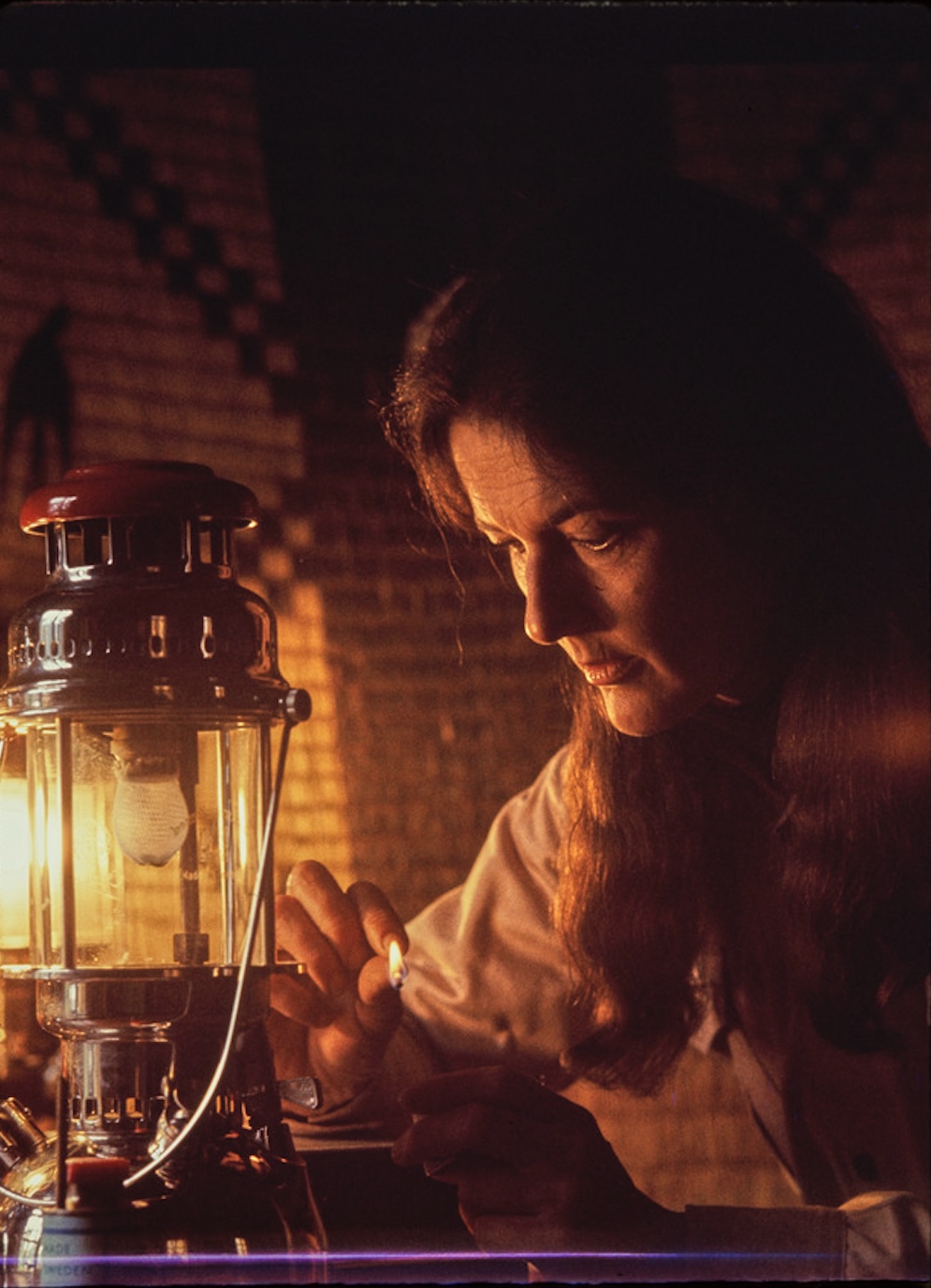
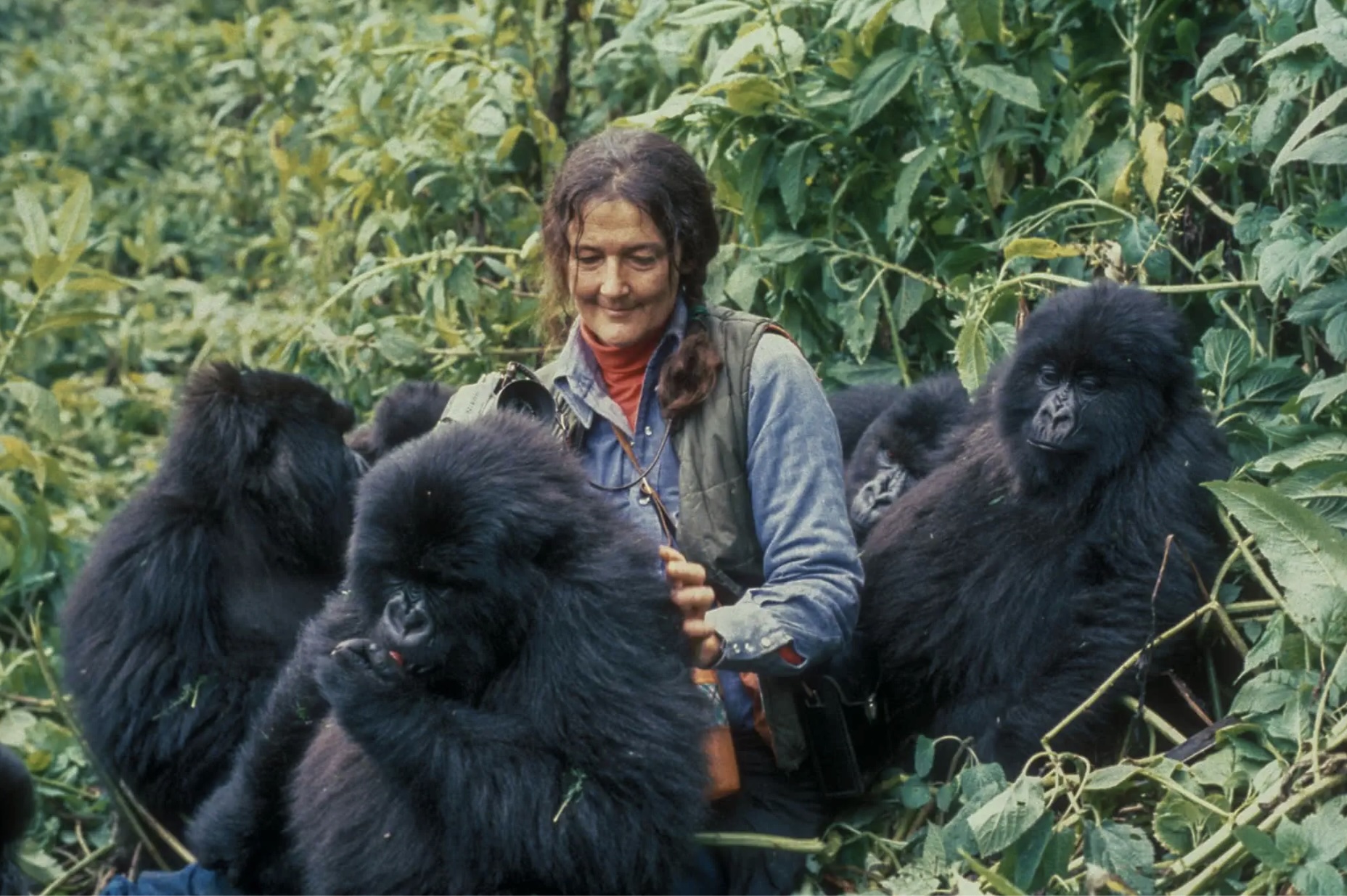
Dian Fossey with gorillas. Rwanda 1969. Photo by Bob Campbell, National Geographic, University of Florida’s Digital Collections.
Dec. 26, 2025 marks the 40th anniversary of the death of Dian Fossey. Fossey was an American primatologist and conservationist known for her pioneering studies on mountain gorillas in Rwanda, Africa. Fossey had a posthumously published memoir titled ‘Gorillas in the Mist’, which chronicled her thirteen-year-long expedition studying mountain gorilla behavior and biology in Rwanda. The title remains the world’s best-selling book on gorillas and was turned into a film sharing the same title in 1988, starring Sigourney Weaver, who has been a long-term donor to the Dian Fossey Gorilla Fund and holds an Honorary Chair on the Board of Directors.
Fossey was a fearsome and passionate conservationist who devoted her life to mountain gorillas in Rwanda up until her murder in 1985. She lived–and died–at her self-established Karisoke Research Center (founded in 1967) in Volcanoes National Park in Rwanda, where she conducted her field work, successfully habituated gorillas, and befriended many of them.
Fossey’s resting place is in a gorilla graveyard that was established for her deceased gorilla friends, many of whom were killed by poachers, including her favorite gorilla, Digit, whom she is buried alongside. Fossey’s headstone reads, “No one loved gorillas more. Rest in peace, dear friend. Eternally protected in this sacred ground. For you are home where you belong.” Fossey lived and died protecting the mountain gorillas she called friends, and her legacy is felt in the region all these decades later.
While Fossey’s later years and death are controversial, the impact she made in the field of conservation and for Rwanda’s mountain gorillas is undeniable.
Fossey first established the Digit Fund in 1978, shortly after his brutal murder. A grief-stricken Fossey created the organization to raise funds for anti-poaching patrols in the Karisoke study area, pursuing an increase in muscle to destroy snares and provide better protection for the gorillas.
After Fossey’s murder in 1985, the Digit Fund was renamed the Dian Fossey Gorilla Fund in her honor. Since then, the non-profit organization has expanded and continues to operate successfully today.
I spoke with Dr. Erika Archibald, the Communication Specialist at the Dian Fossey Gorilla Fund, who has been with the organization for more than 20 years.
Archibald reassured that the organization’s basic mission “hasn’t changed.” The Dian Fossey Gorilla Fund now has over 400 staff members in Rwanda and the Democratic Republic of the Congo. While the organization still focuses on studying and protecting gorillas, there has been expansion in areas of community and educational outreach, which Archibald calls “the four pillars” of the Dian Fossey Gorilla Fund.
“[We want] to help create new scientists, new conservationists, and a greater awareness of Gorilla conservation in the areas where gorillas are found,” Archibald said. “A lot of our education takes place in Africa, and we have a very robust program here.”
Every year, the Dian Fossey Gorilla Fund collaborates with roughly 7,000 primary school children and 3,000 secondary school children to educate them about gorillas and inspire young conservationists. Additionally, hundreds of graduates, undergraduates, and early-career scientists study at the Ellen DeGeneres Campus, where they receive training in research methods, scientific communication, and hands-on conservation biology.
Recently founded in 2022, the Ellen DeGeneres Campus is a research and education center dedicated to Dian Fossey, showcasing 60 years of gorilla conservation and serving as an opportunity for aspiring wildlife students to connect with staff. 85% of student researchers at the Dian Fossey Gorilla Fund pursue careers in conservation.
“We’ve had dozens of our young staff members and students studying with us in Rwanda that go on to become leaders, teachers, and professors in their own right.” Archibald expressed. “We even have one who started with us as a student from the University of Rwanda. She spent her senior year working and doing research with us, then went on to get a PhD. Now she’s the Minister of Environment for the entire nation of Rwanda.”
Not only does the Dian Fossey Gorilla Fund support the education and conservation of gorillas, but it also provides resources for local indigenous peoples and other communities. Through the Village Vitality Program, the organization supports and educates the communities surrounding gorilla habitats. Communities are taught about sustainability while being conscious of maintaining balance in their natural resources, with a focus on food security and economic security.
One example is the foundation’s mission to support indigenous peoples and local communities in beekeeping, a significant stewardship in the biodiversity of the mountain gorilla’s habitat.
Additionally, the organization invests in an educational program called Girls in Conservation, which emphasizes educating secondary school girls. These young women are supported through mentorships, scholarships, and workshops while being encouraged to be confident in their own voices and positions in the conservation field.
The Dian Fossey Gorilla Fund has fostered numerous successes in the world of conservation. Most importantly, the Rwandan mountain gorilla population is “a very rare case of a conservation success story,” as Archibald puts it. “We can say that since we’ve worked here, the killing of gorillas has stopped.” A success that Archibald describes as “the big one.”
Rwanda’s mountain gorillas receive daily protection and monitoring. The organization has an entire database that records essential gorilla information such as photographic identification, genetic studies, diet, and surrounding flora and fauna.
Archibald shared that mountain gorillas are “the only primate in the world whose population is not declining,” rather, their population is “increasing, and that’s because of the intensive decades of protection, study, research, and partnerships that have been put towards their safety.”
Mountain gorillas, like all primates, offer us a glimpse into ourselves, as they are one of our closest relatives.
Archibald shared, “In 2012, there was a full genetic study on a gorilla. They share a little over 98% of their genome with humans.” This study supports Dian Fossey’s unwavering devotion to mountain gorillas, whom she considered her family.
When asked what humans could learn from gorillas, Archibald expressed, “They are much better at protecting and enhancing their environment than we are. They don’t harm their environment. In fact, they benefit their environment.”
Gorillas are one of the many mammals given the title “Gardeners of the Forest.” Mountain gorillas eat hundreds of species of plants and constantly move from area to area across the forested mountains. While they travel, they eat some plants but leave many behind, maintaining balance, and dispersing seeds in their excrement as they travel. They are natural fertilizers and stewards of the mountains, hence the name, “Gardeners of the Forest.”
“They are beneficial,” Archibald said. “I can’t think of any way in which they’re not beneficial to their environment. We certainly can’t say that about people.
”
Fossey was an inspirational and resilient conservationist who pioneered the protection of mountain gorillas and the practice of anti-poaching methods. She lived and died beside her gorilla friends, serving as a symbol of determination, passion, and devotion.
Archibald expressed, “For people thinking of going into the field, [Fossey’s death] is something they could think about.” She said that conservation work is “very physically challenging, and it can therefore be very psychologically and emotionally challenging.”
Archibald said, “[There will be taxing] things that you have to do, [upsetting] things that you will see, and obstacles you have to overcome.”
Conservation work in the Rwandan mountains and the Democratic Republic of the Congo is dangerous and requires years of expertise and experience. Particularly in the Democratic Republic of the Congo, the high, rainy altitudes where the gorillas live are remote and tricky to access. Trackers and researchers have to venture into the forest for two or more weeks at a time to reach the gorillas.
Another major challenge when it comes to gorilla conservation in the Democratic Republic of the Congo is navigating the hostile political climate. The Democratic Republic of the Congo has been in a civil war primarily regarding natural resources since the mid-1990s.
Conservationists risk their lives amidst these treacherous human and environmental conflicts for the sake of the gorillas.
Regarding these conservationists, Archibald said, “[You need to have] the sheer determination to just keep going. Dian Fossey showed that, and I think everybody who works there today does the same.”
The Dian Fossey Gorilla Fund, conservation students, and community supporters continue to carry Fossey’s legacy decades after her tragic murder. It has been 40 years since Fossey departed the Earth she stewarded selflessly, but because of her pioneering effort, the Rwandan mountain gorillas live on today.
For more information on mountain gorillas and the Dian Fossey Gorilla Fund, visit gorillafund.org.