

Redbull Gives You Risk of Heart Palpitations
Gallery
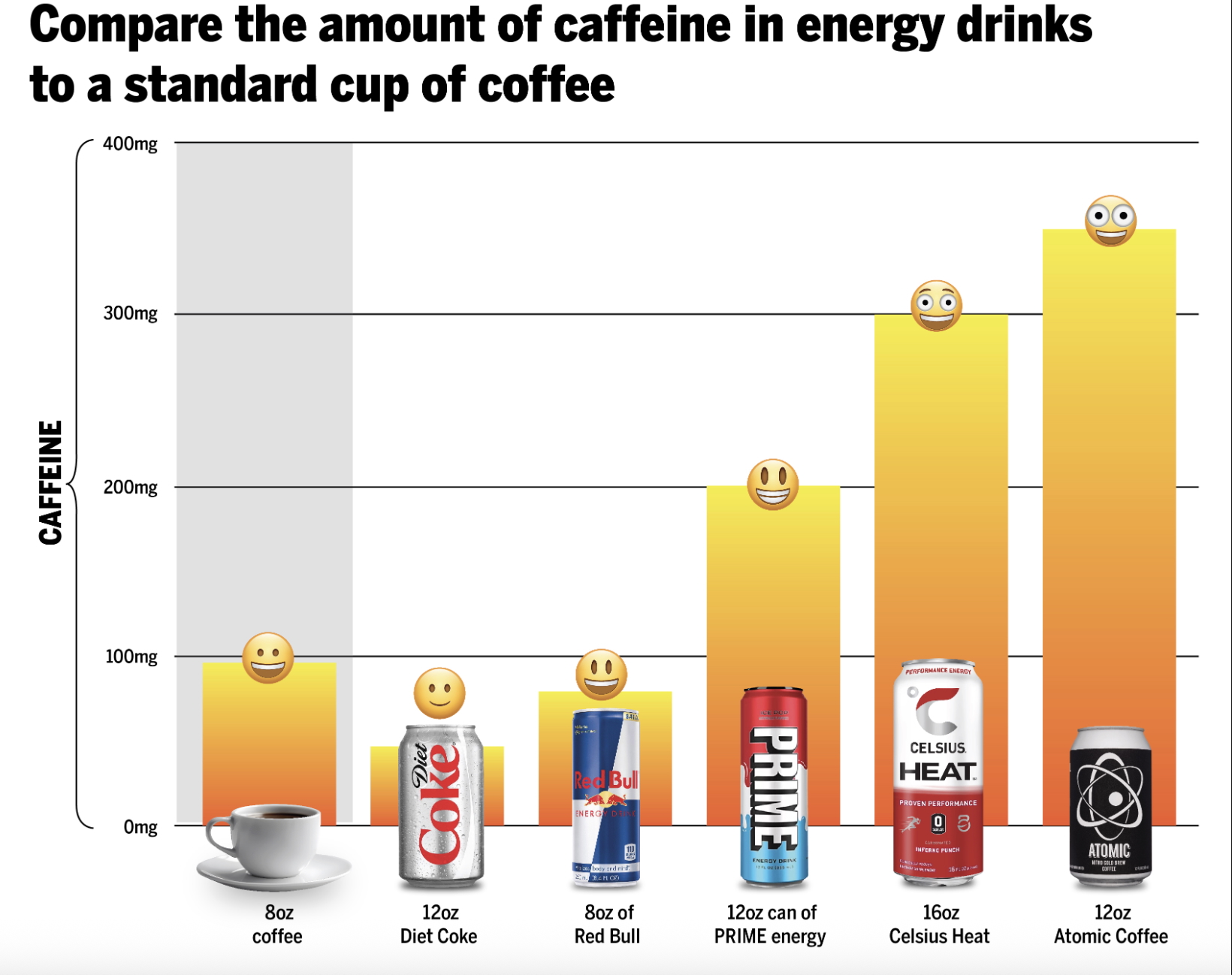
Among college students, energy drinks are often used to provide energy for studying or working on assignments. During exam week, consumption of energy drinks increases as students balance school, part-time jobs, and extracurricular activities, relying on these drinks to stay alert and focused. While they may help students, frequent use can negatively impact both mental and physical health, leading to anxiety, heart complications, insomnia, and dehydration. Common ingredients such as caffeine, sugar, B-vitamins, and taurine contribute to these side effects. According to UC-Davis Health, “Caffeine is the primary stimulant in energy drinks. Too much caffeine can lead to heart palpitations, increased heart rate, and high blood pressure.”
Energy drinks like Red Bull, Monster, Celsius have gained popularity due to aggressive marketing towards young adults, especially athletes and gamers. Brands often sponsor gaming tournaments, extreme sports events, and social media influencers while promoting a variety of flavors that appeal to younger consumers. Some brands are marketed with a focus on health and wellness, suggesting that they contain more natural ingredients. As a result, energy drinks continue to attract consumers who consider them beneficial, often without knowing about the potential health risks.
According to an academic study titled, “A survey of energy drink consumption patterns among college students,” 51% of college students drink more than one energy drink each month during the semester. Insufficient sleep was the most common reason. Many of them reported consuming these beverages to increase their energy and to drink with alcohol while partying. Another reason students used energy drinks was to study or complete major course projects.
HFC Journalism student Alaina Schnell found that energy drinks helped her manage her busy schedule: “I started drinking energy drinks in the second semester of my freshman year of college. I wasn’t used to the workload and felt that coffee wasn’t strong enough to keep me awake. Energy drinks keep me awake much longer, allowing me to study for extended periods of time without “brain fog” or the mental exhaustion I had experienced the previous semester. I still drink energy drinks because I am a very busy person. Between being a full-time student, Editor-in-Chief of The Mirror News and a part-time student researcher, and in the process of transferring, all the while trying to maintain a social life, I can easily fall into mental fatigue or burnout. But energy drinks have helped me to maintain a relatively high GPA and juggle my responsibilities.”
While discussing the health risks associated with energy drink consumption, HFC Physics student Victoria Tan said, “It’s definitely not good for the cardiovascular system. It’s a stimulant that increases blood pressure and the development of kidney stones.”
HFC Pre-Engineering student Joseph Strzempka added, “I know that in excessive amounts it can harm the liver. If you’re drinking like three cans a day for a year, you’ll probably notice some things.”
While she hasn’t experienced negative side effects, Schnell reported, “When I consume more than one can, I experience increased heart rate, shakiness, and at times, restlessness.”
Energy drinks are widely available, but there is lack of understanding of ingredients, and misleading marketing. This is especially concerning due to the fact that younger consumers are targeted by energy drink companies. It’s worth considering healthier alternatives to energy drinks, such as tea, working out, and proper rest.