

Gen Z’s Memory Vacuum and the Entrenchment of Populism
Gallery
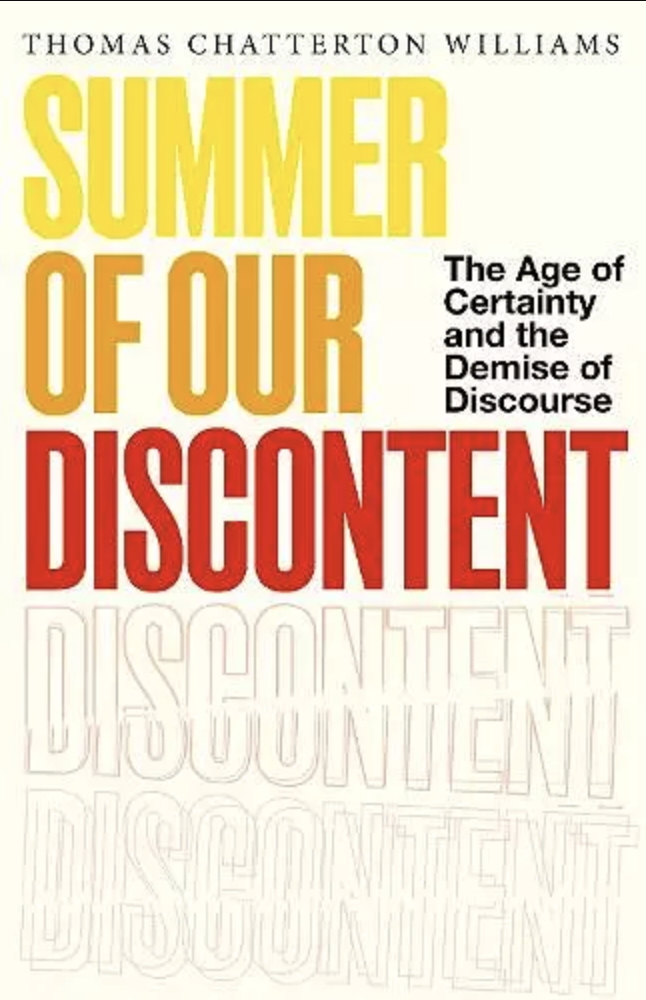
In “Summer of Our Discontent,” Thomas Chatterton Williams offers an account of the chaos of the early 2020s: Covid-19, the death of George Floyd, the excesses of cancel culture, and the January 6th insurrection, while tracing the forces that laid the foundation for the ascent of MAGA and the end of Obama-era optimism. Williams underscores a generational divide in lived experience that leaves Gen Z struggling to make sense of today’s political landscape.
Gen Z came of age during the rise of populism and hasn’t held a presidential ballot without Trump’s name. Over the last decade, politics has felt existential; charisma and fealty have been the primary qualifications for public office, and grievance has become the basis of individual and national identity.
As an early Gen Z myself, I found his diagnosis of our cultural splintering a refreshing origin story because it names the delta in civic life experienced by Gen Z, compared to millennials who rode the wave of “hope and change” during Obama’s terms as president.
Because of this, “Summer of Our Discontent” acts as a historical record that can aid upcoming generations in escaping the morass of the last ten years of politics. Williams’s book functions as a counterweight to Gen Z’s lack of political memory, helping explain both the generation’s susceptibility to, and its pivotal role in, the entrenchment of populism.
The subtitle of “Summer of Our Discontent” is “The Age of Certainty and the Demise of Public Discourse.” The book examines the paradox that, even as the information landscape has fragmented, media commentators—and many ordinary citizens—continue to assert moral certitude regardless of an issue’s complexity. Williams offered a possible explanation in an interview with Kmele Foster. When discussing the influence of wokeness on public discourse, Williams asserted that wokeness is “...a kind of constellation of attitudes and etiquette and manners that are essentially implemented to redistribute recognition…Socialism is redistribution of wealth, but wokeness is really the redistribution of recognition.”
In an era of mounting economic inequality, a diminished shared reality, and thin forms of meaning-making, recapturing status is especially appealing. One of the characteristics that defines Gen Z, according to the psychologist Jean Twenge, is a heightened sense of social responsibility. This mechanism allows Gen Z to garner rank in exactly the language of their shared currency.
With little else as a means to efficacy at scale, Gen Z has made this flattening of complexity central to social and civic life. Millennials and Gen Z scorn the overly individualistic America they inherited from Reagan-era politics. Still, due to the breakdown of third spaces, the rise of social media, and the isolation of COVID-19, young people are increasingly living their lives in a hyper-individualistic manner. The attempt to “redistribute recognition” via activism and social presence stands in for the financial stability and milestones (such as purchasing a home) that are out of reach for most of Gen Z. Combined with Gen Z’s lack of memory of any political alternative, this dynamic has driven the rise of zero-sum thinking.
In “Summer of Our Discontent,” Williams goes so far as to say: “The arc of the American moral universe, wherever it ultimately bends, has been warped by the competing pressure of a social-justice movement that has grown impatient with the liberal project, and a reactionary populism that both feeds off and weaponizes that impatience. The result is a politics—and a society—dominated by grief and fury.” A throughline of grief is inseparable from the Gen Z coming-of-age. While this quote isn’t aimed explicitly at framing that experience, it helps make sense of the over-correction away from classical liberalism.
Williams approaches each of these combustible topics with a sense of proportion to their origins and influence. He pays steady attention to the emotional history underlying these debates but maintains adherence to a deeper set of moral principles. Turning over ills from both the right and the left illuminates the broader degradation of the information ecosystem without relying upon in-group loyalty. His ability to synthesize cultural, political, and personal threads while maintaining a historical eye gives weight to his commentary. “Summer of Our Discontent” models a form of discourse that is neither hysterical nor cynical, which makes it a valuable resource for young people who need a bulwark against the fragility of democracy, the seductions of tribalism, and the exhaustion of political incoherence.
“Summer of Our Discontent” directly challenges typical discourse by holding no favor for right or left movements. This is seen as “bothriderids” by some, but according to research by PPI, young voters drifted rightward in the last election. Yet YouGov and The Economist find that among that same group; the current administration’s approval ratings are at an all-time low.
In three years, the first of Gen Alpha will come of age to vote; what kind of electoral system they inherit will be determined by the decisions made in the coming years. It is not enough for young voters to move away from the dominant political parties—they need to understand what they are moving towards and why. In this journalist’s opinion, Thomas Chatterton Williams is precisely the kind of writer who can provide a footing on that journey.