
“Infinite Variety” of Glass at the Stamelos Gallery
Gallery
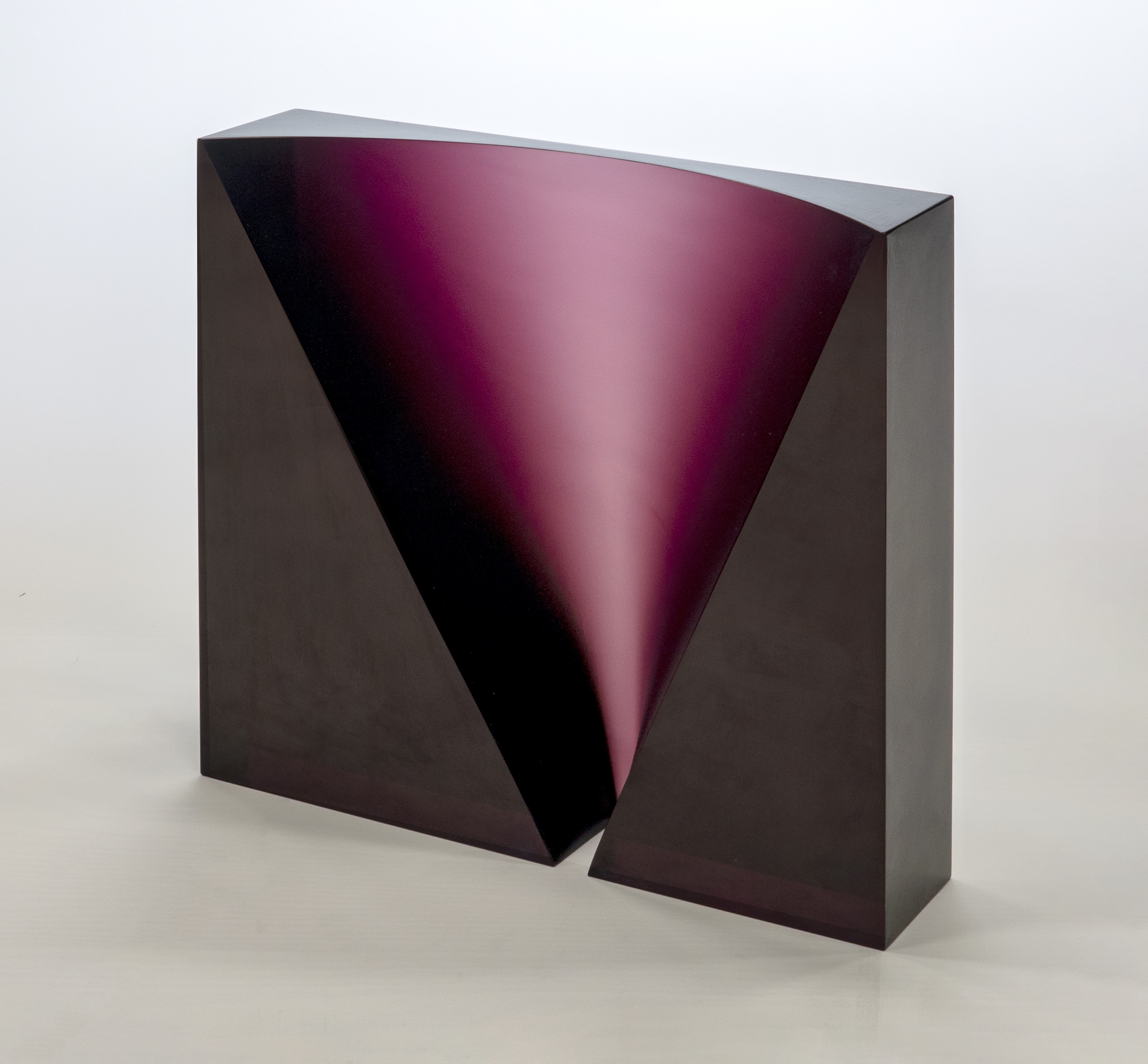
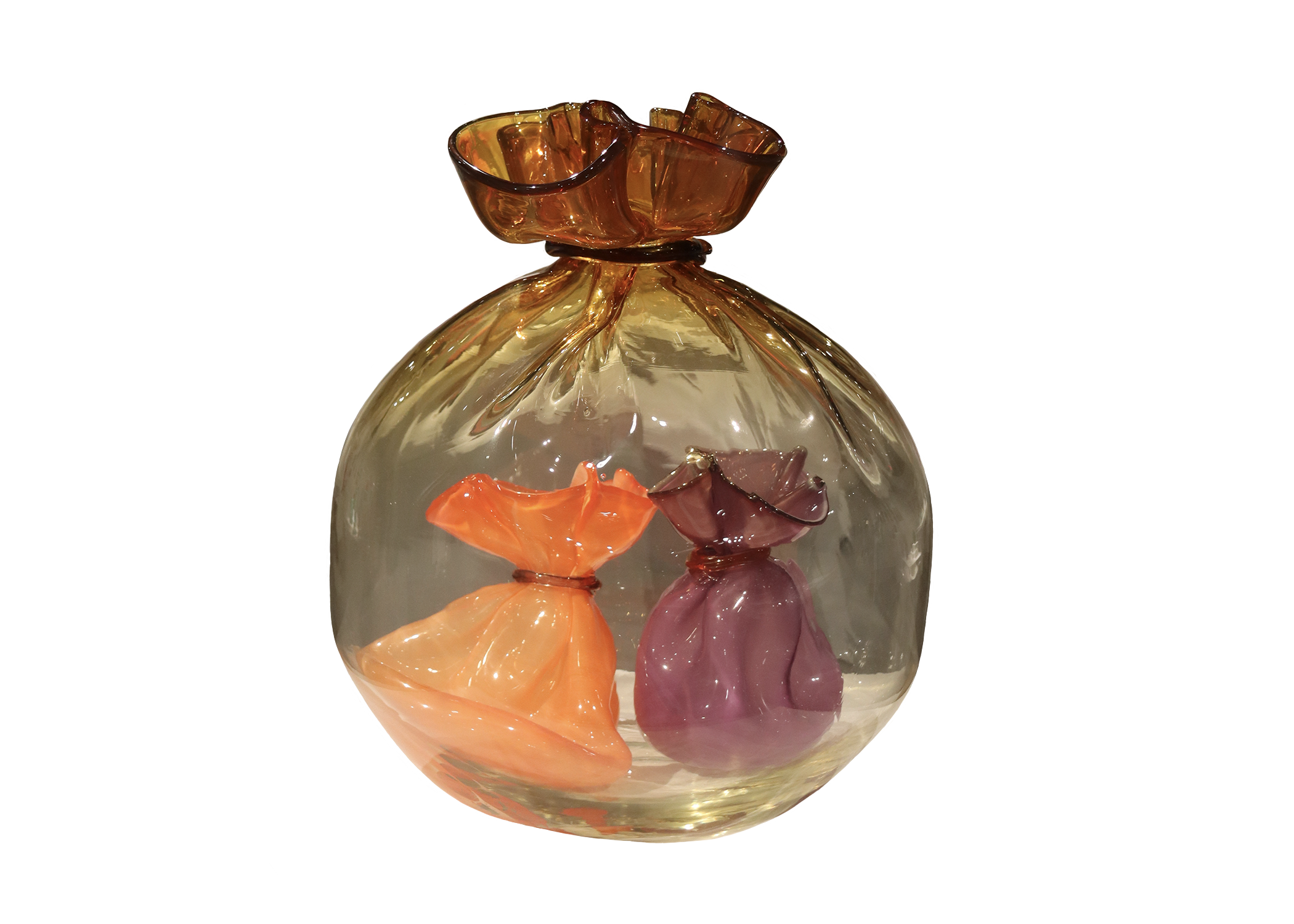
The Stamelos Gallery exhibit titled “Infinite Variety: Selections from the UM-Dearborn Glass Collection” is the product of a two-year-long capstone seminar for art history museum studies majors taught by Diana Y. Ng, associate professor of art history. Gallery manager Laura Cotton and gallery registrar Autumn Muir curated the exhibit.
Ng said she “looked through [the university’s] database of all of the glass objects, and there were certain pieces that kind of jumped out at me as having some kind of similarities, whether it’s in terms of how they, to me, seem to evoke different natural shapes or forms, or, the prismatic shapes, or whether they connect to famous artists and artworks or seem to belong to certain artistic movements.”
Ng explains that once the exhibit’s idea is planned, the capstone seminar begins: “We have the students research the objects, work with the curator, and with the gallery to study the objects.” The students then “go on different field trips and have them look at similar types of artwork and speak to museum professionals,” Ng said.
The exhibition is divided into five themes: Ancient and Modern, Light, Nature, Prism, and Art. The students then chose one of the theme groups and worked to organize the exhibit. “We wanted to have a sense of flow so that people could make their own connections,” Ng added, ”We wanted to let people have that freedom in terms of encountering these artworks.”
The exhibition is meant to display the versatility of glass as an art form and highlight the different traditions of glassmaking. The exhibit features works from around the globe, particularly Western Europe and Eastern Asia. The gallery also showcases many different styles and techniques, from miniature vases by German artist Lauscha to the abstract collage of color of “Prisoner of Continuity” by Scott Chaseling.
Ng explains the shift in mentality artists had towards glass as a medium. During the American studio art movement in the 1960s, artists began experimenting with different media, such as glass. “They were trying to reject the idea of glass only being a functional material,” according to Ng, “even prior to that, there were a lot of people who were trying to figure out how glass connects with traditional crafts.” This history is shown in pieces like “Taketori Tale,” created by Japanese artist Kyohei Fujita. Two boxes are made from colorful glass that is meant to resemble Japanese lacquer and silk boxes.
The exhibit features many pieces by Czechoslovakian artists who focus on cast and sculpted glass as opposed to blown glass. “Krystal” by Jan Frydrych, “Jupiter” by Petr Hora, and an untitled work by Vaclav Cigler are displayed side by side, each sculpted to bend light through the glass, producing vibrant colors and shifting, multicolored reflections. According to the placard next to the display, the works represent the classic methods of glassmaking in Czechoslovakia as well as the political circumstances in which they were made: “The mid- 20th century Soviet dictates against ’subversive art’ exempted glass as it was considered ’merely’ craft. In this space outside state control, Czech glass artists freely expressed themselves in abstract forms.”
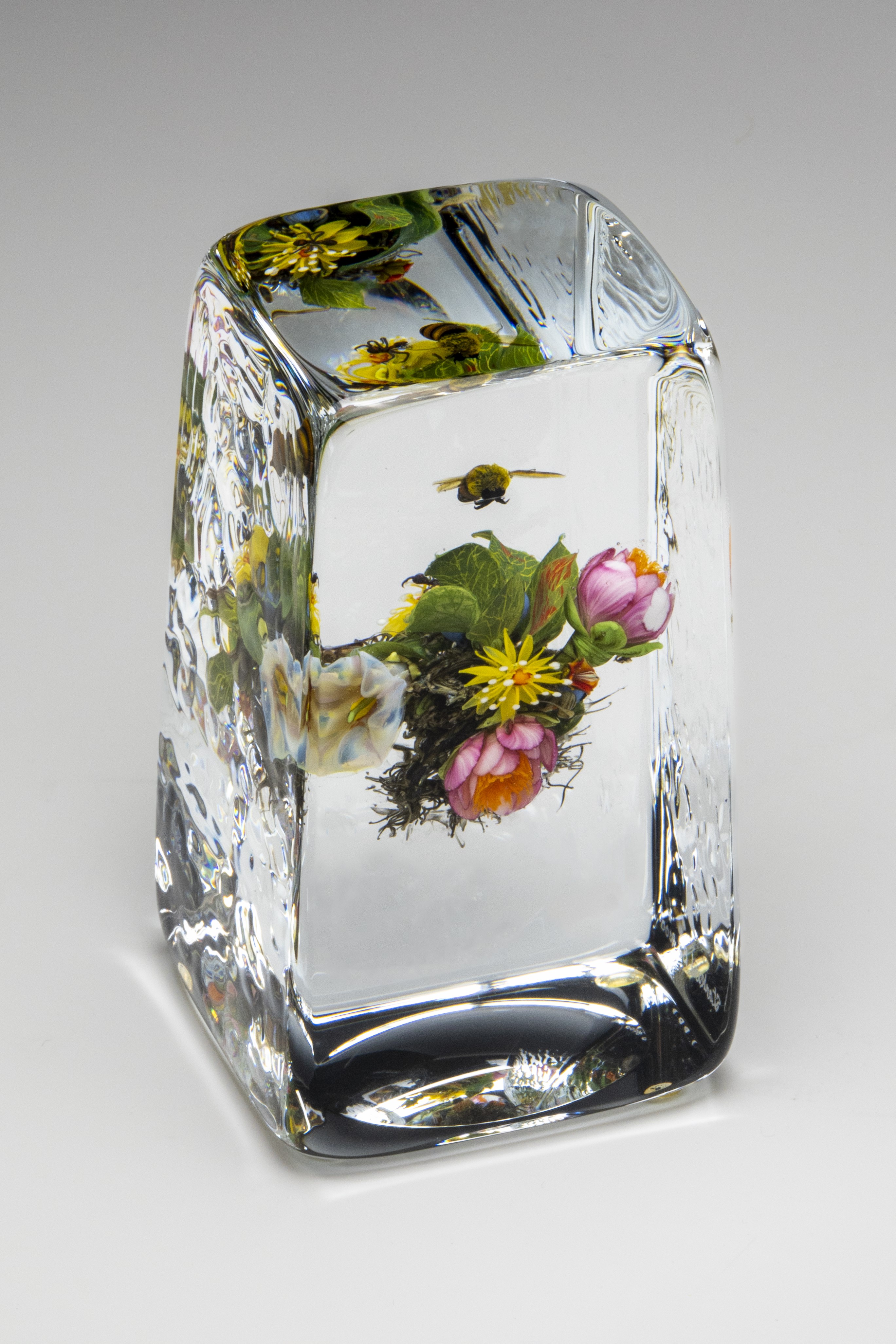
Nature was another theme of the exhibition. Pieces like Paul J. Stankard’s “Pineland Bouquet” and “Orchid Cluster Paperweight” are small realistic sculptures of flowers with their roots encased in clear glass. Through a process called flameworking, Stankard creates the flowers, leaves, roots, and bugs, then encases them in clear glass at a lower temperature. This gives them the appearance of flowers frozen in ice when, in reality, it’s all glass.
Other pieces in the Nature section are a bit more abstract, like “Mast Cell” by Kim Harty. A bowl made up of small flat disks of blue, purple and clear glass “uses this ancient Roman technique of mosaics, where you form individual rods with the different colors, and then you cut segments of these rods into little discs, and then you basically fuse them together in an oven, in a kiln, and drape it over this form,” Ng explains, “But what Kim Hardy was doing was combining this ancient technique with an investigation about biology and genetics, because each of those little pieces in this mosaic are based on microscope photographs of mast cells. This is part of a series of different kinds of cells, and so it’s kind of thinking about the body, thinking about disease.”
The exhibit expertly combines past and present, showcasing the expansive range of glass as a fine art. Though the pieces themselves are separated in their own sections, the exhibition comes together into a beautiful blend of light, color, nature and art.
“Infinite Variety: Selections from the UM-Dearborn Glass Collection” is open to all visitors and runs until Sunday, April 26, at the Stamelos Gallery in the Mardigian Library at the University of Michigan-Dearborn.