
The National Science Bowl at HFC
Gallery
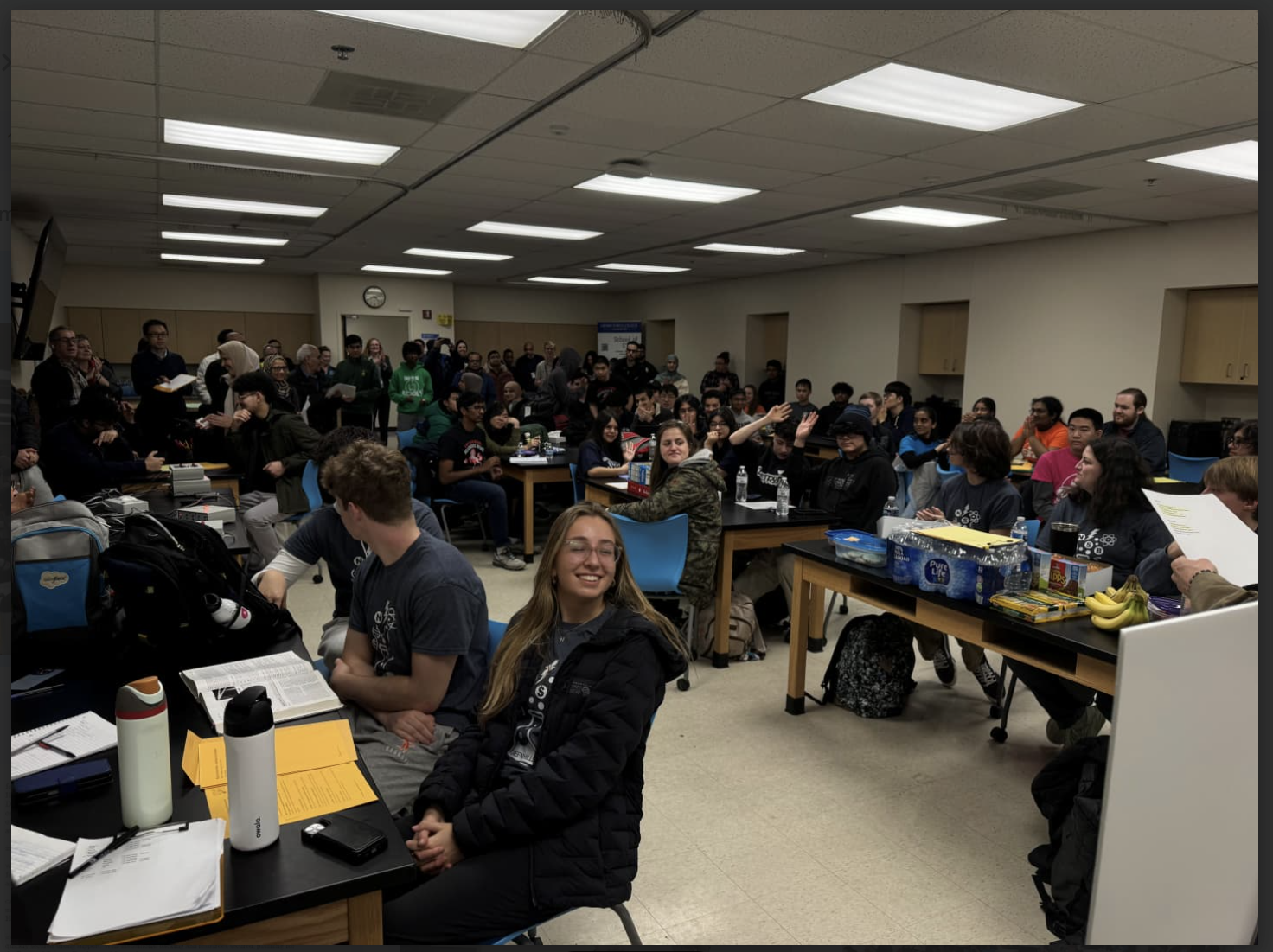

On Feb. 20, Henry Ford College became more than a place of learning. It became a stage for the brightest young scientific minds in Michigan. For the first time, HFC hosted the Michigan High School Regional Science Bowl, a prestigious national competition organized by the U.S. Department of Energy, which drew 10 teams from seven high schools across the state, including one team traveling all the way from Saginaw. The event, held in the STEM Hub (Room G-110) of the Health Sciences Education Center, ran from 7:45 a.m. to 2:30 p.m. and left everyone who attended with a sense that something truly special had taken place.
But behind this landmark event was not a committee of administrators or a long-standing institutional initiative. It began with a single student and a single idea.
Hamza Alfares, a student in the Henry Ford II Honors Program, is not the kind of person who keeps ideas to himself. After competing nationally through HOSA, a student organization focused on health sciences, he saw how academic competitions can shape a student’s confidence, ambition, and career direction. He wanted other students to have access to the same opportunity.
“As a national-level HOSA competitor, I saw how participating in academic competitions can build confidence and spark long-term interest in a field,” he said. “That experience motivated me to contact the national office of the Science Bowl and propose bringing the competition to Henry Ford College.”
After contacting the national office, Alfares brought the idea to his mentor, mathematics instructor Sam Bazzi. Bazzi then presented the proposal to the College administration, where it quickly secured strong support. With institutional backing and resources secured, planning for the Regional Science Bowl moved forward.
“This Regional Science Bowl started with a student’s idea. Hamza saw an opportunity for our college to host something big that would inspire students across our region. We made it happen,” said Bazzi.
Alfares believed Henry Ford College was an ideal host. “The college’s strong academic environment and commitment to student engagement make it an ideal place to offer students a meaningful, nationally recognized STEM experience,” explained Alfares.
Organizing a regional science bowl is no small feat. Bazzi was named the Michigan Regional Science Bowl Coordinator, a role requiring direct planning and coordination with the national office in Washington, D.C. Alfares became the co-regional coordinator, and his responsibilities were immense.
“As a co-regional coordinator, I am one of the directors of the entire event, overseeing every aspect from start to finish,” said Alfares. “I led the planning process alongside Mr. Bazzi, the regional coordinator, and worked closely with high schools, faculty members, and volunteers to organize the event and manage all logistics to ensure the competition ran smoothly. On the day of the event, I managed the schedule, oversaw the rounds, addressed any unexpected challenges, and made sure both students and coaches had a smooth, engaging experience.”
Mr. Bazzi was a great help in planning the Michigan Regional Science Bowl and making sure everything ran smoothly on competition day. During the planning process, he assisted with organizing logistics, confirming details, and keeping important tasks on track. On the day of the event, he helped coordinate materials, supported volunteers and teams, and addressed issues as they came up. His steady involvement and attention to detail played an important role in ensuring the competition went efficiently. He embodies the qualities of an outstanding advisor and regional coordinator.
One of the most strenuous aspects of preparation, Alfares noted, was building the volunteer team. “The biggest challenge in organizing this event was recruiting volunteers. It was a demanding process, as we needed a large number of committed individuals and had to ensure they were properly trained to effectively support us on the day of the event.”
More than 15 HFC STEM instructors answered the call, volunteering as judges, moderators, timekeepers, and scorekeepers. Over 10 student volunteers served as runners and assisted with registration and logistics. Student Activities sponsored lunch for all guests. The specialized lockdown buzzer systems required for the competition were generously loaned by Dr. Andrew M. Chubb, Dean of the College of Science and Engineering at Saginaw Valley State University. Los Alamos Technical Associates, a leader in clean and sustainable energy solutions, provided additional sponsorship and volunteers.
When the day finally arrived, it delivered on every promise and then some. The competition covered biology, chemistry, physics, mathematics, geoscience, planetary science, and energy topics, all in the National Science Bowl’s signature fast-paced quiz bowl format. The energy in the room was electric from the opening ceremony through the closing ceremony.
“The event actually exceeded our expectations,” Alfares said with pride. “It ran smoothly and honestly went perfectly. The teams were engaged, the schedule stayed on track, and the support from volunteers and staff made everything come together seamlessly. It was exciting to see all the hard work pay off and to watch students fully enjoy and benefit from the experience.”
The event maintained a focused but welcoming atmosphere, with students fully engaged in each round and coaches praising the day’s organization and coordination. Participants described the competition as both challenging and rewarding, and many expressed appreciation for the supportive environment that encouraged teamwork and academic excellence. Overall, feedback from students and mentors was overwhelmingly positive, reflecting a successful and well-executed event.
The winning team from the Regional Science Bowl will represent Michigan at the national finals in Washington, D.C., on April 30, with all expenses covered by the U.S. Department of Energy. The national competition’s sponsorship by the DOE adds genuine prestige and credibility, motivating students to push their boundaries in ways few other academic competitions can.
For HFC, hosting this event signals something larger: a commitment to being a true STEM hub for the region. “By hosting teams from multiple high schools, collaborating with faculty, and partnering with organizations like Saginaw Valley State University and LATA, HFC positioned itself as a hub for STEM engagement,” said Alfares. “The event fostered networking, showcased the college’s commitment to STEM education, and created lasting relationships that will encourage future collaborations and opportunities for students across the region.”
Bazzi, whose mentorship helped transform a student’s dream into a regional reality, captured it simply: “A student idea turned into a regional STEM event! By hosting this event at our College, we are offering many talented high school students an opportunity to participate in high-level academic competitions and to experience a college environment. I believe that this competition will enable HFC to serve as a welcoming hub for academic excellence and STEM exploration.”
Perhaps the most enduring legacy of this event will not be found in the competition results alone, but in what it represents: proof that a student’s voice matters. Alfares shared his optimism for the future of the young participants, “I hope this competition encourages them to study more and explore STEM further, helping them discover the field they are truly passionate about. By challenging themselves and engaging with new ideas, they can build confidence, strengthen their skills, and gain a clearer sense of their future academic and career goals.”
And for students at HFC and beyond who have an idea they have not yet spoken aloud, Alfares has a direct message: “Go for it and don’t let hesitation hold you back. If you have an idea, speak up and take initiative, because you never know how much impact it can have. Even small steps can turn into meaningful opportunities, and the experience of trying is just as valuable as the outcome. Confidence grows the more you act on your ideas, and often, others will support and help you bring them to life.”
Alfares hopes it becomes an annual tradition. “It provides valuable opportunities for students to learn, grow, and engage with STEM in a meaningful way, while also fostering a sense of community and collaboration each year.”
In the end, Hamza’s vision of hosting the Michigan Regional Science Bowl in partnership with the National Science Bowl, sponsored by the United States Department of Energy, was successfully realized. The achievement was made possible through the leadership of Mr. Bazzi as Regional Coordinator, the approval and support of the STEM School at Henry Ford College, the dedication of faculty and volunteers, the backing of the College administration, and the contributions of supporting partners such as LATA and Saginaw Valley State University.