

Hospitality Included Expands Who Gets a Seat at the Table in the Restaurant Industry
Gallery


Detroit’s population is approximately 80% Black, with a median household income of $38k, $31k below the state average, according to the Michigan Center for Data and Analytics. Consistent with this, the 2023 release of the Detroit Economic Indicators Report cites that “in 2022, Detroit had a poverty rate of 33.8%, approximately 2.5 times higher than Michigan’s poverty rate.” The timeline of the city’s “comeback” coincided with the opening of many influential, iconic restaurants, but these celebrated dining rooms do not reflect the city’s demographic makeup.
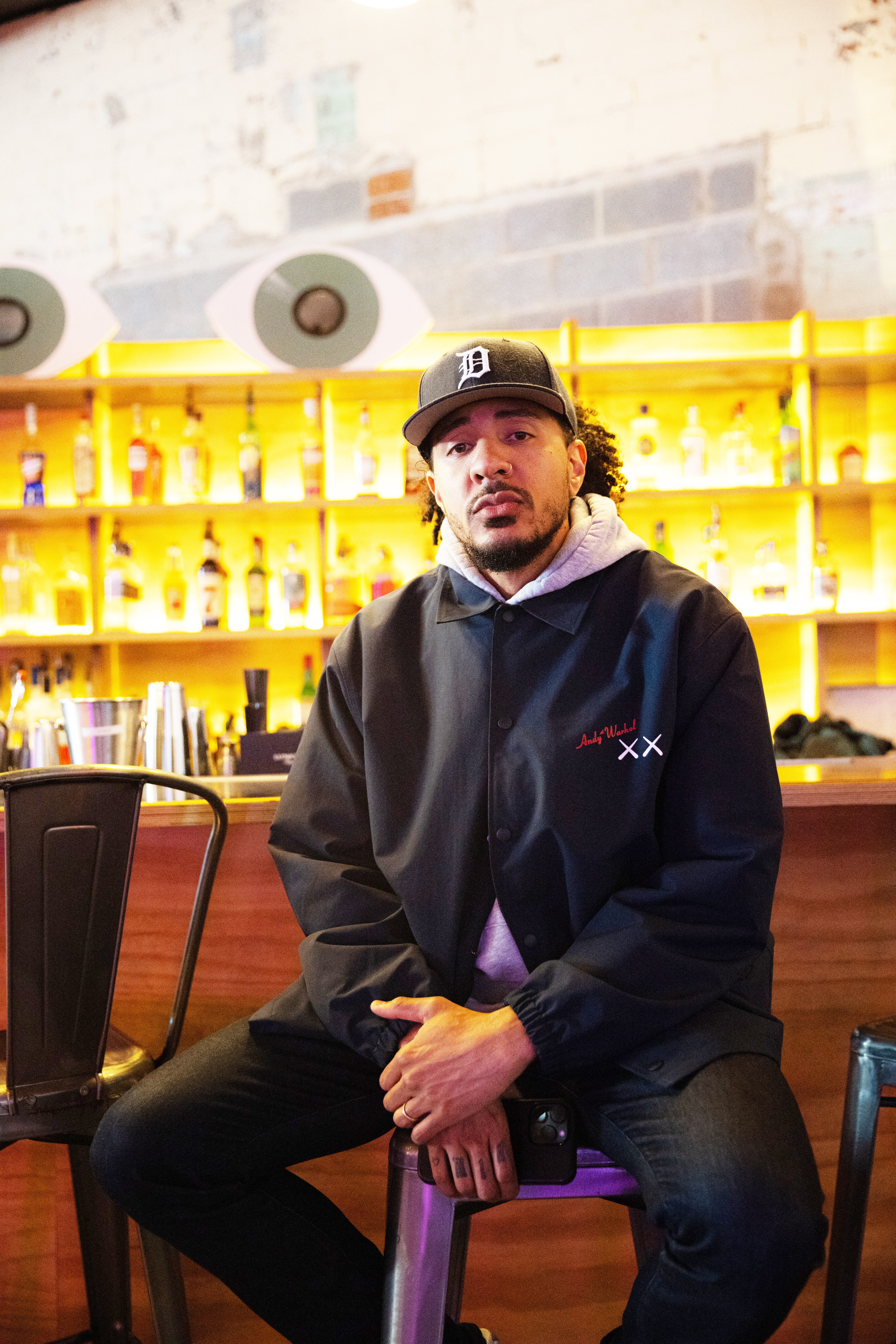
Thor Jones, former manager of Freya, which won Hour Magazine’s restaurant of the year in 2024, is the founder of Hospitality Included. Jones believes that when investors and restaurateurs sit down to “come up with an idea for a restaurant and are thinking about what hours you’ll be open, and what the menu will look like, what wine you want to serve, the cocktails, lighting, and all of that…You know what your guests look like.”
With family roots in the civil rights movement, Jones emphasized that elevating Black creatives was always going to be a part of his path, no matter his career. His restaurant experience gave him the skill set to begin addressing the inequalities he noticed in Detroit’s dining scene.
Jones said, “Hospitality seemed larger than just the industry. I look at it as a way to build, and I don’t want to say ‘save’–but assist communities. Specifically, Black and brown communities. I feel hospitality was kind of a way to build up people to have more respect for their neighbors and the people in their community and more respect for themselves. I think that’s something specifically from the Black community that’s missing. We don’t always see ourselves in the light that we should.”
He mentioned that his sense of purpose has been bolstered by faith and “wanting it to be impactful.” Jones said, “I wanted to leave something behind that was positive. Hospitality is such an old term, with so much meaning. Tie it back to faith; it’s in the Bible a ton. This [Hospitality Included] is supporting the hospitality industry, but this is more so about being a good person, helping, and making people feel comfortable.”
When discussing which restaurants in Detroit are doing it right and feel most authentically Detroit, immediately the old and the new Detroit came into view: Takoi, established in 2016, and Clique, established in 1968. Jones praised both eateries for their clientele diversity and, in the case of Takoi, the possibility of guests having a “middle ground” experience. Jones explained, “I would like to see people take more pages out of Takoi’s book, because it’s not just subway tile on the wall and beet salads. It’s fun, affordable. You can go in there and get a chicken sandwich and a beer and be full for $20. Or you can go in there and drop $150 a person on fish, champagne, and caviar. Giving people the option is what I think makes Takoi the best spot.”
Jones further elaborated on what makes the Detroit hospitality scene distinct from other majority-Black cities he’s lived in, such as D.C. or Atlanta. Despite the momentum Detroit was gathering, he noted that when he and his wife, Lacey, would go out, “Lacey and I would be the only Black people in there. Why is it so segregated? I really don’t think any of that has changed. The only thing that has happened is that some places are trying to have DJs, like that was the fix. To show ‘We don’t mind Black people being in here.’ It’s checking boxes to not get canceled. I think the white chefs and the Black people in the hospitality industry are trying to move things in a certain direction, and are literally on opposite sides. But I think fundamentally, what we want Detroit to look like, especially the food scene…there’s not enough conversation happening to bring that to light. Nobody wants to talk about that part, because then it’s ‘Oh, then what do we do?’”
Jones expressed concern that the pendulum might swing too far and perpetuate stereotypes. But this could be solved through hiring practices, diversity in leadership, and encouraging participation, both within staff and clientele. For Jones, Hospitality Included was created in part to address the stigma surrounding hospitality work as a second- or third-option career. He said, “The last step before I can hopefully say ‘Cool, well, I’m done and retired,’ is an attempt to reframe hospitality work as a whole, and make it more like a skilled trade is treated.”
The 2025 Hospitality Included festival implemented an unusual ticketing model. The goal was to make it possible for everyone attending to enter for free. This was spurred by the hopes of addressing a funding gap. While theorizing with colleagues, Jones said, “What if we sold tickets but you can’t buy tickets for yourself?” This model acted as a culmination of Jones’ philosophy around hospitality because it encouraged participation over consumption. It became a way for supporters to “see themselves” in the process of bringing the festival to life and aiding the community. Jones said, “I didn’t expect the turnout that we got from small businesses. I thought…we’re gonna get Shinola or the Tigers, or somebody’s going to buy 100 tickets, and we’re going to be good. But that never happened. Almost every vendor that was in the festival bought $200 worth of tickets.”
I asked Jones whether Hospitality Included was meant to be a third space, and when it operates that way, if it becomes a form of resistance. “That’s crazy. You’re the second person in the last 24 hours who has said that Hospitality Included feels like a form of resistance. I don’t know if I’ve ever looked at it that way. I’m still trying to see the resistance. I think I feel it’s there. But I don’t think that’s what I set out for it all. It feels more like the industry itself is showing itself, and we just happen to be like supplying a platform. And it seemed like a simple equation to me. It’s the segregation, not to keep hammering that point. People that just won’t kind of get out of their comfort zone—on both sides.”