

Herb Your Enthusiasm: Benefits of Herbalism
Gallery

The herbal medicinal product market is expected to gross $326.46 billion by 2032, according to Coherent Market Insights. This astronomical growth can be attributed to a multigenerational interest in traditional medicine.
A survey by the Nutrition Business Journal documented the behaviors and motivators behind the shopping habits of 1,000 herb and botanical users. Of the 1,000 participants, 36 percent of consumers sourced their information from social media. More specifically, 46 percent of Generation Z and 48 percent of Generation X source information through social media platforms. Thus, demonstrating the impact of influencers on the herbal culture and market is tremendous. Peeling back a layer of the herbal market begins with understanding the meaning of herbal practices and why they are relevant to the consumer.
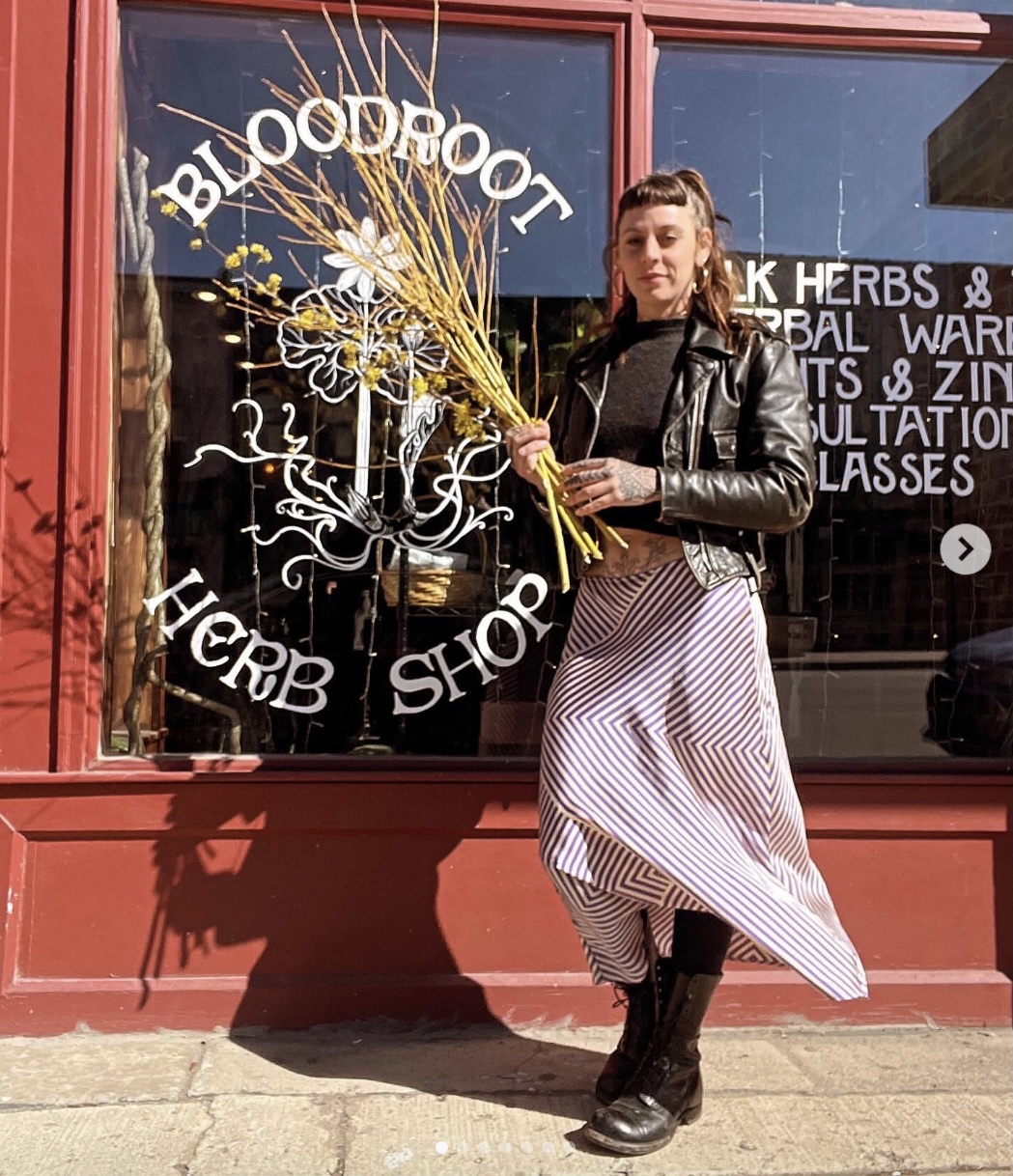
Owner of Bloodroot Herb Shop, Alex Crofoot, a local clinical and community herbalist and full-spectrum doula, describes a herbalist as “someone who works with plants to support health and healing. At its broadest level, herbalism includes anyone who intentionally uses plants for physical, emotional, or spiritual well-being.” Crofoot further explains that herbalism is “a holistic and relational practice that emphasizes safety, accessibility, people’s environment, access to care, and working alongside—not in opposition to—conventional healthcare.” Within the healthcare system, herbalism assists by filling gaps in care and building a collaborative infrastructure in meeting people’s needs.
The World Economic Forum, in collaboration with McKinsey Health Institute, reported in 2024 that approximately 25 percent of a woman’s life is faced with significant health burdens due to underdiagnosis, gender biases in research, and hardships related to non-life-threatening chronic ailments. With an underdeveloped understanding of women’s health, women are at risk for unnecessary, prolonged suffering.
Owner of Green Medicine Acupuncture and Apothecary, Mary Helen Lee, is board-certified in Oriental medicine, Chinese herbology, and acupuncture. She explains that the process of evaluating a patient for herbal care starts with assessing the underlying cause, as it is the key to unlocking the right approach. She further explains that in Chinese medicine, certain organs are responsible for underlying issues.
Regarding women’s health, Lee says, “The kidneys are responsible for the reproductive system. The liver also has a great deal to do with gynecological issues too. So we’re usually treating underlying issues in those two systems, you know, as well as focusing on ovarian hormone balance.” There are over a dozen formulas that Lee uses for complex gynecological issues based on factors such as age, menstrual cycle timing, and cause of illness.
Both Lee and Crofoot have worked with various types of hormonal imbalances. Lee attributes many imbalances to the endocrine system – the system responsible for hormonal communication used to regulate bodily functions. She explains that environmental chemicals such as herbicides, pesticides, and microplastics are common culprits in disrupting estrogen-to-progesterone ratios, creating an estrogen-dominant environment. She has found that women suffering from Polycystic Ovary Syndrome (PCOS), ovarian cysts, fibroid cysts, and breast cancer are often estrogen-dominant. In each case, Lee will curate an herbal formula specified for the individual’s needs.
When it comes to everyday practical uses of herbs for women suffering from Premenstrual Syndrome (PMS), Lee recommends various teas such as peppermint, fennel, and chamomile for their antispasmodic properties, which help reduce cramping. Concentrated turmeric is known for its anti-inflammatory properties during the body’s naturally inflammatory response to menstruation.
In Chinese medicine, stagnation of the liver’s Qi is often the culprit of women’s PMS. Lee explains that Qi “is the energy in your body’s electromagnetic field.” She adds that licorice can help move the liver’s Qi during PMS and help soothe cramps.
Crofoot explains that major issues such as hormonal imbalances, pelvic health, and sexual dysfunction are interconnected with mental health issues and nervous system regulation. She explains, “These concerns are often compounded by lived experiences of dismissal within medical systems, barriers to reproductive care, non-consensual or traumatic medical experiences, and the internalized shame that so many people carry around their bodies and needs.”
According to Crofoot, a more comprehensive approach that complements herbal support includes factors like body awareness, consent-based care, education, and collaboration with healthcare providers. Crofoot explains, “Herbs can be supportive tools when used ethically and alongside informed care.”
Bloodroot Herb Shop has played a vital role in giving access to underserved people through nurturing the community with free herbal products made by Crofoot and fellow volunteers. Partnered with Washtenaw County, Bloodroot Herb Shop has provided products such as immune-supporting teas, respiratory syrups, pain-relief salves, and wound care kits through the Herbal Mutual Aid initiative.
Crofoot made accessibility to herbal products even more flexible with a mobile model, the Community Care Camper. She further elaborates, “The project came about in response to gaps I consistently witnessed while working in community herbalism, particularly the lack of low-barrier, trauma-informed wellness support for people experiencing housing instability, chronic pain, and stress. A mobile model allowed us to meet people where they are, both physically and socially, rather than expecting them to navigate systems that are often inaccessible.”
A mental health crisis continues to affect Americans nationwide. In 2025, a study of over 1,900 U.S. adults was conducted by the Johns Hopkins Bloomberg School of Public Health, where the participants were asked if they had experienced a mental health crisis within the past year. Adults ages 18 to 29 reported the highest frequency of mental crisis at 15.1 percent compared to other age groups. Marginalized groups, specifically Black (11.8 percent) and Hispanic (10.5 percent) adults, reported higher rates than white (7.4 percent) adults. Those experiencing housing instability were linked to the highest rate of mental crisis at 37.9 percent.
Lee emphasizes the mind-body connection in Chinese medicine. “We don’t separate the physical from the mental, emotional. It’s all connected, so we treat the whole person,” she says. She recommends the amino acid tryptophan, specifically 5-Hydroxytryptophan (5-HTP), for those struggling with depression. 5-HTP converts into serotonin in the brain to support mood regulation, potentially reducing symptoms of depression.
Lee says some herbs can be kept around the house to aid immune support–something many of us need this time of year. Lee recommends echinacea, as it can be taken to prevent or combat common infections such as upper respiratory and bladder infections, as well as other bodily inflammations. Lee recommends grapefruit seed extract, oregano oil, and olive leaf pills or tinctures for their broad-spectrum antimicrobial properties.
For those interested in an entry-level pathway to herbal medicine from farm to fruition, Crofoot is holding her Gather + Garble Herbal Medicine Making Course from May to October 2026, where participants will be able to delve into nature to learn the foundation of plant identification, safety measures, and harvesting techniques alongside creating teas, tinctures, oils, salves, vinegars, and honeys.
With an abundance of information in the world, it can be difficult to decipher truth from hearsay. Crofoot’s course takes the guesswork out of herbalism with her professional expertise and structured curriculum. An overview of the course curriculum and registration is available at bloodrootherbshop.com.
As interest in herbalism increases, both Lee and Crofoot have demonstrated their dedication to individualized wellness and herbal education, aiding in an additional layer of care that complements the healthcare space. The core of herbalism is profoundly captured in this sentiment by Crofoot: “Herbalism is a practice rooted in relationships: with plants, with people, and with place. You don’t have to learn everything alone; leaning on a supportive community will make the journey joyful, sustainable, and meaningful.”