

“Hamnet” Brings Shakespeare Down to Earth
Gallery
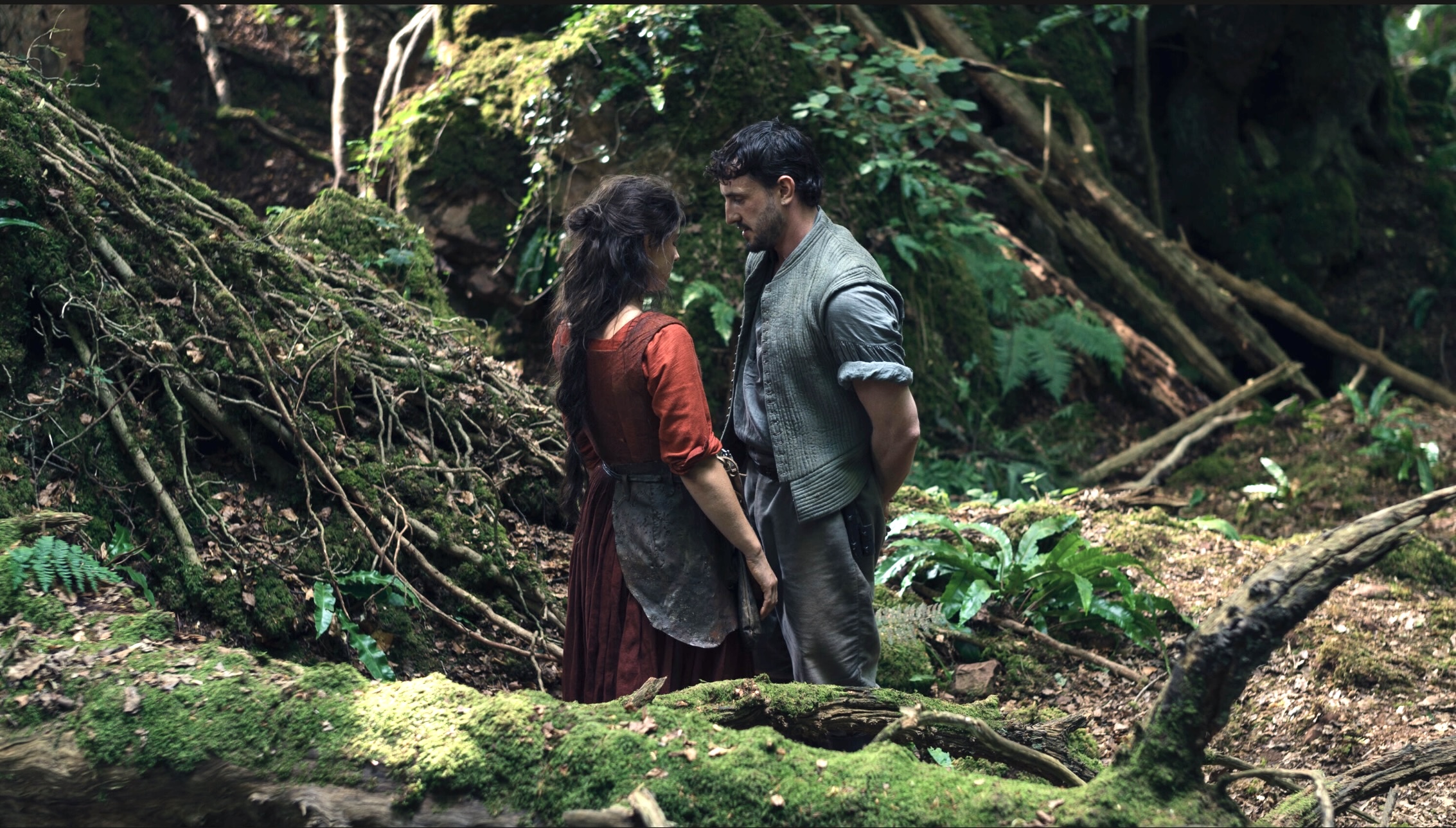
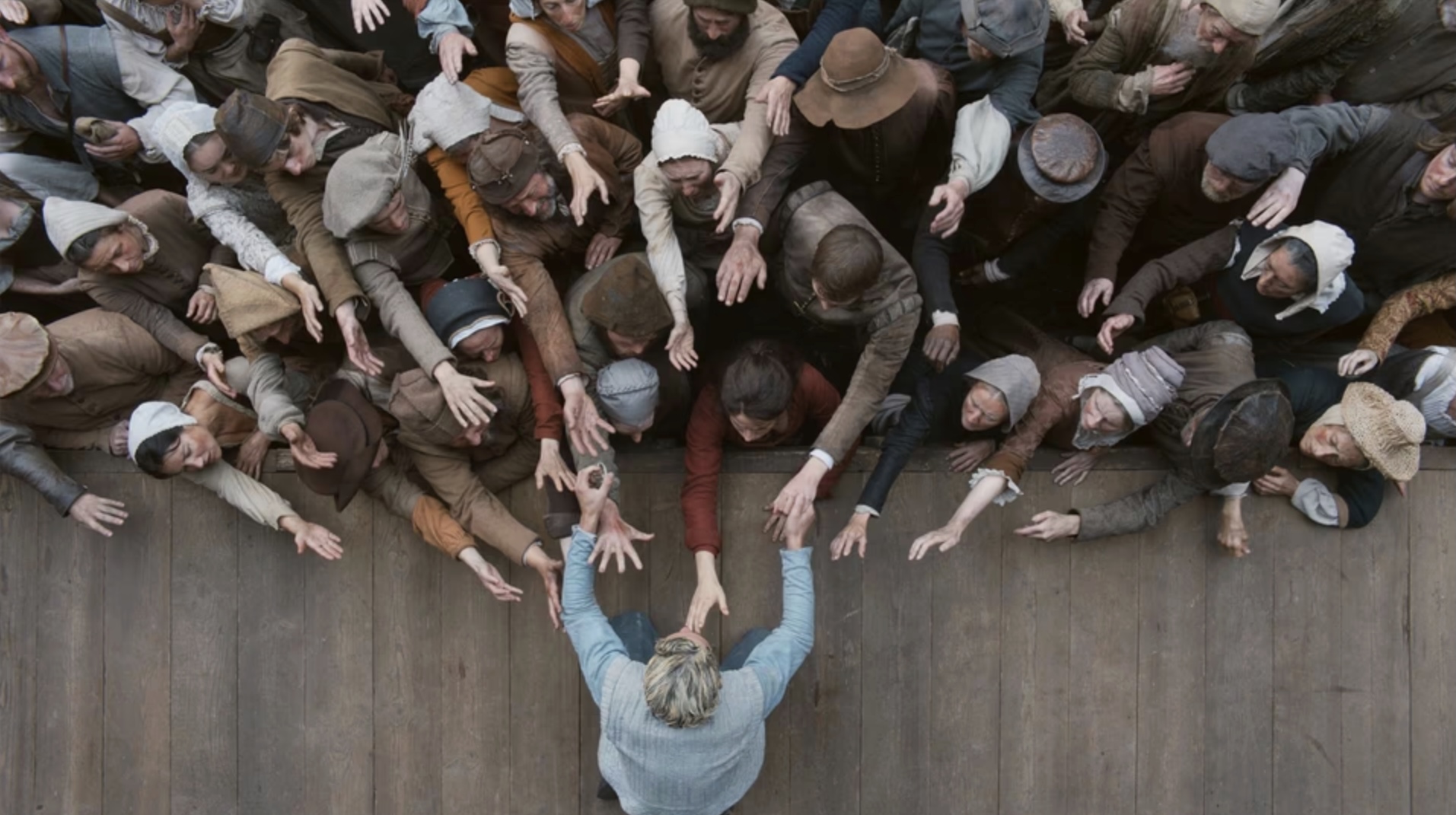
“Hamnet,” directed by Chloe Zhao (“Nomadland,” “The Eternals”), is a fictional take on young William Shakespeare’s life and the creation of his iconic play “Hamlet.”
It begins with William Shakespeare (Paul Mescal, “Gladiators II,” “All of Us Strangers”), working for a family to pay off his abusive father’s debts. While Will is highly educated, he is coasting through life without true purpose—until he meets a woman who changes everything.
This woman is mysterious, known as a forest witch throughout their village, as she would rather spend her days among the trees with her pet hawk than among society. At first sight, Will is mesmerized by her. He shirks his responsibilities to seek her out, flirting coyly, without knowing her identity. When she tells him her name is Agnes (Jessie Buckley, “I’m Thinking of Ending Things,” “Beast”), and sees that it holds no meaning for him, she realizes that Will has no idea who she really is. Startled by the misunderstanding, she flees, insisting they cannot see each other again.
Will discovers Agnes’s identity and the rumors about her, but instead of being put off by this knowledge, it draws him in. He seeks her out in the forest. There, they let each other see into the deepest parts of themselves, Will with his words and Agnes with her herbal magic. The attraction between the two feels natural.
During Peacock’s behind-the-scenes special, “Inside Look: Hamnet,” Mescal shares how attuned he and Buckley became during filming, “The chemistry that I have with Jesse is the center of the film, and it just kept growing and growing and changing shape,” as Buckley shared her similar sentiments.
Will cannot get Agnes out of his mind; unable to sleep, he crafts iconic lines of poetry about her. He seeks her out the next day and says he must be handfasted to her. She and Will make love, resulting in pregnancy. Already the black sheep of their families, this news is not accepted warmly. However, Will’s father, John (David Wilmot “Anna Karenina,” “Calvary”), sees this as an opportunity to get the family out of debt to Agnes’s family. Agnes’s brother Bartholomew (Joe Alwyn, “The Favourite,” ‘Harriet”) comes to an agreement with John for the sake of his sister’s happiness. Will’s mother, Mary (Emily Watson “Gosford Park,” “Punch-Drunk Love”), is initially resistant but ultimately accepts the situation. The two are wed, and soon Agnes gives birth to a baby girl in the forest, just as all the women do in her family.
With a new baby, a new struggle arises: domestic life versus the creative need. To support his family, Will works in his father’s shop, where he is suffocated by both his father’s hateful presence and a lingering fear of becoming just like him. Agnes doesn’t want to lose her husband to misery, so despite having a new baby on the way, she encourages him to go to London to write. In London, Will begins his journey as a playwright, securing a contract with a group of players and eventually making his way to the Globe Theater.
While Will is becoming the famous playwright we know him as today, Agnes experiences a fearful and uncertain birth, which showcases the strength and endurance of women. Throughout the birth, Mary is at Agnes’s side, encouraging her and helping both physically and emotionally. The reality of womanhood in this scene shows the incredible acting abilities of Watson and Buckley.
In the behind-the-scenes interviews, Watson and Buckley had a chance to speak about the experience. Watson expressed the magnitude of the moment, “Mary goes on quite a journey with Agnes. They go through these experiences together. Oh my God, it was so dramatic.” While Buckley shared her reverie for her older counterpart, “To share these moments of fierce womanhood with Emily Watson, who has been an inspiration throughout my life, I’ll never, ever forget it.” The vulnerability between these women is what director Chloe Zhao looks for.
Zhao, who wrote the screenplay alongside the novel’s author, Maggie O’Farrell, created an atmosphere that fostered openness to capture reality: “I don’t need to lead the actors anywhere that they themselves don’t lead me to.” By allowing space for stillness and vulnerability, she could capture the contrasts between private female experience and public male acclaim.
That creative openness extends to the Shakespeare children, whose presence makes the family dynamic feel lived-in rather than performed. There is an easy chemistry between Mescal, Buckley, and their young costars that grounds the film emotionally. Jacobi Jupe (“Peter Pan & Wendy,” “Before”) is particularly striking as Hamnet, displaying a depth and focus well beyond his years. As Buckley noted, he “knows exactly what is required of him but has such access to go somewhere so deep, that it just blew me away.”
“Hamnet” succeeds as an Oscar-worthy film not only because of an incredible cast but also because of a dedicated crew. Production designer Fiona Crombie worked tirelessly with her team to maintain Henley House’s historical accuracy, while using the home to tell the story, “The whole thing with this house is this sense of oppression that you always feel the weight of the building on top of the characters, particularly Will.” While the design of the home is impressive, The Globe truly takes your breath away. Zhao related entering the theater to a religious experience, but Buckley put it best when she said, “It’s the deepest part of humanity, being in that globe.”
The makeup and costume departments really helped with the film’s immersive feel. Makeup director Nicole Stafford and her team aimed to pull the audience in by making the characters look so real you could almost smell them. “We wanted it to be a sensory film,” Stafford explained. Costume designer Malgosia Turzanska strove to keep the costumes historically accurate, while also honoring the character. In Agnes’s case, the forest is so pivotal to her character that they used barkcloth for the bodice of her iconic red dress. A dress that Buckley regards as a representation of her character, “Agnes, she’s learned to kind of sew her heart up a little bit.” Zhao agrees, describing Agnes as “the red beating heart that came out of the forest,” which rings true as Agnes feels like the heart and soul of the film.
“Hamnet” glimpses behind the icon that is Shakespeare and shows the humanity that makes all great art. By shifting the focus from the man to the family and community that shaped him, Zhao illuminates the quiet strength of the women and children, and to quote the real Shakespeare, the “many players” history often leaves in the margins. The result is a story of endurance, heartache, and growth from grief that feels genuine.
“Hamnet” is rated PG-13 for thematic content, some strong sexuality, and partial nudity. It is currently playing in theaters and available for streaming on Amazon Prime, Apple TV, and YouTube. “Inside Look: Hamnet” is rated PG and available to stream on Peacock.