

A Party of One: The Offline Appeal of Solo Tabletop RPGs
Gallery

Due to an increase in internet fatigue, Gen Z is beginning to seek alternatives to excessive phone or tablet use.
An interest in physical media has spread across social media apps, like Instagram and TikTok. More and more young people are cutting ties with Spotify and plugging into the old school joy of CDs and the Walkman. Not to mention the wave of young people permanently signing off of social media, citing that excessive internet use harms their mental health and attention span.
Gen Z youth agree there has to be more than the internet, as the phrase “touch grass” is a popular euphemism among the age group. The youth–tired of consumeristic algorithms and generative AI art–are moving toward a more DIY, reusable way of consuming art and integrating physical hobbies in their daily life.
Solo Tabletop Roleplaying Games (Solo TTRPGs) is a creative alternative hobby that Gen Z is adopting. Games such as “Dungeons and Dragons” and “Warhammer” are already popular party TTRPGs amongst young people.
Solo TTRPGs allow an individual to explore their own creativity, think critically, and spend time with themselves off-screen. It is a misconception that TTRPGs are exclusive to parties or small groups. The world of Solo TTRPG is an ever-growing medium that covers numerous genres.
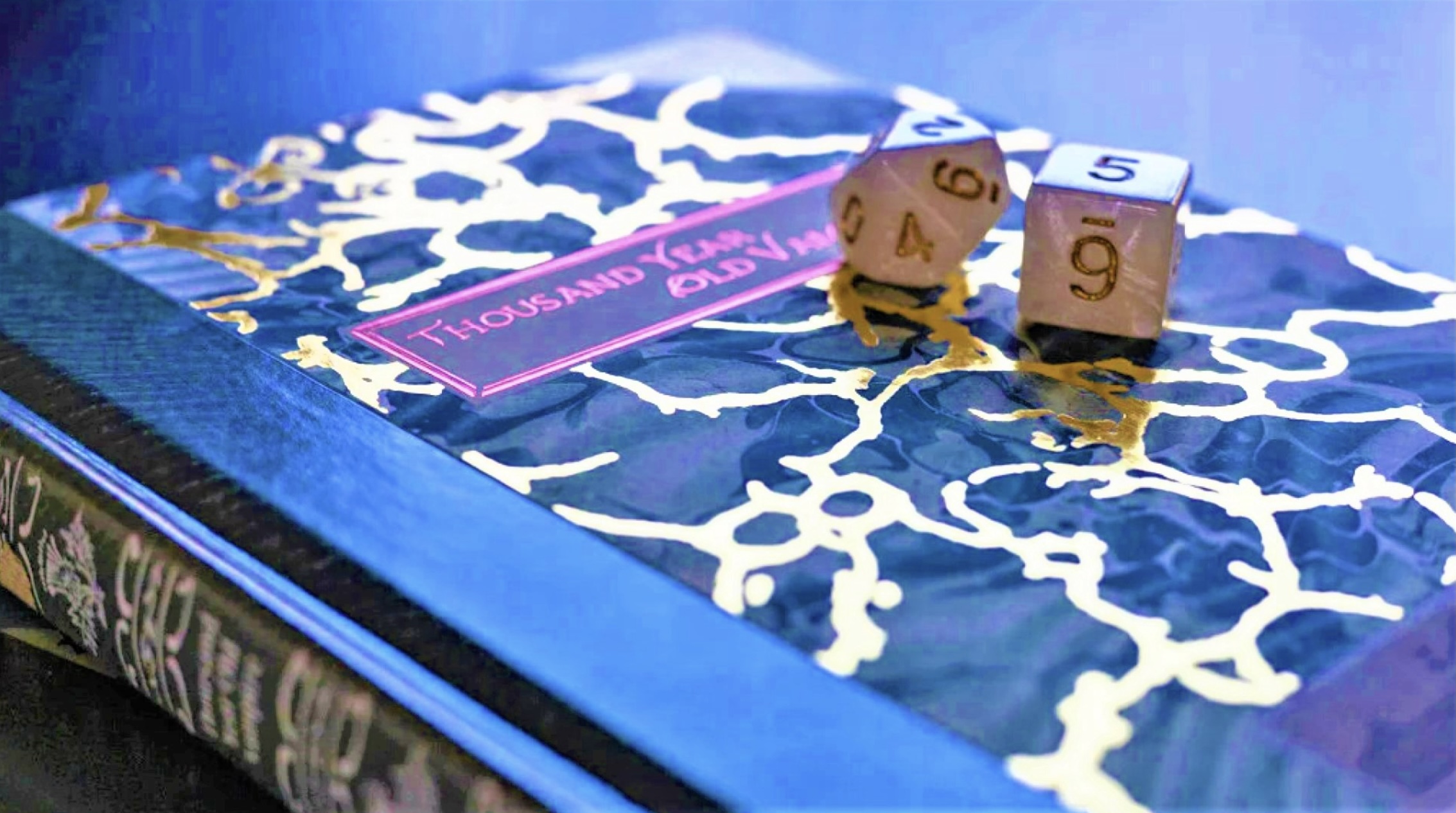
My introduction to Solo TTRPGs was “Thousand Year Old Vampire” by Tim Hutchings, a journaling-style game chronicling the long and often tragic life of your own self-made vampire character. The game encourages historical research and chronological organization with an emphasis on creativity and fact-checking.
You need two six-sided dice, a writing utensil, and paper to play the game. There is a digital, printable PDF available for purchase, along with a free community version for those living with hardships at: timhutchings.itch.io/tyov. You can buy a physical version at the “Thousand Year Old Vampire” website: thousandyearoldvampire.com.
The game is wonderful for people who are into vampires, historical settings, and a grim or Gothic atmosphere. The gameplay mechanics are easy to understand and engaging, opting for a more immersive experience over complicated rules.
For folks more into the modern supernatural, there is a Solo TTRPG titled “Little Town” by Gustavo Coelho, another journaling-style game inspired by the 1990s David Lynch TV show, “Twin Peaks.”
In “Little Town,” you create your own detective character, much like the character, Special Agent Dale Cooper, from “Twin Peaks.” You are trying to solve a unique mystery in your self-designed town, where every character has a secret or a possible twist. Coelho describes the game as a TV show that pays homage to “Twin Peaks” in tabletop form. Each phase of gameplay is described as a “scene,” and advancing to the next day is moving to the next “episode.”
To play “Little Town,” you will need two d6 dice, a deck of cards, a writing utensil, and paper. Copies of the game are available for download via PDF on both gcpcoelho.itch.io/little-town and drivethrurpg.com/en/product/399092/little-town. The cost is under$10. With the purchase, you are provided with two supplements titled “Eldritch Town” and “Eerie Town”; these can be viewed as a “DLC” that serves as their stand-alone, fresh version of the game.
“Eldritch Town” takes on a Lovecraftian spin to “Little Town,” where you are investigating cosmic horror and otherworldly monsters akin to the works of H.P. Lovecraft. “Eerie Town” is inspired by “The X-Files,” and the player must investigate a mysterious town being influenced by an alien presence. “Little Town” is truly three separate experiences wrapped into one and can appeal to a wide variety of people, whether they are cinephiles or literature lovers.
If you browse these works and still feel a little daunted by the setup or complexity, look no further than “Of Moon and Leaf” by mothteeth. “Of Moon and Leaf” is a simple and magical table-rolling and journaling Solo TTRPG. There are no technical gameplay rules, and the game’s layout is straightforward, making it easy to understand. You will need a six-sided die, a notebook, and a writing utensil to play.
The setting in “Of Moon and Leaf” follows the player, a forest dweller who leaves their home to explore the natural world around them. There are random tables to roll for physical descriptions, types of creatures, and even personality traits in NPCs. You will find herbs, encounter oracles, and piece together fragments of your dreams every morning.
This game is akin to stress-free life sims such as “Animal Crossing” or “Stardew Valley” and is perfect for anyone looking for a relaxing experience. “Of Moon and Leaf” is available for free at mothteeth.itch.io/of-moon-and-leaf.
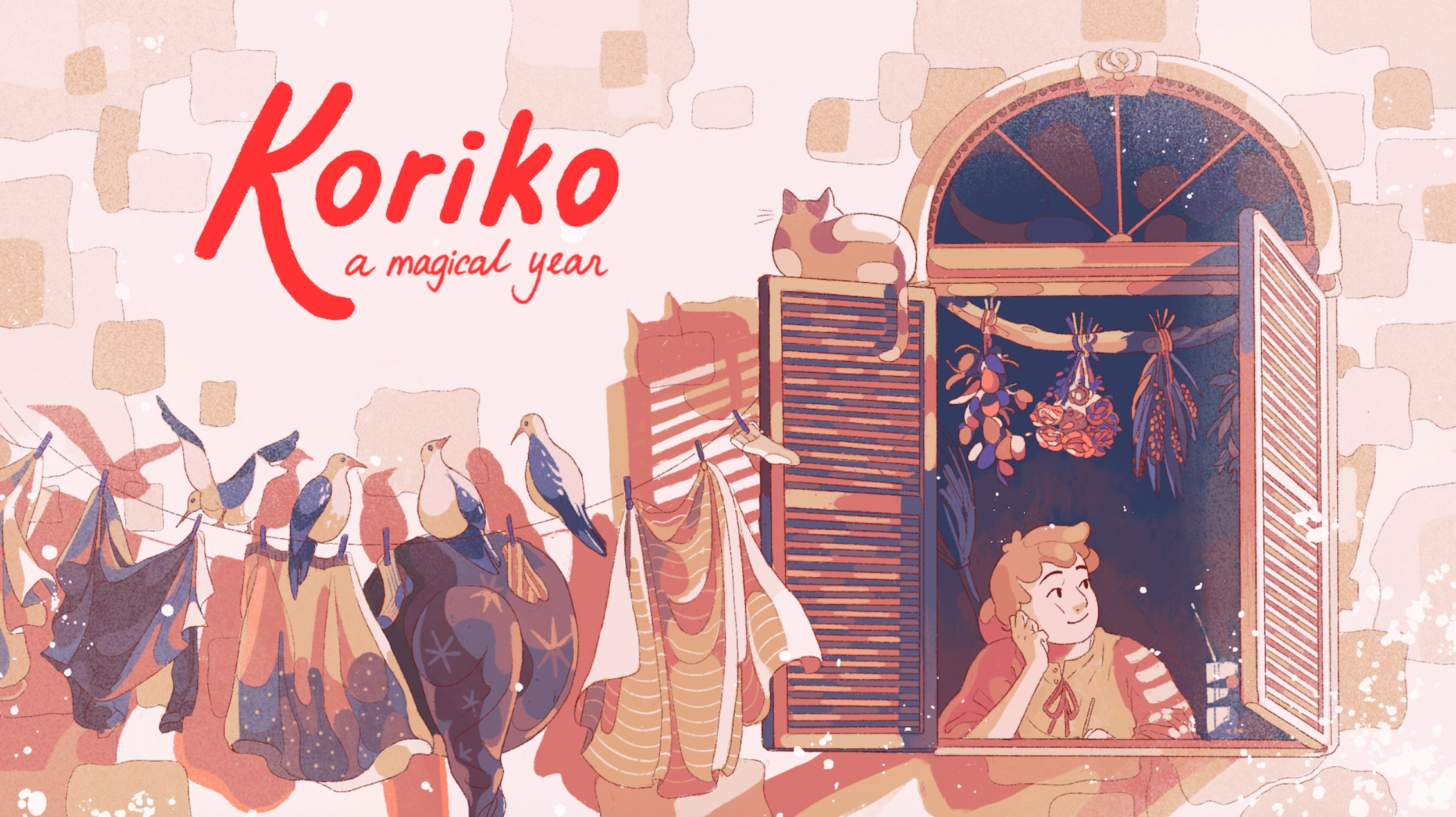
In the same vein as a relaxing, stress-free experience but with a bit more complexity is “Koriko” by Jack Harrison, a Studio Ghibli-inspired journaling TTRPG–taking heavy influence from the studio’s 1989 Hayao Miyazaki animated film, “Kiki’s Delivery Service.” The film follows a young, budding witch and her journey to finding her magic’s purpose—this is exactly the formula for “Koriko.”
To play “Koriko,” you will need some d6 dice, a writing utensil, paper, and a deck of 80 cards. This game plays as slow-burning writing prompts and journaling, favoring creative thinking over complicated steps. “Koriko” envelops players in an atmospheric, contemplative world that feels and writes exactly like aGhibli film.
Harrison made a unique set of cards, included with purchase, exclusively for this game. In addition, the game comes with its own custom dice, dice bag, bookmark, and stickers. “Koriko” is available for purchase on mouseholepress.itch.io/koriko and heartofthedeernicorn.com/product/koriko.
The darker, more gnarly Solo TTRPG titled “Grotten: 1-Bit Deeper” by Sunzenaut acts as a tabletop dungeon crawler that emphasizes exploration, where entering a new room allows you to roll on random tables to see what treasures or horrors you may find. The game’s notoriety comes from how harsh the game is on your self-designed character. Dying can happen quickly–and often–but it allows each playthrough to be unique and for the player to become even better at the game by learning from previous mistakes.
The unique gimmick of “Grotten” is that it comes with flippable tiles showcasing doors, corridors, and rooms with a varying number of exits—all of which you must cut and glue yourself, which is a fun evening project.
If DIY crafting is not your style, you can simply draw the doors and rooms on a piece of paper. Other than those materials, you will need a set of d4, d6, d8, and d20 dice, a writing utensil, and paper.
While there are a lot of elements to keep track of when it comes to tables and combat, “Grotten: 1-Bit Deeper” is incredibly intuitive and easy to get a feel for if you are a beginner to Solo TTRPGs and enjoy dungeon crawlers.
If life-sims, journaling, and peaceful atmospheres aren’t for you, then “Grotten” could be the harsh, challenging sort of game you might be looking for. “Grotten: 1-Bit Deeper” is available for purchase on both sunzenaut.itch.io/grotten and sunzenaut.com/products/grotten-1-bit-deeper.
Solo roleplaying can be looked at as a skill you fine-tune each playthrough. It isn’t always easy to tap into the vulnerability and self-expression of creativity, but it can be incredibly fulfilling when you do.
I have these words of encouragement for everyone reading this: take the time to log off and roll into one of these Solo TTRPGs.