
The Propoganda and Praise of Wicked: For Good
Gallery
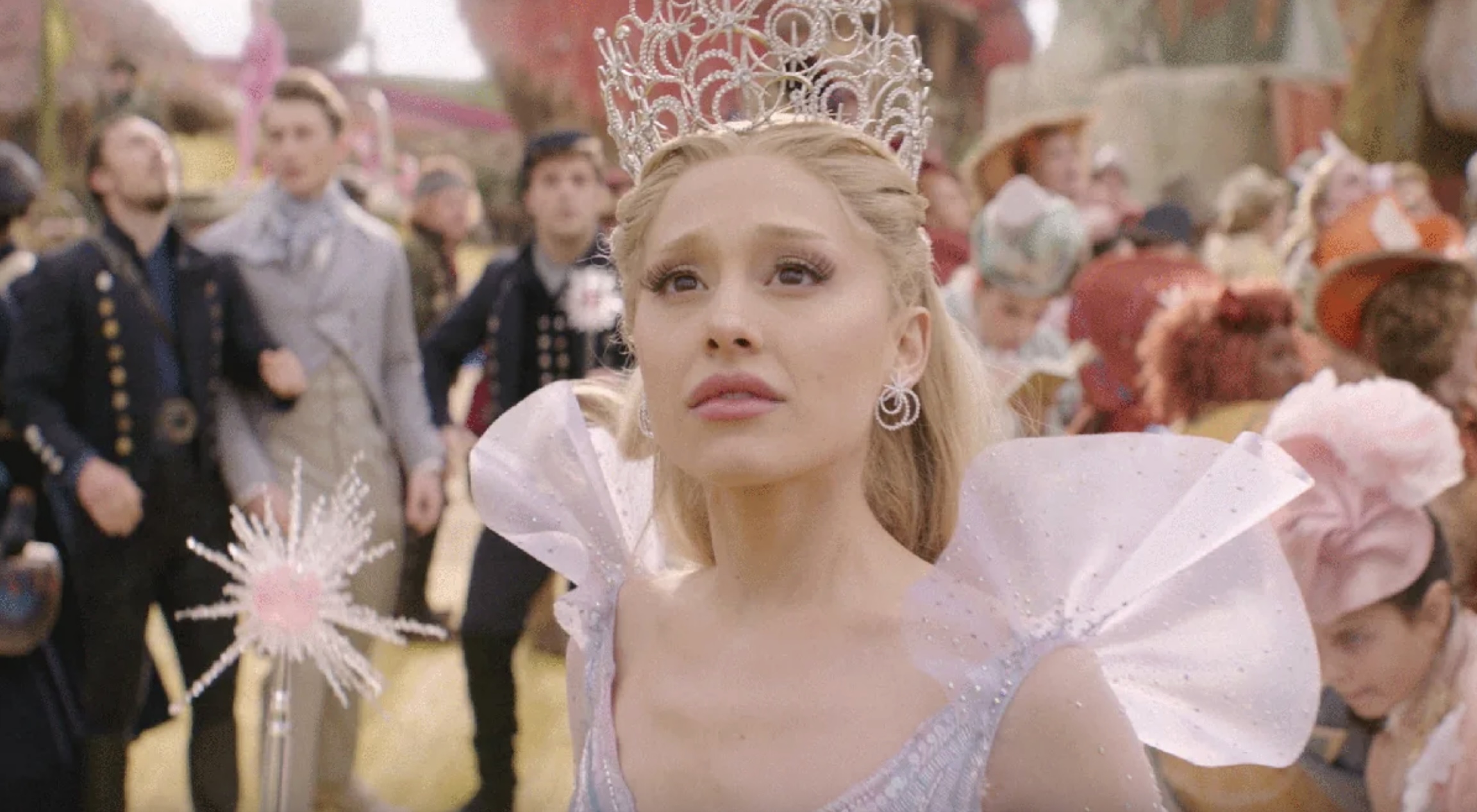
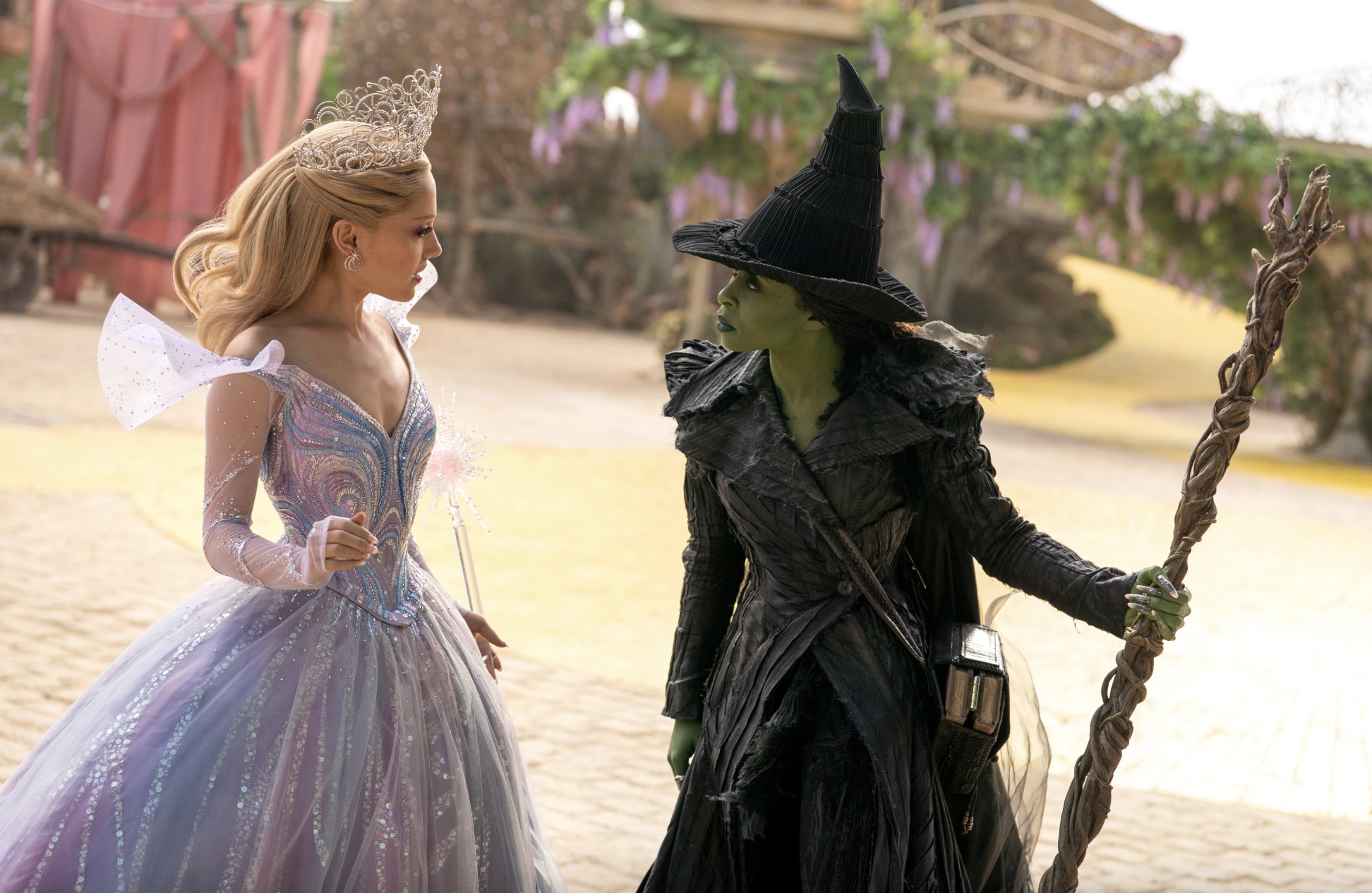
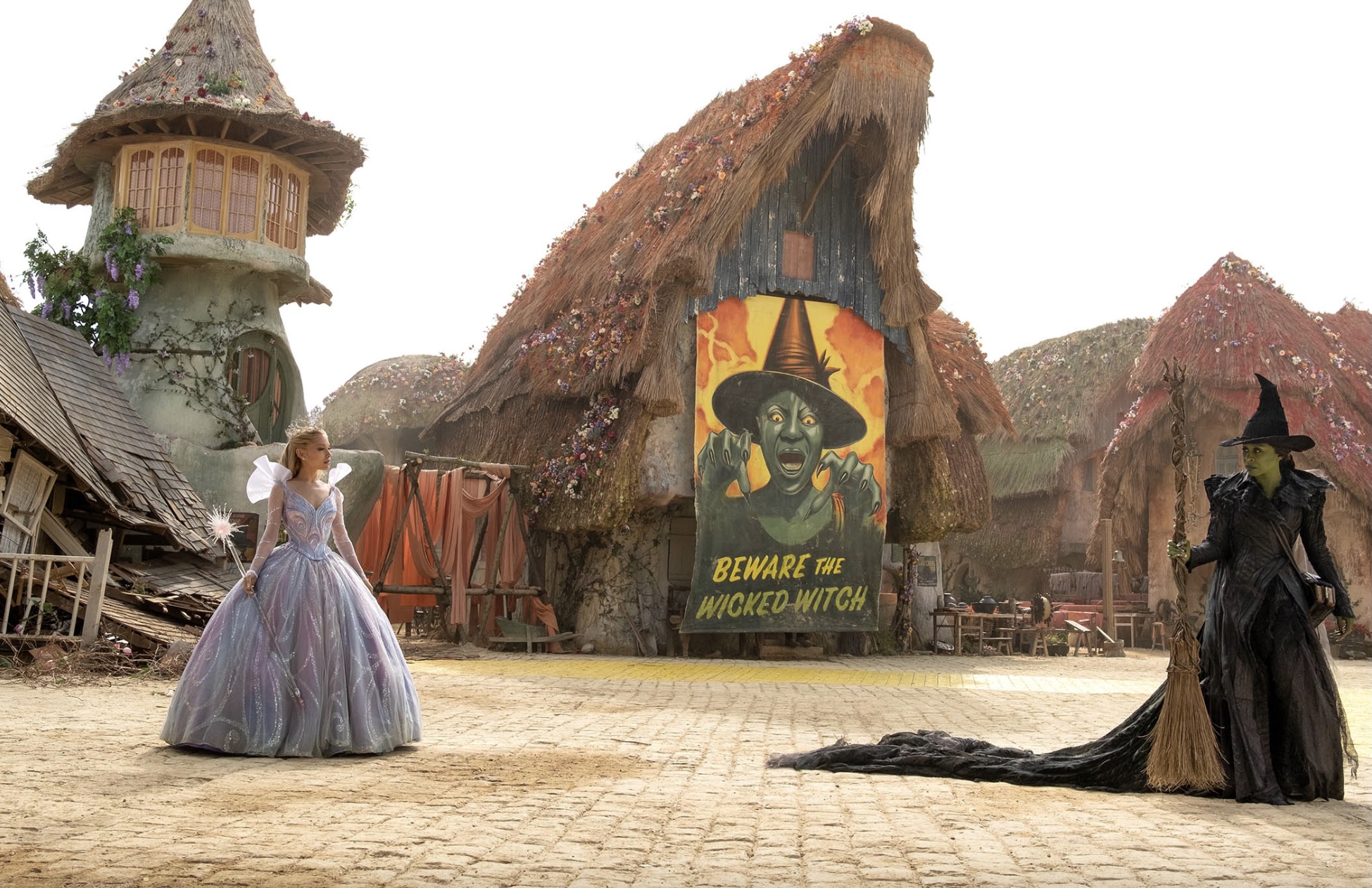
Glinda (Ariana Grande) and Elphaba (Cynthia Erivo) square off in scene from "Wicked For Good."
Fans of “Wicked” (2024) were waiting with bated breath for the release of “Wicked: For Good.” Though released separately, both films were directed by Jon M. Chu (“In the Heights”) as one continuous production to maintain cohesiveness and faithfulness to the Broadway musical on which the two films are based. Filming began in 2022, paused during the SAG/AFTRA strike in 2023, and concluded in 2024, with post-production and a few reshoots taking place in 2025.
What “Wicked: For Good” ultimately offers is darker and more politically charged: a sobering exploration of power, propaganda, and the cost of choosing truth in a world built on comforting lies.
Light-hearted, full of comedic moments, while simultaneously laying the groundwork for the second act of the story, “Wicked” ended with its show-stopping ballad, “Defying Gravity.” During which, Glinda (Arianna Grande “Don’t Look Up”) and Elphaba (Cynthia Erivo “Harriet”) triumph in their friendship, though each must choose separate paths: silence and lies for Glinda, speaking out and truth for Elphaba.
“Wicked: For Good” picks up shortly after this event. Elphaba continues to attempt to free the animals, encourage them to revolt, and expose the tyranny and lies of the Wizard. Her attempts at these good deeds are portrayed as dangerous and framed with murderous intentions. Despite her attempts at avoiding it, Elphaba becomes a tool for control for the Wizard, through one of the most powerful means: fear.
Madame Morrible, portrayed by Michelle Yeoh (“Everything Everywhere All at Once”), employs fear-mongering tactics against Elphaba, labeling her The Wicked Witch of the West, and rallies the citizens of Oz against her. She spreads propaganda at every ideal moment. Unfortunately, while Yeoh’s role felt influential in the first film, her character here seems like a one-trick pony. Morrible is full of potential for the expanse of her villainy or a more in-depth backstory, yet the movie lets this potential fall flat.
Viewers see on a grand scale the harm the totalitarian government has on the citizens of Oz. The animals are caged or enslaved, used as a scapegoat to distract the masses. Through “Wicked: For Good,” Oz’s government is exposed as corrupt and authoritative, led by the ever-charismatic Wizard, portrayed by the equally charming Jeff Goldblum (“Jurassic Park”). Unfortunately, the citizens of Oz are too blind to see that their world—or their wizard—isn’t as wonderful as they believe.
For the Wizard to maintain this façade of wonder, he must keep the masses distracted. This is where Glinda comes into play; she is the face of goodness, gaining fame and popularity through the wizard, at the cost of truth, happiness, and integrity. The film offers an insight into Glinda’s childhood through an original song, explaining the dreams that shaped her ambitions.
It was a brave choice by Chu to add new songs to a musical with such a cult following, but it was also a strategic move to increase the chances of nominations for Best Original Song this upcoming award season. Personally, I felt that Glinda’s song was a welcome addition. It provided depth and growth using flashbacks, which were not possible in the original Broadway production.
“Wicked: For Good” allowed characters who were introduced in “Wicked” to come into their own. Glinda, who was vapid and self-centered but had a heart full of love for her friend, matures and wakes up to the reality around her. Grande truly shone, portraying a wide range of emotional ability. Not to mention her pushing herself to new limits with the operatic execution of the songs. Grande just received her second Golden Globe nomination for the role.
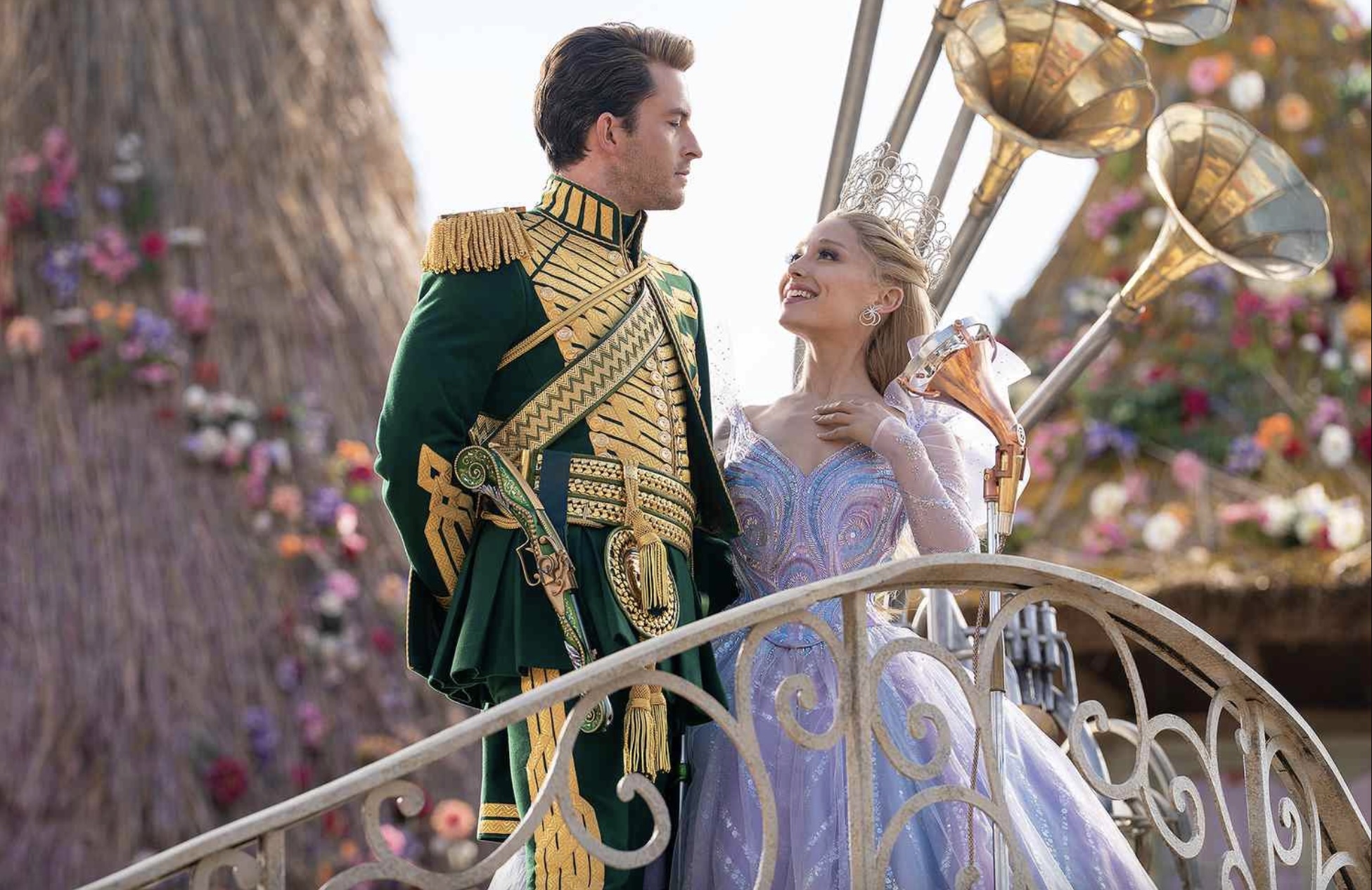
Glinda was not alone in her growth this season. Her on-screen love interest, Fiyero (Jonathan Bailey “Bridgerton”), has his loyalty to the state tested as he faces a choice between fame and adoration or resistance and justice. This choice is influenced by the two women he cares for. Gradually, he learns how empty minds fall for lies. This leads him toward utilizing his brain more independently; his moral clarity foreshadows his fate.
Unfortunately, while some come into their own for the betterment of themselves, there will always be those who do it for the worst. Nessa (Marissa Bode “Wicked”), who showed signs of jealousy and bitterness in “Wicked,” has these feelings come to fruition in “Wicked: For Good.” After her father’s passing, Nessa inherits the position of Governor of Munchkinland. Lost without her father and sister, and learning Boq (Ethan Slater “SpongeBob SquarePants: The Broadway Musical”) has always had feelings for another, Nessa’s bitterness comes through in her tyrannical rule.
Elphaba is on the cusp of good and wicked. Her intentions are good, but, as she sings, “no good deed goes unpunished.” This theme is ever-present, following each of Elphaba’s actions. The consequences weigh heavily on her, and she is nearly breaking, wanting to give up and give the people what they want: the wicked witch of the west. Whether she gives in or not, you will have to watch to find out. Cynthia Erivo portrays Elphaba’s struggles perfectly. The raw emotions, passion, desperation, and exasperation are moving. Erivo manages to pull the audience in and make them feel as she feels.
Cinematically, the colors in this film were brighter than in “Wicked.” The first film received some negative feedback regarding the washed-out look, and it seems Chu took this criticism and ran with it. The brighter colors made me feel more immersed in the world of Oz. They also allowed the contrasting bright, good image that the Wizard presents and the dark, brutal truth that he hides to feel more impactful. These moments were skillfully shot and centered around each of the girls. Particularly, while Glinda walked down the aisle, surrounded by bright sunshine and butterflies. Meanwhile, Elphaba was in the underbelly of the palace, discovering the shadows and secrets hidden below.
The contrast presented between these two girls matched the theme of the progress of technology versus the preservation of nature. Many of Elphaba’s scenes take place surrounded by the raw beauty of nature, and her overarching beliefs lie in the protection of animals. Glinda’s scenes, on the other hand, take place mainly in the heart of the city, surrounded by advanced technology. She has aligned herself with the Wizard, a man who is always thinking of the next innovation, the next grab for power. If his choices for progress negatively affect the world around him, he does not take the blame; instead, he falls back on his same trick of blaming the animals and distracting the masses.
The film also tied in with the original source material, “The Wizard of Oz” (1939). Dorothy (Bethany Weaver), the Tin Man, the Cowardly Lion, and the Scarecrow can be seen following the Yellow Brick Road. Like the Broadway musical on which it is based, “Wicked: For Good” only alludes to them. There is some negative criticism about this choice, as it makes knowing “The Wizard of Oz” vital to understanding the plot. Personally, I was okay with this. This is not the story of Dorothy Gale; this is the story of Elphaba and Glinda.
Overall, I thought “Wicked: For Good” was a heartwarming and inspiring film. While it stuck mostly true to the Broadway musical, I think that aspect both benefited and hurt this film. In the film medium, there were opportunities to amend the play’s plot holes and explain the slightly confusing ending. However, in its attempt to fill some of those plot holes, the film lacks the well-timed pacing and emotional impact of the musical.
“Wicked: For Good” is currently playing in theaters and is rated PG for action/violence, some suggestive material, and thematic material.